Indigenous SODAR boosts forecasting & Atmanirbhar Bharat
July 15, 2026
  • Read Ecopy
  • Circulation
  • Advertise
  • Careers
  • About Us
  • Contact Us
Android AppiPhone AppArattai
Organiser
  • ‌
  • Bharat
    • Assam
    • Bihar
    • Chhattisgarh
    • Jharkhand
    • Maharashtra
    • View All States
  • World
    • Asia
    • Europe
    • North America
    • South America
    • Africa
    • Australia
  • Editorial
  • International
  • Opinion
  • RSS @ 100
  • More
    • Op Sindoor
    • Analysis
    • Sports
    • Defence
    • Politics
    • Business
    • Economy
    • Culture
    • Special Report
    • Sci & Tech
    • Entertainment
    • G20
    • Azadi Ka Amrit Mahotsav
    • Vocal4Local
    • Web Stories
    • Education
    • Employment
    • Books
    • Interviews
    • Travel
    • Law
    • Health
    • Obituary
  • Subscribe
    • Subscribe Print Edition
    • Subscribe Ecopy
    • Read Ecopy
  • ‌
  • Bharat
    • Assam
    • Bihar
    • Chhattisgarh
    • Jharkhand
    • Maharashtra
    • View All States
  • World
    • Asia
    • Europe
    • North America
    • South America
    • Africa
    • Australia
  • Editorial
  • International
  • Opinion
  • RSS @ 100
  • More
    • Op Sindoor
    • Analysis
    • Sports
    • Defence
    • Politics
    • Business
    • Economy
    • Culture
    • Special Report
    • Sci & Tech
    • Entertainment
    • G20
    • Azadi Ka Amrit Mahotsav
    • Vocal4Local
    • Web Stories
    • Education
    • Employment
    • Books
    • Interviews
    • Travel
    • Law
    • Health
    • Obituary
  • Subscribe
    • Subscribe Print Edition
    • Subscribe Ecopy
    • Read Ecopy
Organiser
  • Home
  • Bharat
  • World
  • Operation Sindoor
  • Editorial
  • Analysis
  • Opinion
  • Culture
  • Defence
  • International Edition
  • RSS @ 100
  • Magazine
  • Read Ecopy
Home Bharat

Indigenous SODAR innovation boosts India forecasting & Atmanirbhar Bharat vision: A breakthrough in atmospheric science

India marked CSIR Foundation Day 2025 with the inauguration of its indigenous SODAR system at IMD, New Delhi. Developed by CSIR-AMPRI, this facility symbolizes self-reliance in atmospheric science, strengthening disaster preparedness, localized forecasting and reducing dependency on imported technologies

Vivek KumarVivek Kumar
Oct 3, 2025, 08:00 pm IST
in Bharat, Sci & Tech
Follow on Google News
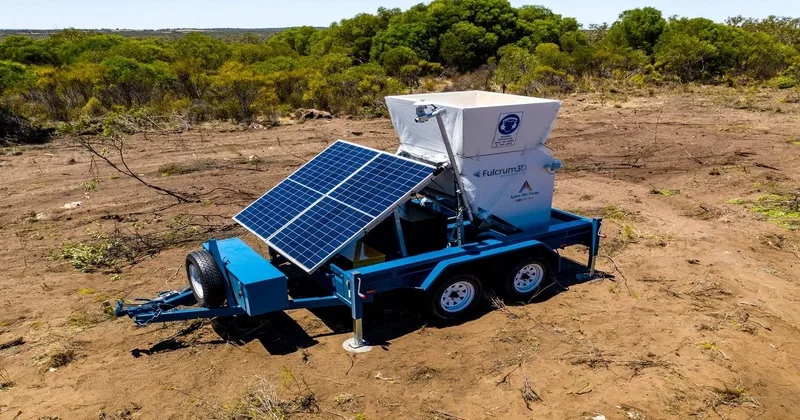
Representative Image: SODAR

Representative Image: SODAR

FacebookTwitterWhatsAppTelegramEmail

India celebrated its break-through in atmospheric science by developing, Sound Detection and Ranging (SODAR) facility, made by the CSIR–Advanced Materials and Processes Research Institute (AMPRI), Bhopal. It was inaugurated at the India Meteorological Department (IMD) headquarters in New Delhi. The occasion brought together leaders of India’s scientific community, including Dr. M. Ravichandran Secretary of the Ministry of Earth Sciences, Dr. Mrutyunjay Mohapatra Director General of Meteorology at IMD and Prof. Thallada Bhaskar, Director of CSIR-AMPRI.

The event was a representation of institutional partnership. A Memorandum of Understanding was signed between CSIR-AMPRI and IMD to facilitate collaborative research in atmospheric sciences and exchange of climate data and application of these insights to disaster risk reduction. Prof. Bhaskar and Dr. Mohapatra sealed this agreement with solidifying an association that has the potential to revolutionize India’s meteorological research. Addressing the gathering virtually, Dr. N. Kalaiselvi, Director General of CSIR, pointed out how the system reduces dependency on imported technologies. Her remarks captured the spirit of Atmanirbhar Bharat, emphasizing that this facility is not just about science but also about self-reliance.

“SODAR” (Sonic Detection and Ranging) is a ground-based remote sensing device that uses sound waves to measure wind speed, wind direction and the thermodynamic structure of the lower atmosphere, similar to radar but with sound instead of radio waves. The device operates by emitting acoustic pulses upward and analyzing the reflected echoes. From this information, wind speeds, turbulence and direction flows at differing altitudes are known as components vital to making good weather forecasts, monitoring the environment and even energy planning. For a nation with varying weather patterns and susceptibility to catastrophic events, such precision instruments make the difference between readiness and disaster.

India has been depended on foreign-made equipment to collect this sort of data for long time, thus having a strategic hurdles and financial expense. Maintenance challenges and limited access to system customization further limits their usefulness. By creating domestic technology India gains cost-effective solutions and will be able to retain meteorological data entirely within national control. A network of such systems will not only enhance day-to-day weather forecasting but also give localized inputs for agriculture, disaster planning and public health.

This event also put the spotlight on AMPRI itself, a CSIR lab in Bhopal. Originally called the Regional Research Laboratory, it was renamed in 2007 to reflect its expanding vision. The institute has created a niche in process innovations and advanced materials, right from the creation of smart materials and nanostructures to the development of waste-to-wealth technologies. Its achievement is by inventing radiation shielding materials using industrial waste and gaining international patents is a testament to its diversity. With SODAR, AMPRI is now venturing into environmental sciences, a sign of a multidisciplinary push.

Also Read: Women power holds central place in Sanatan: Uttar Pradesh CM Yogi Adityanath on Vijayadashami

The significance of such innovation is when one looks at India’s diverse geography. Weather patterns in coastal areas, the Gangetic plains, deserts and the Himalayan belt, call for localized instruments. Imported technologies cannot grasp the complexity. An indigenous SODAR network enables scientists to merge regional data with satellite and radar observations, refining forecast models as well as improving early-warning systems. These advances directly assist farmers with timely advisories, help urban planners deal with pollution and give industries accurate wind and weather information for their energy projects.

Senior researchers who attended the launch has pointed out these advantages. The development was called “very promising” by Dr. Ravichandran, while Dr. Mohapatra emphasized its capability of providing more precise forecasts. This development mirrors the increasing perception that India needs to lead innovation in climate science from within its own landscape. By integrating the scientific intensity of CSIR-AMPRI with the operational visibility of IMD, the country is paving the way for a future of weather monitoring.

This collaboration also reflects a greater national vision. As the climate change is visible it increases the frequency of extreme weather conditions, resilience is inextricably linked with technological self-sufficiency. Being able to forecast short-term, localized events with more precision can minimize losses in agriculture, industry and lives. SODAR is not just a tool it is a shield that enhances India’s readiness towards natural and manmade threat from China

In the future, the AMPRI–IMD collaboration intends to put SODAR systems into place in climate-sensitive and data-scarce areas. This expansion will validate other weather instruments, enhance the accuracy of the models and form the basis of sophisticated studies. Farmers in need of rain patterns, urban governments struggling with air quality and communities in the danger zones for cyclones and floods will all be able to gain from these upgraded features.

The opening of the SODAR centre is therefore not merely a scientific achievement, it is an expression of national intent. It is an expression of India’s resolve to harness indigenous innovation for societal advancement. By combining cutting-edge research with application, the nation is creating tools that guarantee not only forecasts but also the future.


Topics: Indigenous Weather ForecastingAatmanirbhar Bharat TechnologyDisaster Risk ReductionSODAR System IndiaCSIR-AMPRI InnovationIMD Collaboration
ShareTweetSendShareSend
✮ Subscribe Organiser YouTube Channel. ✮
✮ Join Organiser's WhatsApp channel for Nationalist views beyond the news. ✮
Previous News

Bihar: ECI briefs central observers to be deployed for assembly elections

Next News

Al-Shaara’s recent diplomatic wins emboldened him to monopolize the power

Related News

Representative Image

Climate Intelligence: Indian AI-led path to net-zero resilience

Principal Secretary PK Mishra

India accords high importance to disaster risk reduction issues: Principal Secy to PM Modi

Load More

Latest News

FIR filed against NSUI leader for rape

Bhopal Shocker: NSUI leaders booked for rape of ST girl during ‘Chhatra Goonj Ki Awaaz’ campaign; FIR registered

AI Generated Image

Ladakh Gets Major Governance Boost: All 7 districts to have autonomous hill councils

Karnataka: Mangaluru police bust illegal immigration network; 11 Bangladesh nationals & three agents arrested

Ahead of Rath Yatra, Gujarat ATS Busts Suspected JeM Network, 12 Detained

Gujarat ATS Crackdown: 12 suspected Jaish-e-Mohammed operatives held ahead of Jagannath Rath Yatra

Umar Faizy Mukkam

Samastha Kerala Jamiyyathul Ulama opposes PM SHRI in Keralam, demands Arabic and foreign languages university

“Reuters-You can do better”: US Envoy Sergio Gor slams British news agency over fake narrative on India-US trade deal

Tamil Nadu: Karur stampede appointments by CM Joseph open Pandora’s box as other victims’ kin seek similar benefits

A Protest Held by Hindu Munnani a protest held at Thiruvattar in Kanyakumari district

Tamil Nadu: Hindu Munnani protests in Kanyakumari, seeks removal of illegal Christian prayer hall despite court orders

The Rajasthan Legislative Assembly marks 75 glorious years of upholding democratic values and legislative excellence

Rajasthan Legislative Assembly at 75: Honouring a legacy of landmark laws, democratic values and visionary leadership

External Affairs Minister Dr. S. Jaishankar launched India's campaign for the UNSC chair

India unveils campaign for UNSC seat; EAM Jaishankar outlines SHANTI vision for secure, peaceful & just world order

Load More
  • Privacy
  • Terms
  • Cookie Policy
  • Refund and Cancellation
  • Delivery and Shipping

© Bharat Prakashan (Delhi) Limited.
Tech-enabled by Ananthapuri Technologies

  • Home
  • Search Organiser
  • Bharat
    • Assam
    • Bihar
    • Chhattisgarh
    • Jharkhand
    • Maharashtra
    • View All States
  • World
    • Asia
    • Africa
    • North America
    • South America
    • Europe
    • Australia
  • Editorial
  • Operation Sindoor
  • Opinion
  • Analysis
  • Defence
  • Culture
  • Sports
  • Business
  • RSS @ 100
  • Entertainment
  • More ..
    • Sci & Tech
    • Vocal4Local
    • Special Report
    • Education
    • Employment
    • Books
    • Interviews
    • Travel
    • Health
    • Politics
    • Law
    • Economy
    • Obituary
  • Subscribe Magazine
  • Read Ecopy
  • Advertise
  • Circulation
  • Careers
  • About Us
  • Contact Us
  • Policies & Terms
    • Privacy Policy
    • Cookie Policy
    • Refund and Cancellation
    • Terms of Use

© Bharat Prakashan (Delhi) Limited.
Tech-enabled by Ananthapuri Technologies