





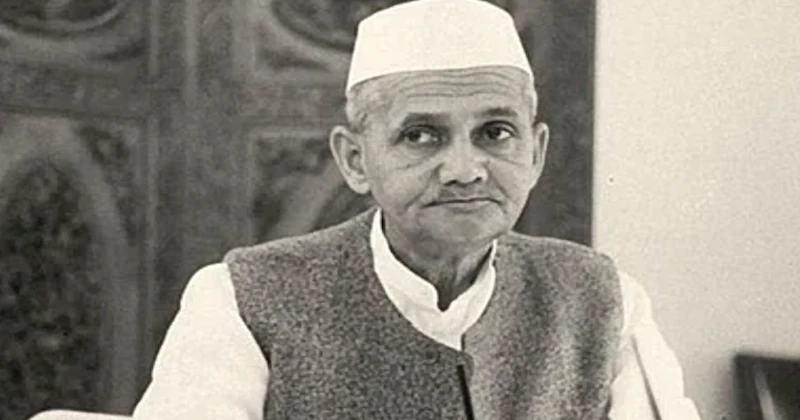
On the occasion of Lal Bahadur Shastri’s birth anniversary on October 2, it is important to reflect on the legacy of one of India’s most humble yet visionary leaders. Born in 1904, Shastri rose from modest beginnings to become the second Prime Minister of India, serving from 1964 to 1966. While he is widely remembered for his integrity, simplicity, and the iconic slogan “Jai Jawan, Jai Kisan,” his critical role in laying the groundwork for the Green Revolution remains an often-overlooked yet significant chapter in India’s history. Though his tenure was brief, his impact on India’s agricultural transformation was both profound and lasting. His leadership came at a time when India was facing dire food shortages, frequent droughts, and an over-reliance on food imports. Amidst these crises, it was Shastri’s political will and foresight that laid the foundation for a movement that would ultimately lead India toward food self-sufficiency.
When Lal Bahadur Shastri took office after Jawaharlal Nehru died in 1964, India was still struggling with a fragile economy, widespread poverty, and an agricultural sector mired in traditional practices. Despite being a predominantly agrarian society, India’s agricultural productivity was alarmingly low. Dependence on monsoons, a lack of irrigation infrastructure, poor access to modern technology, and inadequate supplies of fertilisers and seeds have plagued Indian farmers. To compound these issues, India was heavily dependent on food grain imports from the United States under the PL-480 program, which made the country vulnerable to international political pressure. The situation worsened when successive droughts in 1965 and 1966 caused a dramatic decline in food grain production, pushing the country to the brink of famine.
In the face of these immense challenges, Shastri rose to the occasion with a sense of urgency and resolve. He recognised that no nation could claim true independence while being dependent on foreign countries for its basic food needs. His famous slogan, “Jai Jawan, Jai Kisan,” was not merely a political statement but a declaration of national priorities. With these words, Shastri underscored the equal importance of the soldier who defends the country and the farmer who feeds the nation. This message resonated deeply with the Indian public and set the tone for his government’s commitment to strengthening the agricultural sector.
Recognising the need for long-term agricultural reforms, Shastri provided full political and administrative support to scientific initiatives aimed at modernising Indian farming. While the initial ideas for introducing high-yielding variety (HYV) seeds and modern techniques had been floated during Nehru’s era, it was under Shastri’s leadership that these ideas were actively pursued and implemented. He facilitated collaboration between Indian agricultural scientists like M. S. Swaminathan and international experts such as Norman Borlaug, whose research on HYV seeds had already revolutionised agriculture in other parts of the world. Shastri’s administration took the critical step of importing these seeds and initiating pilot programs in select states, particularly in Punjab and Haryana, to test their efficacy under Indian conditions.
Beyond supporting scientific innovation, Shastri recognised the importance of institutional infrastructure. He empowered key organisations, such as the Indian Council of Agricultural Research (ICAR), and supported the creation and strengthening of agricultural universities that became centres for research, education, and training. These institutions played a pivotal role in developing region-specific farming techniques, educating farmers, and ensuring the diffusion of knowledge and technology across the country. Shastri also emphasised the need for irrigation expansion, rural credit availability, and the timely supply of fertilisers and pesticides. His government worked to ensure that the necessary ecosystem was in place for the Green Revolution to take root and grow.
A hallmark of Shastri’s leadership was his ability to inspire public participation in national development. During the food crisis, he appealed to citizens to observe weekly fasts to conserve food and lead a life of austerity in solidarity with the suffering farmers. He led by example, personally giving up one meal a week. This moral leadership instilled a sense of shared responsibility among the people, creating a national climate of discipline and unity. It also helped prepare the public psyche for the sweeping changes that the Green Revolution would bring, especially in rural India.
Shastri’s approach to agricultural reform was not limited to technological or institutional changes. He had a nuanced understanding of rural India and was deeply empathetic to the struggles of farmers. He believed in decentralisation and the empowerment of local governance structures, such as Panchayati Raj institutions, ensuring that agricultural programs were implemented effectively at the grassroots level. His policies were grounded in the belief that food security and rural prosperity were not only economic objectives but moral imperatives for a just and independent nation.
During Shastri’s tenure, the early phase of the Green Revolution began to demonstrate tangible results, albeit on a limited scale. The experimental introduction of high-yielding wheat and rice varieties in Punjab, Haryana, and western Uttar Pradesh resulted in a noticeable increase in crop productivity, despite the challenges of drought and infrastructural constraints. These early successes validated the potential of scientific farming methods and justified further investment in agricultural modernisation. At the same time, the need for broader reforms became increasingly evident. Many regions lacked access to basic irrigation, rural credit systems remained inadequate, and the distribution of fertilisers and pesticides was inconsistent. Recognising these gaps, Shastri’s administration focused on strengthening agricultural infrastructure, streamlining supply chains, and improving farmer education. These initiatives, although still in their infancy, were crucial in laying the groundwork for the subsequent large-scale expansion of the Green Revolution. His leadership during this crucial transitional period helped bridge the gap between traditional subsistence agriculture and a more self-reliant, production-oriented system.
Although Lal Bahadur Shastri passed away in January 1966 under sudden and mysterious circumstances, the policies and frameworks established during his tenure laid the foundation for the success of the Green Revolution in the late 1960s and early 1970s. It was during Indira Gandhi’s government that the Green Revolution reached its peak. Still, the initial steps—such as the introduction of HYV seeds, institutional support, and the creation of a favourable policy environment—were all initiated under Shastri’s watch. His foresight and determination ensured that India would no longer be at the mercy of foreign nations for its food needs. Within a decade of his leadership, India transformed from a food-deficient country into a food-surplus nation, capable of feeding its own population and even exporting grain.
Shastri’s contribution to agriculture must also be understood in the broader context of his vision for India. For him, food self-sufficiency was not just a matter of economic policy—it was deeply tied to national pride, dignity, and independence. He believed that a country that could not feed its people could never truly stand on its own feet. His policies reflected a blend of pragmatism and idealism, addressing immediate needs while also building long-term capacities. His deep respect for the farmer and his unwavering commitment to national development through self-reliance have become central themes in India’s political and agricultural discourse ever since.
On the occasion of Lal Bahadur Shastri’s birth anniversary, it is essential not only to celebrate his personal virtues of honesty, humility, and simplicity, but also to acknowledge his visionary role in shaping modern Indian agriculture. His quiet yet resolute leadership during one of the most difficult periods in India’s post-independence history enabled the country to achieve a transformation that many thought impossible. The Green Revolution, which fundamentally altered the trajectory of Indian agriculture, owes much to the groundwork laid during his tenure. His legacy lives on in the fields of India, in the resilience of its farmers, and in the enduring aspiration for a self-reliant nation.














Comments