





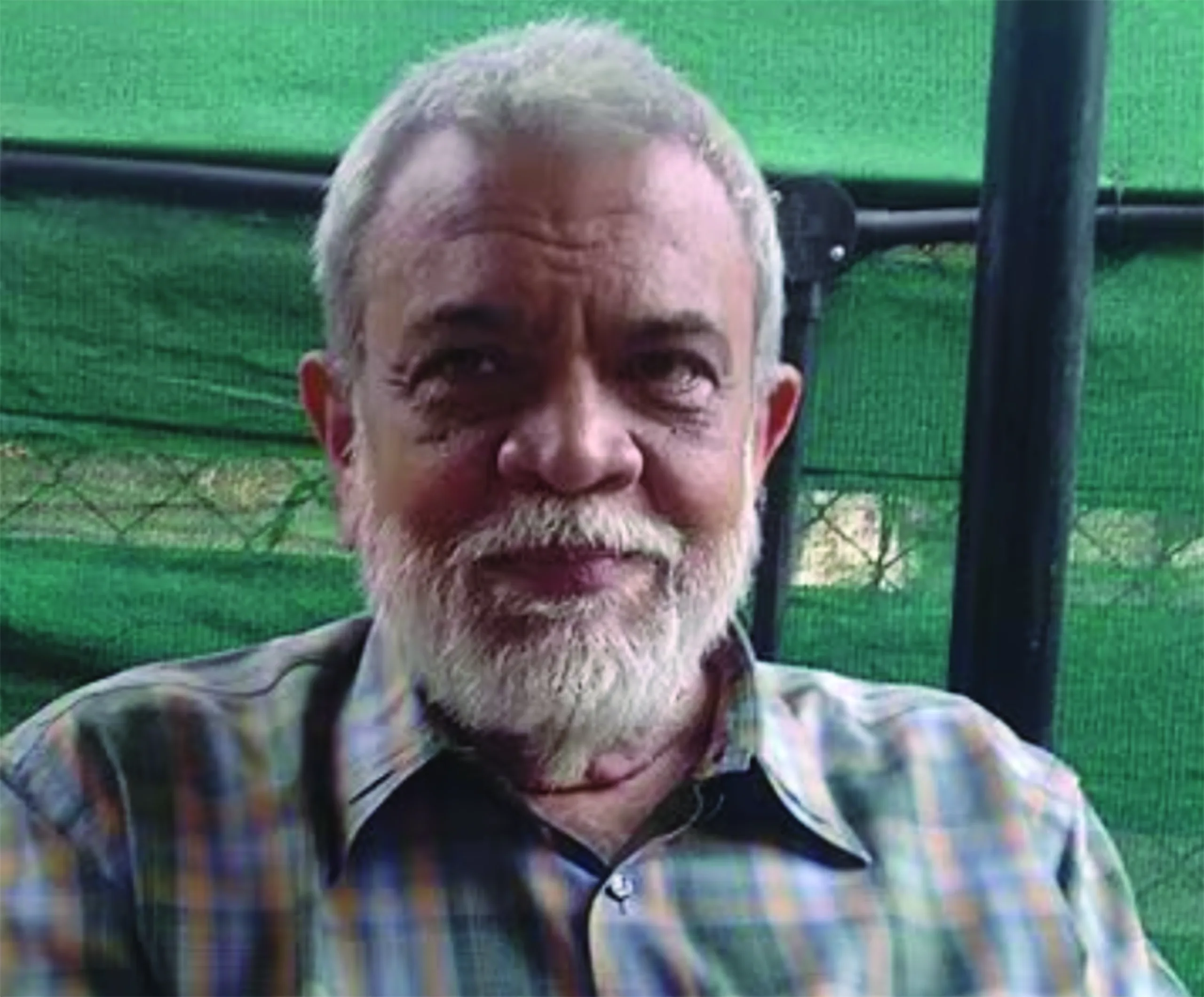
At the centre of the tradition of Maharashtra’s great rulers and warriors stands Chhatrapati Shivaji Maharaj, the eternal figure who transformed the destiny of his people. During the colonial period, a nationalist school of history writing took shape under stalwarts such as Sir R G Bhandarkar and Itihasacharya V K Rajwade. Their institutions—Bhandarkar Oriental Research Institute and Bharat Itihas Sanshodhak Mandal—nurtured a culture of rigorous research that still endures. Into this lineage was born Shri Gajanan Bhaskar Mehendale, who passed away at the age of 78 years on September 17, 2025. He belonged to that rare generation of historians who treated evidence as sacred, and whose scholarship will remain a touchstone for the study of Maratha history.
Fidelity to Sources
Mehendale was unmatched in his devotion to primary material. Whether it was Shiv Bharat, firmans from the Mughal, Adilshahi and Qutb Shahi courts, or European records from the Dutch, Portuguese and British, he examined them with meticulous care. His annotations often ran longer than the narrative itself, reflecting his precision and unwillingness to let any claim pass without scrutiny.
A story from the Bharat Itihas Sanshodhak Mandal in Pune illustrates his principle. When young researchers hesitated to read aloud a Persian record describing the brutal execution of Sambhaji Maharaj, Mehendale intervened firmly: “If the source says so, every word must be read.” It was not only a correction but a lesson in the historian’s foremost duty—to present the truth without dilution.
In recent times, efforts to recast Chhatrapati Shivaji Maharaj as a secularised figure gained ground. To answer these distortions, Mehendale produced a concise booklet shortly before his passing—Chhatrapati Shivaji Maharajanche Hindu, Musalman ani Christi Sevak. Citing original documents, he demonstrated that only a handful of Muslims, mostly inherited from Shahaji’s Adilshahi service, held positions under Shivaji, countering claims of widespread patronage.
Even in his later years, Mehendale embarked on a fresh inquiry: “Chhatrapati Shivaji Maharaj Jhale Naste, Tar?” (What if Shivaji Maharaj had not existed?). He began tracing Islamic rule in Bharat through a series of planned volumes, starting with Islamchi Olakh on the life of Prophet Muhammad, and intended to continue through the Delhi Sultanate, the Mughals, and the Deccan Sultanates up to Aurangzeb. His departure has left this ambitious project unfinished, though his disciples are preparing to continue the work.
The Enduring Legacy
The Bharat Itihas Sanshodhak Mandal has seen generations of nationalist historians—Rajwade, Vasudeo Shastri Khare, G H Khare, Potdar, Purandare and many others. Among this constellation, Gajanan Bhaskar Mehendale stands apart. He was more than a scholar—he was an institution, shaping countless young researchers who learned from his uncompromising standards. With his passing, Maharashtra has lost not only a great historian but also the custodian of a tradition that put truth above all else. His life remains a reminder that history, when pursued with integrity, is not merely the study of the past—it is the preservation of civilisational memory. May his noble soul attain sadgati.















Comments