





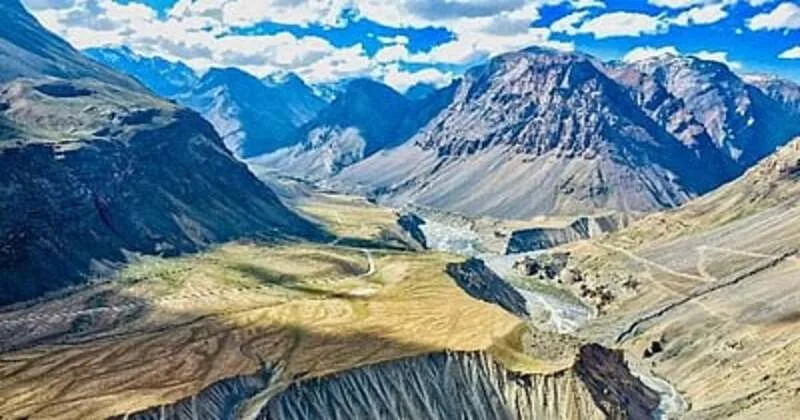
On September 27, 2025, the United Nations designated the Cold Desert Biosphere Reserve as part of its global network, bringing India’s total number of UNESCO Biosphere Reserves to 13.
This is India’s first high-altitude cold desert biosphere reserve and one of the coldest and driest ecosystems within UNESCO’s World Network of Biosphere Reserves. Covering 7,770 square kilometres at elevations ranging from 3,300 to 6,600 meters, the reserve includes Pin Valley National Park and its surrounding areas such as Chandratal, Sarchu, and Kibber Wildlife Sanctuary. The landscape is characterised by windswept plateaus, glacial valleys, alpine lakes, and harsh high-altitude deserts.
The Cold Desert Biosphere Reserve is home to 732 species of vascular plants, including 30 endemic and 157 near-endemic species of the Indian Himalayas. It also provides habitat for iconic wildlife such as the snow leopard, Himalayan ibex, blue sheep, Himalayan wolf, golden eagle, and Himalayan snowcock.
The trans-Himalayan region is home to approximately 12,000 people living in scattered villages who rely on pastoralism, yak and goat herding, small-scale farming, and traditional Tibetan medicine. Buddhist monastic traditions and local councils play a crucial role in managing the delicate alpine environment.
Tim Curtis, Director of UNESCO’s Regional Office for South Asia, stated, “The Cold Desert Biosphere Reserve exemplifies how fragile ecosystems can be preserved while supporting the livelihoods of local communities. This designation highlights India’s dedication to balancing conservation with sustainable development.”
This announcement also marks the 50th anniversary of UNESCO’s Man and the Biosphere programme, which promotes conservation, sustainable development, and research across 785 sites worldwide.
















Comments