





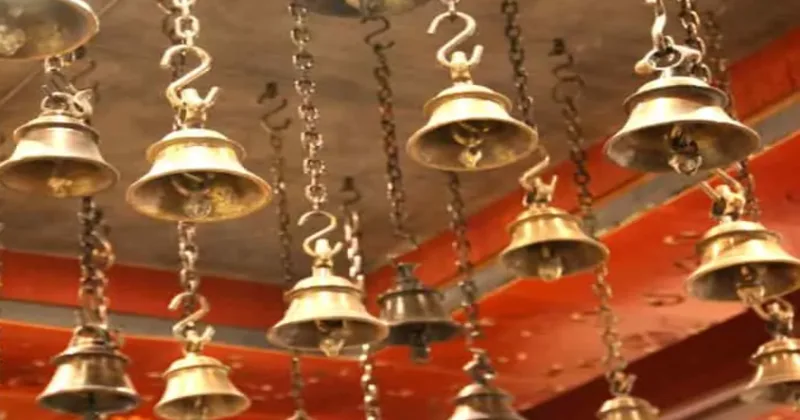
As Navratri 2025 celebrations are ongoing across the country, the air is filled not only with chants of “Jai Mata Di” and devotional songs but also with the resonant sound of bells, or ghantas, echoing through temples and homes. The ringing of these bells indicates the beginning of prayers and aartis, and may appear like a simple tradition, yet it carries profound layers of meaning: spiritual, cultural, and even scientific.
Navratri 2025, dedicated to worshipping the nine forms of Devi Ma, is a festival of devotion and discipline. Every ritual, from lighting the sacred lamp (deepak) to offering flowers, embodies symbolism. Among these, the ghanta holds a unique place, signifying the connection between humans and the divine. Far from being a mere ritualistic accessory, the bell transforms the worshipper’s state of mind, cleanses the environment, and enriches the spiritual experience of Navratri.
The importance of bells in Hindu worship is deeply embedded in scriptures like the Agamas, Tantras, and Puranas. According to these texts, ringing the bell while beginning a prayer is akin to inviting the Goddess into the sacred space. The sound serves as an announcement that worship is about to begin and that the place and the devotees are prepared for the divine presence.
During Navratri, when devotees dedicate themselves to intense prayers, ghantas are rung before chanting mantras, during aartis, and while offering bhog (sacred food). Priests explain that the bell represents a call to the divine, much like knocking at a door before entering. It is a way of saying: “Mother, we are ready to receive your blessings.”
The ghanta is not just about sound, it carries layered symbolism that enhances the depth of Navratri rituals. The sound of a temple bell is believed to echo the universal vibration of Aum, the primordial sound of creation. In this way, the ringing of the bell reminds devotees of the cosmic power of Durga Ma and their connection to the universe. Just as light dispels darkness, the sound of the bell is believed to drive away negative energies and distractions, purifying the environment and creating a sacred atmosphere for prayer. The act of ringing the bell also represents a transition from the material to the spiritual, guiding devotees into a meditative and prayerful state. For many, it signifies an act of surrender, leaving behind worldly concerns to focus entirely on devotion.
Interestingly, modern science provides support to what ancient traditions have long emphasised. Temple bells are generally made from a mix of metals such as copper, bronze, and brass, carefully crafted in specific proportions to produce a distinct frequency. When struck, the vibration of the bell lasts for about seven seconds, creating a continuous echo. This duration is significant as it is believed to stimulate the seven chakras of the human body, aligning the mind and body for meditation. The harmonic frequencies produced by the bell reduce stress, calm the nervous system, and sharpen focus, particularly useful during Navratri, when devotees fast and engage in extended hours of chanting and prayer.
The sound vibrations also help purify the surroundings, reducing unwanted noise and creating an atmosphere of harmony. This explains why the ringing of bells during aarti feels so uplifting, as it combines both spiritual reverence and scientific benefit.
The sound of bells also plays a vital cultural role in Navratri, acting as a thread of continuity across regions and generations. From grand temples in Varanasi and Kolkata to small household shrines in towns and villages, the practice of ringing bells remains universal. In villages, the sound of the ghanta in the evening often serves as a community call, signaling the start of collective aartis and devotional singing.
In cities, where life is fast-paced, households continue the tradition, with children often taking joy in ringing bells during prayers, thereby keeping the practice alive across generations. During large garba and dandiya gatherings, the synchronized ringing of bells during aartis creates a powerful spiritual ambiance, binding thousands of devotees together in shared rhythm and vibration.
Navratri 2025 is more than a festival of dance, music, and colors, it is also a period of fasting, meditation, and self-discipline. In this journey of devotion, the ghanta becomes an essential companion, helping devotees silence inner distractions and focus on the Goddess. Scholars describe each ring of the bell as a symbolic awakening of consciousness, a reminder to remain mindful and to channel thoughts toward spiritual growth. In this sense, the bell functions not only as a sacred object but also as a psychological tool that strengthens self-control and devotion.
As Navratri 2025 continues to be celebrated across the nation, the sound of bells remains inseparable from its rituals. It is a sound that transcends time, rooted in scriptures, enriched by symbolism, validated by science, and cherished by culture. Every chime of the ghanta is more than just a vibration in the air; it is a vibration in the heart and soul of devotees. It purifies, energizes, and uplifts, making it one of the most powerful instruments of worship. In Navratri rituals, the ghanta is more than an object, it serves as a bridge between the human and the divine, between the material and the spiritual, and between tradition and timelessness.














Comments