





The Goods and Services Tax (GST) Council, during its 56th meeting earlier this month, approved the next-generation tax reforms, clearing the path for GST 2.0 under the eight-year-old indirect tax regime.
The new structure replaces the complex multi-slab system with a simplified two-slab framework, 5 per cent and 18 per cent, along with a 40 per cent “demerit rate” reserved only for super luxury, sin, and demerit goods.
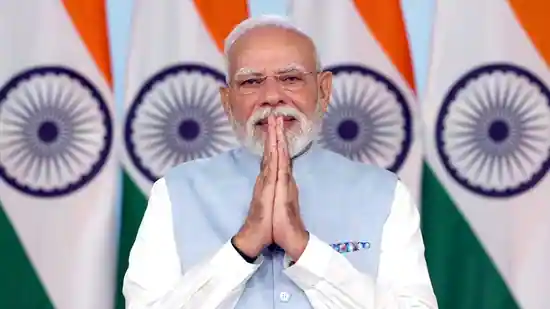
Prime Minister Modi, extending greetings on the eve of Navratri, said, “From sunrise tomorrow, India will see the implementation of next-gen reforms. From the first day of Navratri, the country is moving a step forward towards Atmanirbhar Bharat.”
Cheaper daily essentials will bring relief for households
In a major announcement, Modi highlighted that daily-use essentials would either be exempt from GST or taxed at just 5 per cent. This includes food products, medicines, soaps, and even health and life insurance.
“99 per cent of goods that previously had 18 per cent tax will now be taxed at 5 per cent,” he said, noting that this would directly reduce the burden on ordinary families.
Middle class to save over Rs 2.5 Lakh Crore annually
Modi stressed that the middle class and neo-middle class would be among the biggest beneficiaries of GST 2.0. He recalled that income up to Rs 12 lakh has already been made tax-free and said the combined impact of income tax relief and GST reductions would be transformative.
“Citizens will save more than Rs 2.5 lakh crore every year,” Modi said, adding that this effectively amounts to a “double bonanza” for poor and middle-class households.
Affordable travel and services: Tourism to benefit
The reforms also promise a boost to India’s tourism and service sectors. The Prime Minister said that hotel room rents across most categories had been reduced, making travel more affordable for domestic and international tourists.
“Travel will be cheaper, because room rent for maximum hotels has been reduced,” Modi remarked.
MSMEs and small businesses to gain strength
Modi underlined that micro, small and medium enterprises (MSMEs), which form the backbone of India’s economy, would see significant relief through reduced tax burdens and simplified compliance.
“MSMEs and small businesses will benefit a lot. Their business will get a boost, they will have to pay lesser taxes,” he said, adding that this would fortify the foundation of Viksit Bharat.
Push for ‘Made in India’ products
Renewing his call for self-reliance and global competitiveness, Modi urged people to purchase and promote Indian goods.
“Indian made goods were of superior quality. We have to gather that reputation back,” he said, calling upon shopkeepers to decorate their outlets with “Made in India” items.
He emphasised that Indian goods should not only dominate domestic markets but also meet and surpass global quality standards.
Call to States: Boost manufacturing under atmanirbhar abhiyan
In a direct appeal to state governments, Modi asked them to encourage local manufacturing and align their efforts with the broader vision of Atmanirbhar Bharat.
“I urge all state governments to boost manufacturing in their states under this Atmanirbhar Abhiyan,” the Prime Minister said.
Remembering the pre-GST era: From chaos to ‘One Nation, One Tax’
Reflecting on the period before GST’s introduction in 2017, Modi recalled the complex web of taxes, octroi, VAT, excise, and service tax, that once plagued traders and consumers.
“It was easier to send goods from Bengaluru to Europe than from Bengaluru to Hyderabad,” he said, pointing out how inter-state trade barriers had crippled efficiency.
He noted that GST became possible only after extensive consultations with states and stakeholders, culminating in the realisation of the dream of “One Nation, One Tax.”
Historic reform with people-centric benefits
As GST 2.0 comes into force tomorrow, Modi framed it as not just a tax reform but a step towards India’s economic self-reliance. With cheaper daily essentials, tax relief for the middle class, affordable travel, and stronger support for MSMEs, the rollout is expected to benefit households, businesses, and the broader economy alike.
“From tomorrow, we are not only implementing a new tax structure but also scripting a new chapter for Viksit Bharat,” the Prime Minister declared.













Comments