





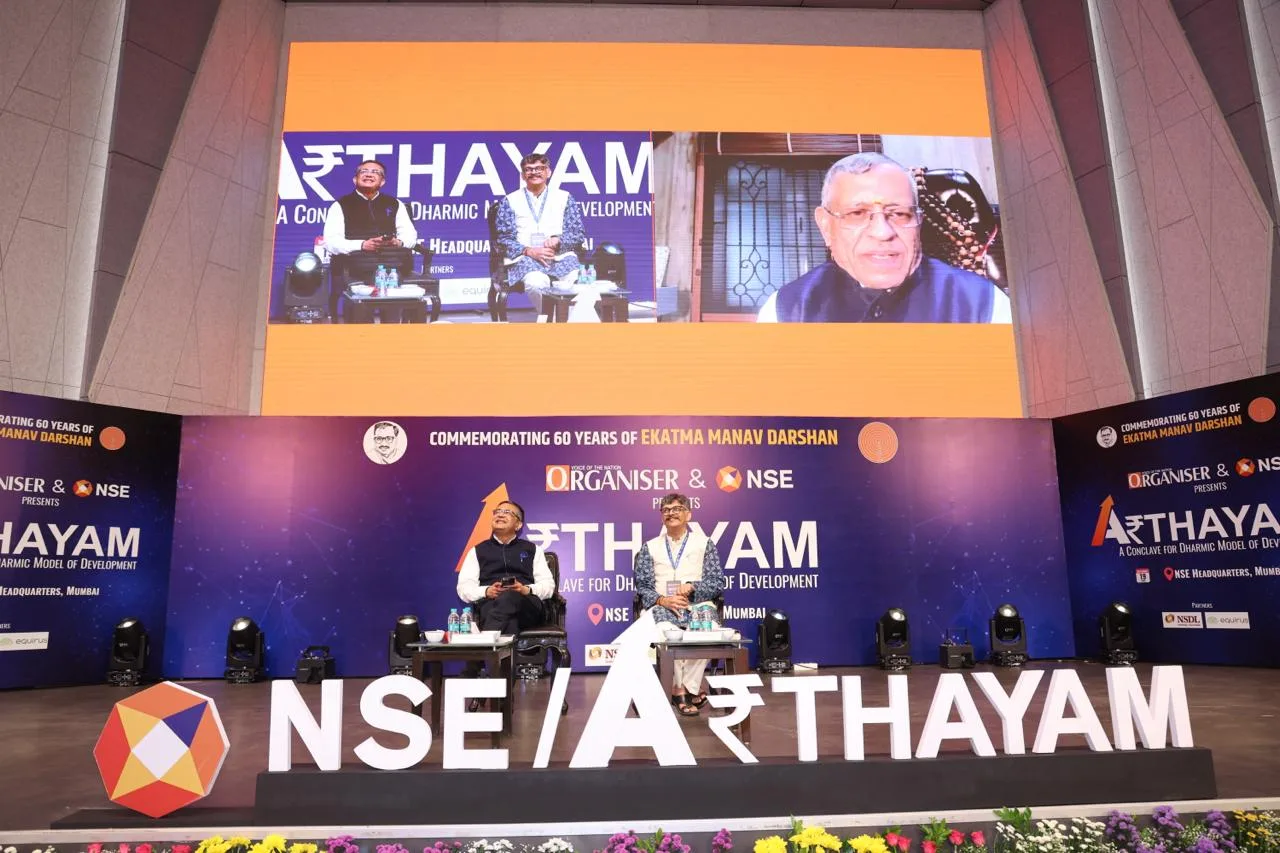
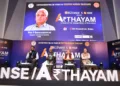
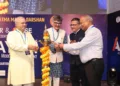
Organiser Weekly, in association with the National Stock Exchange (NSE), hosted “Arthayam: A Conclave for Dharmic Model of Development” in Mumbai on September 19, marking sixty years of Pandit Deendayal Upadhyaya Ji’s Ekatma Manav Darshan. The day-long event gathered policymakers, economists, and industry leaders to explore Ekatma Manav Darshan, which is sustainable, inclusive development model rooted in Dharma, nature, and culture, highlighting its relevance as Bharat rises as the world’s fourth-largest economy.
The second session of Arthayam carried forward the philosophical and economic churning around Integral Humanism, sixty years after Pandit Deendayal Upadhyaya first propounded it from this very city.
Themed “Ekatma Manav Darshan: Eternal Yet Contemporary”, the session brought together eminent thinkers, economists, and policymakers, reaffirming that Bharat’s march towards Viksit Bharat 2047 must be grounded in its civilisational ethos of Dharma, Swadeshi, and Aatmanirbharta.
“Deendayal ji was not arrested by the context”
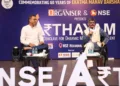
Addressing the audience, S. Gurumurthy Ji, noted economist and Editor of Thuglak, described Integral Humanism as “a subject of reverence for him born out of his involvement with the Swadeshi Jagran Manch and deep study of Indian society and civilisation.”
He reminded the audience that Western development models of the 17th, 18th, and 19th centuries were trapped in individualism. “Thinkers like Kant, Spencer, Mill, and Max Muller were all grappling with the collapse of relationship-based life that had been broken by Church and colonial power. For the West, the market replaced relationships. But Deendayal Ji conceived a framework that placed society, Dharma, and human relations at the centre,” he explained.
Drawing a parallel with Gandhiji’s writings in Hind Swaraj, Gurumurthy said, “Integral Humanism is not arrested by context. Colonialism ended, socialism faded, and capitalism dominates but will also pass. Deendayal Ji went beyond context to offer an eternal framework. His greatest contribution was to think beyond time-bound ideologies so future generations could inherit a vision not tethered to immediate circumstances.”
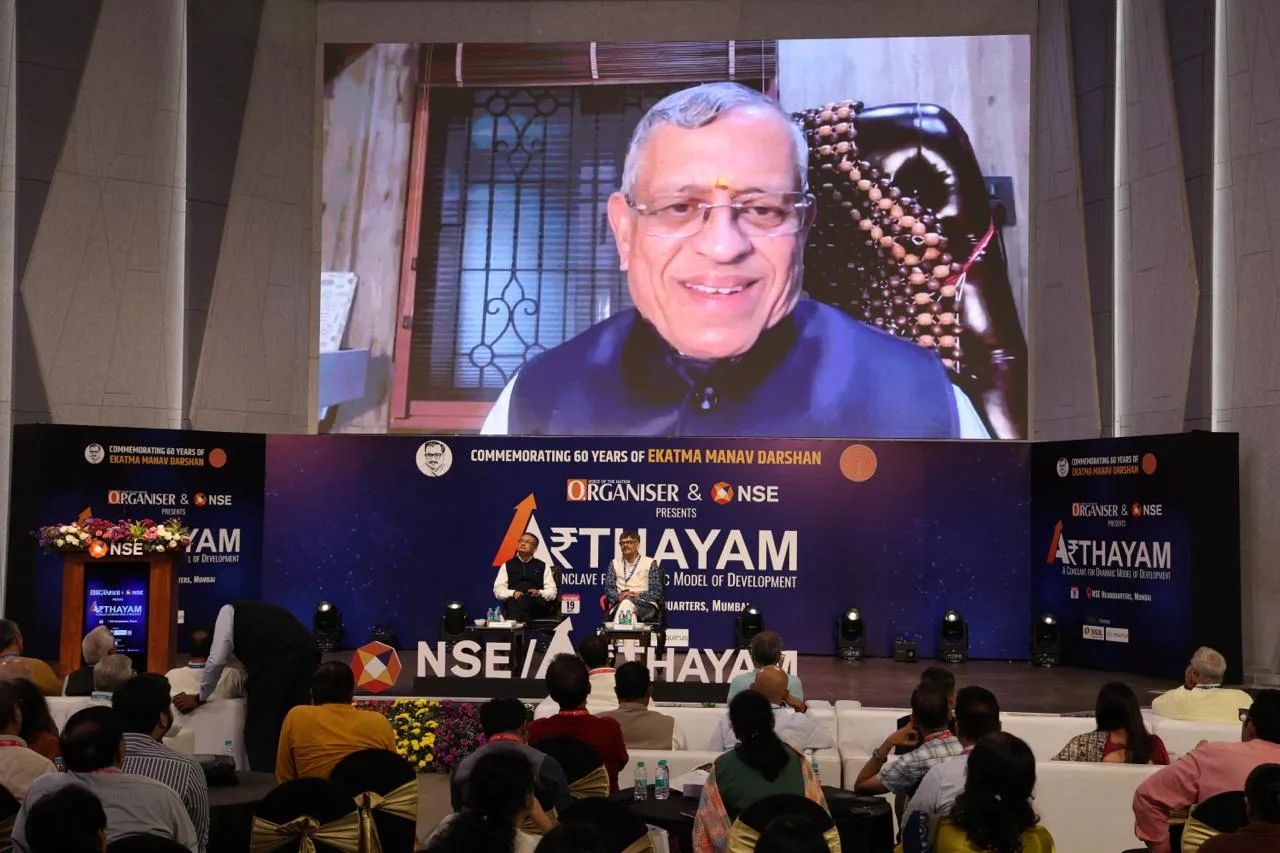
He described Dharma as the real social capital of Bharat: “Intellectual capital belongs to those with knowledge, financial capital to those with money. But social capital, which is built on shared values, is ignored because it cannot be monetised. Bharat thrives because its society is built on shared duties, this is Dharma. Deendayal Ji’s entire discourse integrated man, society, nature, and civilisation.”
Gurumurthy explained that Integral Humanism rests on the triad of Vyakti (individual), Samashti (collective), and Parmeshti (the cosmic whole). He laid out four critical ways in which Deendayal Ji’s thought continues to shape India:
Sustainability Rooted in Tradition: “We have only 2.4 percent of global land but support 18 percent of the world’s population. The secret lies in our Rishi-Krishi tradition. What may appear religious has been the foundation of our food security and civilisational resilience.”
Social Security Through Families: “Unlike the West, where elderly people often face isolation, Indian families live together, sharing space and food. This cultural instinct provides natural social security and embodies the spirit of Ekatma Manav Darshan.”
Civilisational Renewal: “The Ram Janmabhoomi movement was not about conquest but about reconnecting with a thousand years of civilisational discontinuity. It reasserted Dharma and unity.”
India’s Rise Against Global Powers: “US could not crush India because of our civilisational strength. Our rise today is the reinstitution of our values, proving that Integral Humanism is not just philosophy but lived practice.”
He concluded by stressing that Integral Humanism applies not only to human society but also to nature and ecology: “Everything belongs to one source of energy, Ishwar. One must take only as much as is necessary, leaving enough for others. This is the true Dharmic approach to economics and environment.”
“Trust is the foundation of Social Capital”
Bringing in the financial perspective, Ashish Chauhan Ji, MD & CEO of NSE, reflected on the resilience of Indian democracy and its markets in turbulent times. “Social capital is ultimately trust. The stock market works because people trust strangers with their money. This is nothing new to Bharat; we always had guilds, caste-based structures, and trading sanghas where people pooled resources and shared wealth. The modern stock exchange is a continuation of this ethos.”
Chauhan emphasised that India’s success is deeply tied to its youthful demographic: “The societies that grow are the ones with young populations. Japan and China are ageing; Europe and the US are also ageing. But for the next 50 years, India will remain young. That is why wealth creation in the future belongs to Bharat.”
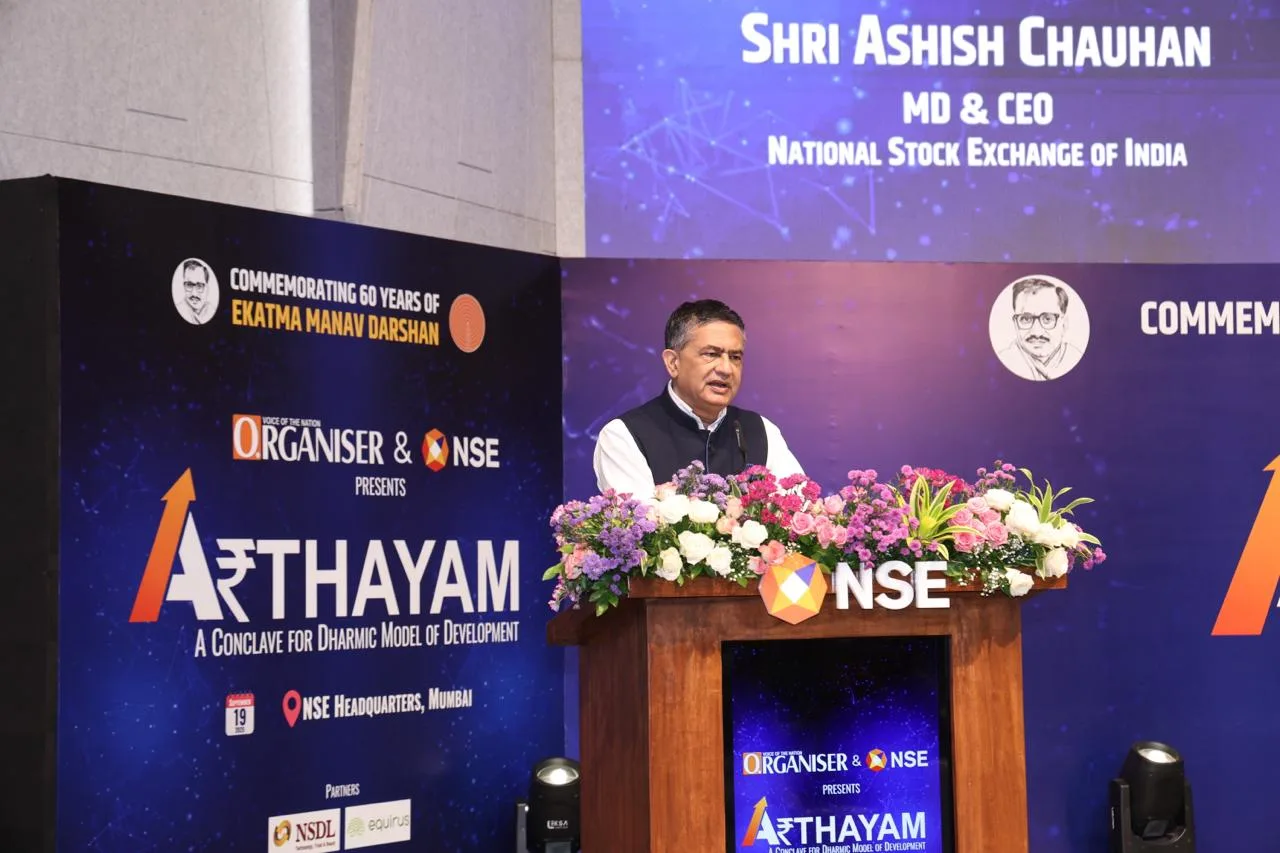
Highlighting the emergence of new technology-driven enterprises, he said, “This is new capitalism – capitalism without capital. Companies like Zomato, Swiggy, and Facebook prove that wealth can be created without traditional financial resources. NSE represents an Indian version of adopting Western technology but tailoring it to Indian needs.”
“Deendayal ji showed Bharat the right path”
Shri Mangal Prabhat Lodha Ji, Minister in the Maharashtra Government, underlined the civilisational wisdom of Deendayal Ji’s vision. “At a time when Bharat was swaying between capitalism and socialism, Deendayal Upadhyaya Ji showed us the right path. Others spoke of individual-centric models, but his was rooted in family and society.”
He said Deendayal Ji’s thought was intrinsically linked with Bharat’s golden age: “Bharat was once the golden bird. Our temples, gaushalas, and social institutions reflected collective prosperity. Krishi was not merely an economic model but the backbone of our civilisational GDP. Every household was productive. For Bharat to rise again, every citizen must be empowered through self-employment and meaningful work.”
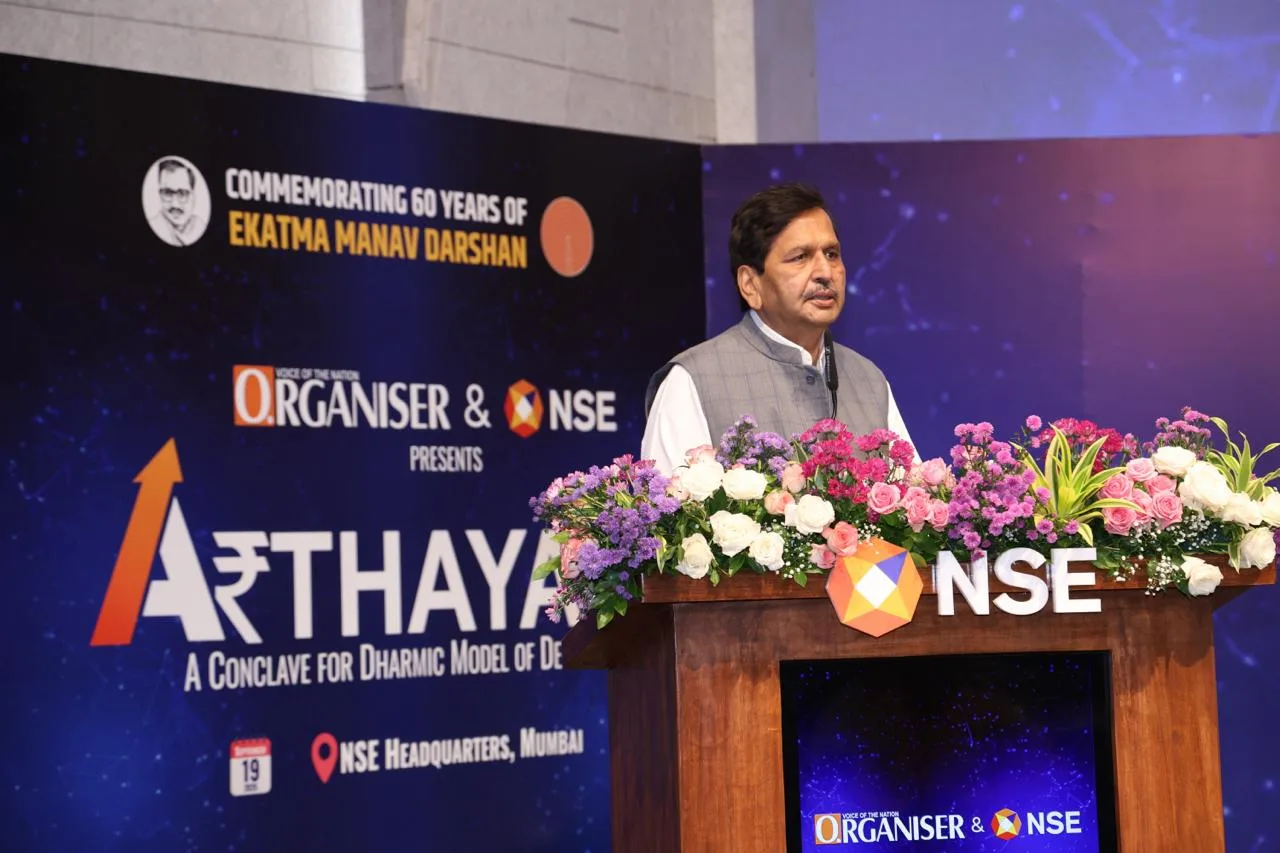
Linking this to the present celebration, Lodha said, “Today, as we mark 100 years of RSS and 60 years of Integral Humanism, we are in a position to speak confidently of a Dharmic model of development. ‘Hindu hit’ means ‘samaj hit’ it is about the welfare of society, not just one religion.”
Eternal humanism, contemporary relevance
The session reinforced that Ekatma Manav Darshan is not an antiquated philosophy but a living framework to address the crises of modernity, from ecological imbalance and social alienation to economic inequity.
Gurumurthy Ji’s civilisational insights, Chauhan Ji’s emphasis on trust and youthful demographics, and Lodha Ji’s reminder of Bharat’s golden traditions all converged to affirm that Integral Humanism offers Bharat a guiding light as it prepares to lead the world towards Viksit Bharat 2047.











Comments