





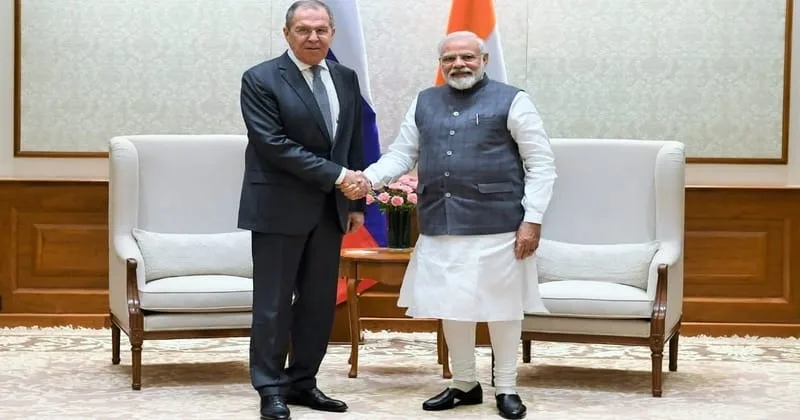
Russian Foreign Minister Sergei Lavrov has strongly criticised the United States’ decision to impose tariffs on India. Speaking on the show The Great Game on Russia’s main channel, Channel 1 TV, Lavrov asserted that India is not a nation that bow to ultimatums. He noted that the US has indicated it will stop purchasing Russian oil, a move that will compel countries to seek new markets and pay higher prices.
Lavrov emphasised, however, that such threats would not deter India. By pressuring these countries to cease buying Russian oil, he argued, the United States is inadvertently pushing them further away. “American pressure will force all countries to explore new energy markets and alternative sources. There are moral and political objections to this approach by the United States,” Lavrov said. He further underscored the long-standing civilisational histories of India, noting that attempts to coerce it with tariffs or ultimatums would not succeed.
The US recently imposed additional tariffs on India over its continued purchase of Russian oil, with President Donald Trump accusing India of financing the war in Ukraine through these transactions. Lavrov highlighted that India has publicly described the American action as unfair, unjustifiable, and irrational, pointing out that India’s decision is rooted in its national interest and energy security priorities.
While the Trump administration has yet to impose additional tariffs on China for similar purchases, Russia has previously indicated that attempts to damage relations with India would fail. The Russian Foreign Ministry welcomed India’s stance, emphasizing that relations between the two nations remain warm and are steadily growing.
The ministry noted that India’s commitment to maintaining cooperation with Russia, despite Western pressure, reflects the enduring spirit of friendship between the two countries. Bilateral cooperation spans strategic areas including civilian and defense sectors, human space programs, nuclear energy, and Indian investments in Russian oil exploration projects.
Additionally, India and Russia are collaborating on financial and infrastructure initiatives. Efforts are underway to expand the use of national currencies in trade, develop alternative payment systems, and create new transport and freight routes. These initiatives are long-term in nature, reflecting strategic planning rather than reactive responses to immediate international developments.
According to Lavrov and the Russian Foreign Ministry, these developments underscore the resilience and maturity of India-Russia relations. Despite pressures from the Western world, the two countries are continuing to strengthen multilateral cooperation in key sectors, and any attempt to disrupt this process, the ministry insisted, is destined to fail.
This stance demonstrates India’s determination to prioritize its national interests while maintaining long standing diplomatic and economic ties with Russia, signaling a clear message that external pressure will not dictate its strategic decisions.













Comments