





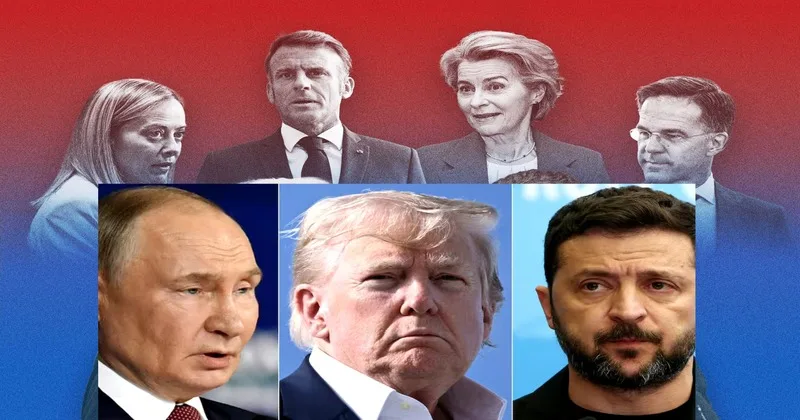
Despite mediation attempts by the US President Donald Trump, the war between Russia and Ukraine shows no sign of ending. Instead of pursuing a peace process, the United States and Europe have intensified their efforts to weaken Russia through economic measures. With this goal, Washington and its allies have opened a tariff war targeting India and China, while European countries have piled on additional sanctions. At the same time, Ukraine has escalated its military campaign against Russian facilities.
A Ukrainian drone strike was carried out against one of Russia’s largest oil processing plants. The target was the Kirishi oil refinery in the Leningrad region of northwest Russia, which subsequently caught fire. Both the Ukrainian military and Russian officials confirmed the incident.
The Kirishi refinery, which produces around 355,000 barrels of crude oil per day, is a vital part of Russia’s energy sector. Ukraine claimed responsibility, releasing footage of explosions and flames at the facility. Kyiv has repeatedly targeted oil refineries and related infrastructure, arguing that revenues from energy sales fuel Russia’s military operations.
Regional Governor Alexander Drozdenko reported that three drones had crashed in Kirishi, sparking the fire after debris fell. He said that no casualties had been reported and that the blaze was quickly brought under control. Still, the incident has raised international concerns over how Moscow might respond. Ukrainian drone flights have repeatedly violated the airspace of neighbouring countries, including NATO member Poland, further alarming the alliance.
Instead of retaliating with large-scale strikes, Russian President Vladimir Putin has adopted a probing strategy, sending drones across borders to test the readiness and response of his opponents. If Poland is directly hit, NATO will be obliged to intervene. This has pushed Poland closer to the brink of conflict than at any time since the Second World War.
Poland has announced that its military is fully prepared to face any provocation. Fighter jets were deployed to its borders, and a nearby airport was temporarily shut down as a precaution. Polish concerns were echoed by Ukrainian President Volodymyr Zelensky, British Defence Secretary John Healy, and US Ambassador to NATO Matthew Whitaker, all of whom accused Russia of playing dangerous games.
Within NATO, there are rising calls for a decisive political and military response to block “Putin’s manoeuvres”. The alliance is considering expanding its troop presence along the borders of member states, and reports suggest that Britain has already begun military preparations. This escalation highlights NATO’s willingness to increase confrontation rather than push for peace.
Trump’s Tariff Push Drags the World into Economic Warfare
Meanwhile, Trump has expressed frustration at the failure of his efforts to mediate. He warned that his patience with Putin was wearing thin and signalled a readiness to impose tougher sanctions. As part of a wider economic offensive, he is seeking higher tariffs on Russian oil exports that pass through India and China. Trump has urged both the European Union and the G7 to impose tariffs ranging from 50 to 100 per cent on imports by India and China, extending even to NATO states. His call reflects a push to drag non-Western economies into the Western strategy of strangling Russia financially.
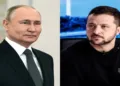
Trump has openly admitted his anger that his attempts at securing a ceasefire have been undermined by the refusal of both sides to engage in talks. Putin has stated that he will not meet Zelensky, while Trump claimed in a television interview that “when Putin is ready, Zelensky will break, when Zelensky is ready, Putin will break, and we have to deal with this very strongly.” Instead of encouraging compromise, Washington continues to escalate the economic war, while European capitals follow suit.
Adding to the pressure, Trump has also criticised NATO countries that continue to purchase Russian oil, demanding that they halt imports immediately. He warned that if NATO was serious, it must also prepare for heavier sanctions. In parallel, the European Union is considering fresh sanctions packages targeting Russian energy and finance.
Japan, too, has joined this economic confrontation by lowering the price cap on Russian oil to $47.60 per barrel. Tokyo has signalled that it may penalise countries buying Russian oil above that price, a move that would extend the sanctions regime far beyond the Western bloc.
These combined steps reveal the broader strategy that aims to deprive Russia of oil revenues and thereby weaken its war effort. However, rather than pushing towards peace, the West is prolonging the conflict by turning it into an economic war that punishes not only Russia but also countries like India. Far from ending the fighting, the combination of sanctions, tariffs, and military posturing risks further destabilising the global order, leaving Ukraine, Russia, and their neighbours caught in the crossfire of a widening confrontation.











Comments