





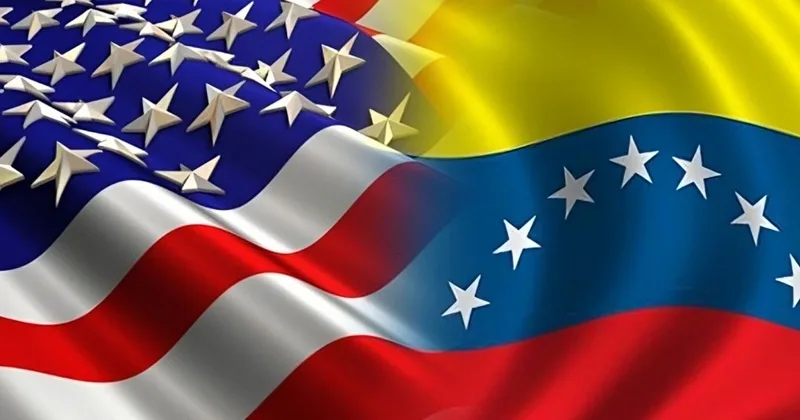
The Latin region, perhaps after the Los Angeles Summit, seems to be turning towards aggressive multi-polar strategies, challenging the US’s traditional sphere of influence. The 2022 event perhaps gave the first strong signal of Latin America’s shift toward regional autonomy. The renewed tensions with Venezuela and the escalation of the situation in the region raise two key questions: Is the US still operating under Cold War thinking to maintain its influence in Latin America? Second: Is it willing to risk everything for its influence in the region by dragging Venezuela?
The US’s Cold War Thinking and Latin America
The US’s strategic thinking towards Latin America is influenced by Cold War perspectives—initially viewing it as a natural sphere of influence, reminiscent of the Monroe Doctrine, and secondly adopting a zero-sum approach by analysing governments through ideological lenses and pressuring them to align with US interests—an inherent ‘Either with us or against us’ mindset. This Cold War mindset led to non-kinetic means of engagement with Latin American countries, such as sanctions and other coercive measures. While these non-kinetic actions were successful in the past, the same strategy now produces counterproductive results as Latin America experiences a mixed right-left shift in domestic politics, both aggressively advocating against US hegemony in the region and pushing for diversification. This has resulted in a sharp increase in regional autonomy, the development of alternative institutions such as the creation of US-free regional organisations (CELAC, ALBA), and reduced participation in US-dominated forums (OAS). Economically, there is a rapid expansion of trade relationships with China, the development of non-dollar payment systems, and the growth of regional development banks and financial institutions.
The situation in Mexico shows subtle signs of moving away from US influence by developing a non-interventionist doctrine, similar to Brazil’s aspiration to be a regional leader in Latin America and to participate in BRICS. Meanwhile, Argentina and Colombia are growing pragmatically, scrutinising US influence.
Venezuela in Flashpoint
Venezuela experienced a unique rise in Latin America and was perhaps the most vocal advocate of anti-US sentiment and regional autonomy. It was distinct in steering the region away from US influence because of its vast oil reserves, which provided financial independence from US markets—unlike other Latin American countries—a resource used to build an alternative economic network. One of its most significant advantages was the ability to withstand US sanctions. Besides building resilience, Venezuela developed a strong ideological framework to challenge US hegemony in the region. During Chavez’s era, the ideological and intellectual challenge to US influence in its backyard became visible, something other Latin American countries hesitated to openly express. Hugo Rafael Chávez, Venezuela’s former President who ruled for nearly fourteen years, explicitly framed the “Bolivarian Revolution” as anti-imperialist and used Venezuela’s oil wealth to fund regional alternatives to US influence. He aimed to export an ideological movement beyond Venezuela’s borders, positioning himself as a global leader of anti-US sentiment. He further expanded the geopolitical challenge for the US by providing cheap oil to adversaries like Cuba, supporting left-wing movements across Latin America, and attempting to establish and strengthen alternative institutions parallel to US-dominated ones, such as the Bank of the South, offering an alternative to US-controlled financial institutions.
Venezuela became a systemic challenge when Chavez invited adversarial powers Russia and China into the US-dominated hemisphere. All these reasons were enough to make Venezuela a clear threat to US strategic interests.
US’s Strategy Against Venezuela
After realising that Venezuela is a systemic rather than an episodic threat to US strategic interests, it began to explore all possible kinetic and non-kinetic means to engage and counter Venezuela’s anti-US regime. Non-kinetic approaches included diplomatic pressure through sanctions, notably in 2015, and exploring regime change strategies in Venezuela. However, none of these efforts successfully brought the regime to the negotiating table and instead proved counterproductive, as they strengthened anti-US sentiments in the region. The renewed tensions that have pushed both countries to the brink of direct conflict raise the question: Is the White House willing to risk everything to topple Nicolás Maduro’s regime?
The Intelligence factor and risks
The CIA, during the Bush administration in 2002, observed “Conditions Ripening for a Coup Attempt.” This shows the CIA was tracking coup plotting and the volatility of mass mobilisation and military loyalties. The Threat Assessment of the Directorate of National Intelligence notes that the Maduro government’s security apparatus, external backing (Cuba/Russia), fragmented opposition, and high repression—factors that imply high risk and low odds for quick regime change. A brewing coup plan(Operation Gideon) during the first Trump Administration did not get traction and support from the US’s security agencies. A cautious intelligence approach is applied to Venezuela, likely due to three key reasons: the lack of street-level intelligence and the operational risks involved. Second- Counter Intelligence challenge- Sabotage and exposure risks remain high.
As there is an extensive Cuban intelligence presence, it creates significant counterintelligence challenges for the US Intelligence agencies. Three factors— weak and fragmented opposition, a loyal military, and a lack of support— are deterring the US from pursuing a regime change strategy. Even establishing a guerrilla warfare scenario appears difficult, as they fear another Bay of Pigs or Vietnam trauma, due to numerous intelligence blind spots and an unclear picture of the ground realities.
The Narco War and Opportunity
The US has waged war on drug cartels, and the second Trump administration has given free rein to the CIA to aggressively engage in the war on drugs. Many drug cartels have been designated as foreign terrorist organisations due to an extensive ongoing covert campaign against various drug cartels in Latin America. Interestingly, the US has found an opportunity to stage a strategic coup against Venezuela under the guise of the war on drugs. The US has deployed naval vessels near Venezuela and further escalated tensions by carrying out air strikes on a boat in the Caribbean Sea, which the White House says killed 11 drug traffickers. Some reports suggest that the US is planning to intensify strikes on drug cartels through air strikes, and if true, the US may have a small window for regime change through a limited special operation if it is willing to accept significant risks.
The Opportunity for US
There is an opportunity for the US to topple the regime, similar to what it did in Operation Just Cause in Panama, where the US provided legal justification to remove the Noriega regime in Panama by noting that “Protection of US citizens and counter-narcotics operations,” but alongside discussing the removal of the Noriega regime during a National Security Council meeting which was later declassified. The US’s Plan Colombia to fight drug cartels and left-wing insurgent groups in the Latin American region began under the Bush administration, which also gave the US significant room to achieve broader political and strategic objectives under counter-narcotics operations.
There is room for the US to repeat history and possibly set a credible example in safeguarding its influence through global policing strategies, but it must recognise that this time, the risks are too high to ignore.













Comments