





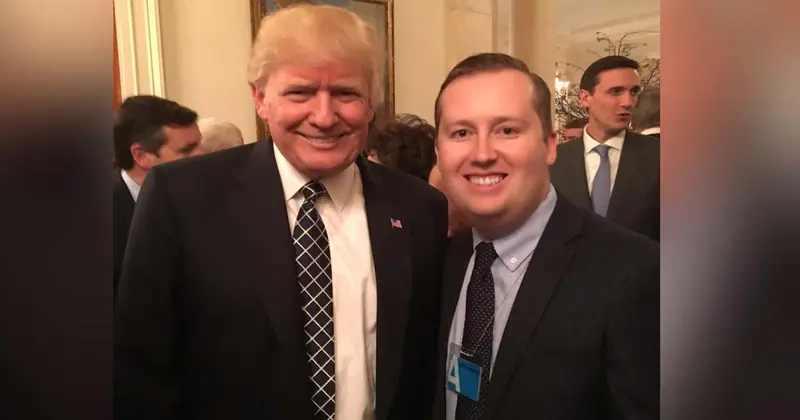
While speaking at the confirmation hearing in the US Senate Committee of Foreign Relations on September 11th, Donald Trump’s nominee as US Ambassador to India, Sergio Gor said that President Trump might travel to India for the Quad Leaders’ Summit later this year. “The President is fully committed to meeting leaders of Quad. There have already been talks on a trip for the next Quad meeting”, reiterated Mr. Sergio Gor. However, he added that the exact date of the visit to India cannot be said as of now.
Quad grouping comprises India, United States, Australia and Japan, who are the key players of the Indo-Pacific region. India being the current chair of the Quad, is set to host the Summit in the month of November. When PM Modi and President Trump held a telephonic conversation on June 17, PM Modi had extended an invitation to Trump to attend the Quad summit in India and the US President had accepted the invitation as well.
However, it was anticipated that it would be difficult or almost impossible to hold the Quad summit in India later this year, in the backdrop of the latest tariff tensions escalated by the US President Donald Trump and as there has been a strain in the India-US bilateral relations.
The latest statement from Sergio Gor has reignited the hope of the Quad summit and it is also said that PM Modi and President Trump might soon hold a phone conversation to discuss on the scheduling of the Quad summit. Meanwhile, Mr. Sergio Gor has also acknowledged the utmost importance of the Quad grouping for the USA.
President Trump & PM Modi share ‘incredible relationship’: Sergio Gor
During the confirmation hearing in the US Senate Committee on Foreign Relations, Mr. Sergio Gor, also highlighted the nature of the relations, shared between PM Modi and President Trump. He quoted it as an “incredible relationship”. He exclaimed that Trump’s approach to Modi is ‘very unique’ unlike with other world leaders and despite trade tensions, Trump has praised Modi, which is a drift from the Trump’s conventional style of dealing with the world.
“When he(Trump) has been critical of India, he has gone out of his way to compliment Prime Minister Modi. They have an incredible relationship. I’ve been with them in the same room”, said Mr. Gor. He also said that India and the US are “not that far apart” from reaching a trade deal. Earlier, Commerce and Industry Minister Piyush Goyal had also expressed his confidence and optimism in reaching a deal with the US in the coming months, while not compromising on the interests of Indian farmers, MSMEs and other export vulnerable sectors.
U-turn by the US comes amidst the strategic firmness of India
In the previous week, the global power paradigm, has seen a drastic and sudden U-turn by the United States with respect to its relations with India. After a phase of intense and irrational accusations on India by the President Trump and his cabinet Advisories such as Peter Navarro for purchasing the Russian oil, for India imposing high tariffs on the US and towards PM Modi’s interactions in the Tianjin SCO Summit, suddenly Trump took a U-turn.
In the latest posts on his Truth Social Platform, President Trump has expressed that the United States and India are continuing the trade negotiations to resolve the trade barriers and both nations will soon ink a deal for the benefit of both the “great countries”. Trump also said that he is looking forward to speak with his “very good friend” PM Modi in the upcoming weeks. And now, US Ambassador to India nominee Sergio Gor has further sought to reverse the rhetoric and has asserted on rendering utmost priority for recalibrating the India-US relations.
This sudden shifts in the US’s moves across the geopolitical chessboard comes as an impact of the strategic firmness, bold diplomatic moves and unequivocal geopolitical maturity exhibited by New Delhi instead of immature or short-sighted retaliation.
India instead of throwing retaliatory tariffs on the USA and further escalating the trade tensions that would be futile for both the nations, it chose to continue to indulge in the trade negotiations with its US counterparts. At the same time India was vigilant of its national security priorities and didn’t bow down in the negotiation table for the US pressure that was against the economic security of India. New Delhi also chose not to react for every tantrum and irresponsible statements of the US administrators. Instead, New Delhi chose to make bold diplomatic moves and send strong strategic messaging regarding the strategic autonomy of India as witnessed on the sidelines of the SCO Summit in Tianjin.
This strategic firmness of India coupled with the strategic patience, intention to not compromise on its national security or its way of conducting foreign policy, might have evoked a strategic alarm and realization in Washington DC about the diplomatic capabilities of India and also about the vitality of India for the US in its Indo-Pacific policy, thus leading to a shift of rhetoric from the Trump administration.










Comments