





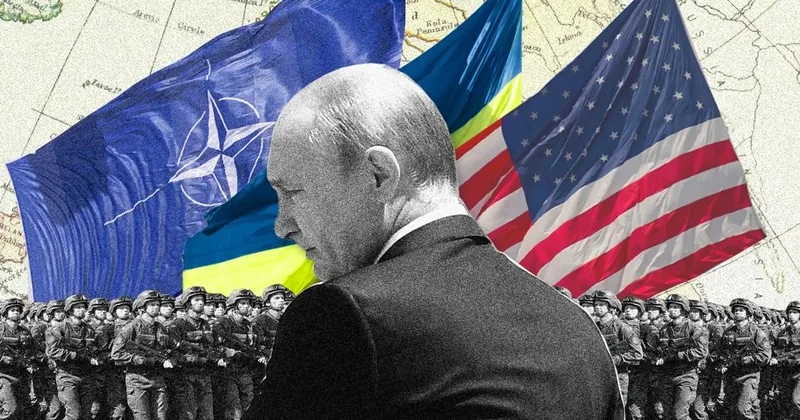
European nations have stepped up criticism of President Vladimir Putin for blocking a ceasefire with Ukraine, warning that Moscow’s latest moves will trigger tougher sanctions. The European Union is preparing to impose additional restrictions on Russia, while US President Donald Trump has urged Brussels to go further by introducing 100% import duties on India and China to choke off what he described as funding streams for Putin’s war. At the same time, Russian drone activity is heightening tensions across the region, with attacks reportedly bypassing NATO defenses and rattling Poland.
Warsaw has accused drones launched from Belarus, one of Russia’s closest allies, of violating Polish airspace. Moscow, however, dismissed the charges as baseless and insisted it has no interest in sparking conflict with Poland. Given Poland’s NATO membership, the allegations have taken on a sharper edge. British Defense Secretary John Healey and US Ambassador to NATO Matthew Whitaker both warned that any Russian breach of NATO territory would invite a firm military response. The Netherlands, along with the so-called E5 countries, France, Germany, the UK, Italy and Poland, issued a joint statement condemning Putin’s actions. They argued that far from weakening NATO, Russia’s provocations would strengthen the alliance and accelerate further sanctions.
President Trump reacted swiftly to reports that NATO allies had downed several Russian drones. Posting on his Truth Social platform, he questioned the meaning of Russia’s alleged violations of Polish airspace. In Warsaw, Prime Minister Donald Tusk stated that Polish forces had tracked 19 separate incursions by Russian drones and had shot down at least three overnight. He warned that this provocation represented the most dangerous escalation in Europe since World War II. “From Poland’s perspective, this is without doubt more threatening than any previous provocation,” he said.
Russia has firmly denied launching drones into Poland, with the Defense Ministry branding the accusations a fabrication aimed at inflaming the war in Ukraine. Officials in Moscow reiterated that they have no plans to target Poland and even signaled readiness to hold talks with Warsaw. Kremlin spokesman Dmitry Peskov declined detailed comment, saying only that Russia did not wish to add to the controversy.
Ukrainian President Volodymyr Zelensky dismissed Moscow’s denials, arguing that the drone incidents were no accident but part of a broader effort to intimidate NATO and destabilize Europe. He condemned the violations as a “dangerous example” and highlighted damage to a house and a car in Poland, describing the strikes as an attempt to humiliate Warsaw. Zelensky urged NATO to deliver a strong response. Polish Foreign Minister Radoslaw Sikorski echoed that view, saying previous drone incursions had already demonstrated Russia’s disregard for Polish sovereignty. This latest episode, he argued, was of a different magnitude.
The Polish Interior Ministry reported that seven drones had been intercepted or recovered, along with fragments of an unidentified object found in multiple locations. Authorities suggested that the remains confirmed the scale of the violation. Across Europe, leaders added their voices to the condemnation. British Prime Minister Keir Starmer said the attack underscored Russia’s contempt for international norms and reinforced the need for solidarity with NATO allies.
While Russia continues to insist it is being falsely accused, the repeated drone sightings over Poland have deepened the sense of crisis across Europe. With sanctions mounting and NATO allies vowing retaliation, the confrontation between Moscow and the West appears closer than at any time in recent decades, raising fears of a slide toward a wider conflict.










Comments