A small digital receiver system, about the size of a credit card, may soon provide a new glimpse into the Universe earliest days. The innovation spearheaded by Indian scientists might enable us to decipher the secrets of the Cosmic Dawn, the period when the first stars first began to shine, determining the fate of the cosmos.
The Cosmic Dawn is the time when the first galaxies and stars were formed, forever changing the course of the Universe. The era is believed to hold the key to understand how the current Universe was formed. However, till date very little is known about it, because the signal from that era is very weak and covered by cosmic and terrestrial interference.
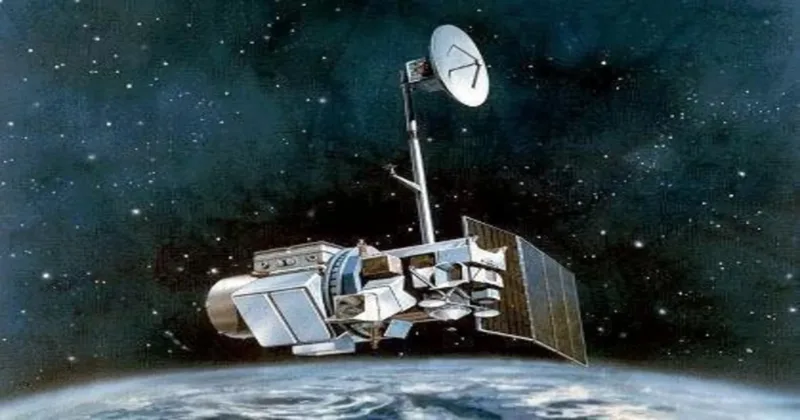
In order to reveal these secrets, a space payload, PRATUSH (Probing ReionizATion of the Universe using Signal from Hydrogen), has been proposed. Developed by a group of the scientists at the Raman Research Institute (RRI) an autonomous institution supported by the Department of Science and Technology (DST), Government of India. PRATUSH is a first-of-its-kind radiometer mission that will be sent to lunar orbit. Its mission is to provide answers about how the first stars were created and how they reconfigured the universe.
Why a Tiny Computer Is Significant in Space
What’s impressive about PRATUSH, is that it is based on a small single-board computer (SBC), roughly the size of a credit card. Such a tiny yet potent system demonstrates how accurate radio measurements can be made with minimalist hardware. The SBC functions as the master controller of the radiometer, coordinating its antenna, analog receiver and a custom processor called the Field Programmable Gate Array (FPGA).
Firstly, the antenna picks up weak cosmic radio signals. Then the analog receiver enhances these signals, once signal is received the digital receiver digitizes them. Finally, the FPGA interprets the data, extracting weak patterns that signify brightness variation in the sky at various frequencies. All of this is managed by the SBC, which not only captures and stores the data but also carries out calibrations, provides system health and performs initial processing. For the last space mission, the commercial Raspberry Pi can be replaced with a space-qualified version to withstand the harsh environment of the moon.
As Girish B. S., Research Scientist E, Electronics Engineering Group, RRI expalined, “SBCs, being compact forms of desktop or laptop computers, provide an attractive compromise between size, performance and efficiency to process the data produced by FPGAs using software commands.”
Overcoming the Challenge of Noise
The detection of the weak radio signal emitted from hydrogen atoms (21-cm signal), carrying the imprint of the Cosmic Dawn is similar to listening to a whisper in a noisy stadium. On Earth, this subtle signal is buried in deep space by interference produced by sources like FM broadcasts, cellular networks and the ionosphere. This is why PRATUSH is conceptualized for the lunar far side mission, which is the inner Solar System’s quietest location, protected from the radio noise of the Earth. There it stays undistorted and the instrument can listen for the earliest whispers of the Universe.
Laboratory model tests have already proved it as highly effective. Collecting 352 hours of data on a reference signal, the team was able to minimize receiver noise to millikelvins which is extremely low levels, showcasing the sensitivity of the system. With newer software enhancements and upcoming space-grade equipment, PRATUSH is poised for even better performance and reliability. Conventional space payloads tend to require large, power-intensive systems. PRATUSH minimizes size, weight and power (SWaP) through the strategic utilization of a small SBC. The technology is not merely small in nature but it’s about getting science more affordable and feasible.
Srivani K. S., Research Scientist E, Electronics Engineering Group at Raman Research Institute, explains, “The SBC is a very important part of the digital receiver system for PRATUSH, having been chosen with utmost care to be both the master controller and data recorder.
Saurabh Singh and Mayuri S. Rao, Associate Professors at Dept. of Astronomy & Astrophysics, RRI, pointed the larger significance: “Technologies like the SBC-based digital receiver will be an integral part of payloads to detect the signal of the Cosmic Dawn from one of the quietest corners of the solar system.”
Significance for India and the Global Community
This work is significant on various aspects for India and World:
The detection of the Cosmic Dawn signal would confirm the formation of the first stars, their impact on the intergalactic medium and whether new physics would be needed to interpret the observations. These results would provide answers to some of the largest open questions in cosmology.
For India: PRATUSH represents India’s rising prowess in space technology and science. By constructing small, low-budget, high-capability payloads, Indian scientists proved that accurate findings are possible without huge budgets. This is India’s overall space mission philosophy of doing more with less budgets. Utilization of SBCs in space missions may motivate equivalents across the globe. Low-power, miniaturized systems might be used not only in astronomy but also in Earth observation, satellite communication, and exploration of deep space.
For Global Collaboration: As the Cosmic Dawn is a cosmopolitan event, research from PRATUSH would be beneficial to researchers globally. Information from such missions can promote global cooperation and provide new research in astrophysics studies.
PRATUSH may be a pioneer for forthcoming missions aimed at capturing tiny cosmological signals. Outside astrophysics, technology such as SBC-based systems might extend to planetary exploration, mini satellites and even the next lunar and Martian missions. At the end of the day, PRATUSH is not merely about observing the early Universe. It is about demonstrating how creativity and simplicity can propel the advancement of science and technology. Through the audacity to listen for the faintest aspects of what happened nearly billion years ago, Indian researchers can help humankind solve some of its most ancient puzzles: When did the first stars shine, and how did they influence everything else?
The quest to the Cosmic Dawn may be on the shoulders of a small single-board computer, conducting one of the most elaborate scientific endeavours ever imagined. With PRATUSH, India is not just expanding the boundaries of astrophysics but also showing the world how intelligent and clever innovation can shed light on the deepest secrets of the Universe. The first stars might have twinkled across the space billions of years ago, but their reverberations will be heard shortly thanks to a humble but mighty bit of technology leading the charge from lunar orbit.