





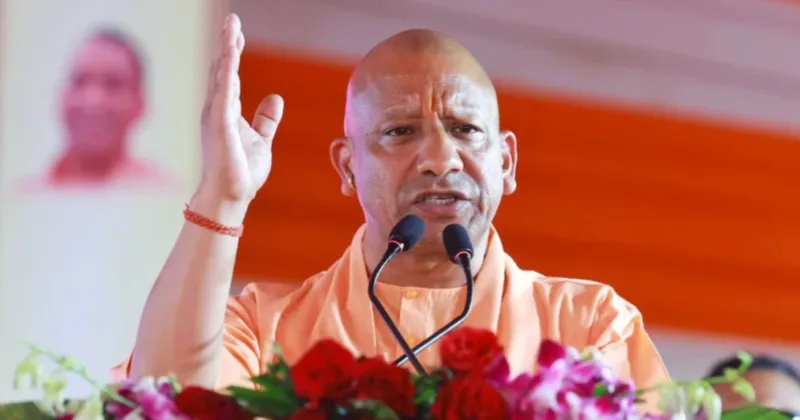
Yogi Adityanath-led Uttar Pradesh government has announced its preparations to introduce the ‘Ease of Doing Business Bill, 2025’. Under this proposed legislation, the state will abolish nearly 99 per cent of criminal provisions from 13 state laws, replacing imprisonment with monetary fines and administrative measures. With this initiative, Uttar Pradesh is ready to become the first state in India to implement such sweeping changes in its legal framework for industries, paving the way for a more business-friendly environment while ensuring fair compliance.
A Historic Step for Business Reforms
Chief Minister Yogi Adityanath chaired a high-level meeting on August 28, where he focused on the need to align Uttar Pradesh’s industrial growth with Prime Minister Narendra Modi’s vision of ‘Reform, Perform, Transform’. He emphasized that reducing unnecessary punitive provisions in laws is vital to attract investments, encourage entrepreneurship, and generate employment.
The proposed bill will amend laws including the Excise Act, Molasses Act, Tree Protection Act, Revenue Code, Sugarcane Act, Groundwater Act, Municipal Corporation Act, Plastic Waste Act, Cinema Act, and Panchayat Acts. These laws earlier contained provisions for imprisonment for non-compliance. Once the bill is passed, such punishments will largely be replaced with financial penalties, warnings, or corrective administrative actions.
“Unnecessary penal provisions create hurdles for industries and discourage investment. It is time to establish a transparent and just system where compliance is encouraged rather than criminalized,” the Chief Minister said during the meeting.
According to officials, the draft bill has already been circulated among 14 concerned departments, seeking their views and recommendations. Most departments have expressed agreement with the proposed changes, while a few raised objections. The Chief Minister directed that these objections should be carefully considered, ensuring that the final legislation strikes a balance between industrial growth and protection of worker rights.
Alongside industrial reforms, the Yogi government is also working on simplification of labour laws. The proposals under consideration include:
- Extending the duration of factory licenses to reduce renewal hassles for entrepreneurs.
- Simplifying rules for shops and commercial establishments, making it easier for small businesses to operate.
- Creating more job opportunities for women by amending restrictive clauses.
Introducing self-certification and third-party audit systems to make the inspection process more transparent and less arbitrary.
“Industries often complain about the heavy burden of compliance. By simplifying rules and introducing third-party audits, we are ensuring a business environment where industries can focus on growth while the rights and welfare of workers remain protected,” CM Yogi said.
Digital Push: ‘Nivesh Mitra 3.0’ on the Horizon
To complement legal reforms, the state government is set to launch ‘Nivesh Mitra 3.0’, an upgraded digital single-window system for investors. The new platform will be fully digital, transparent, and investor-friendly, offering:
- Common Application Form for multiple clearances
- PAN-based identification for hassle-free registrations
- Smart dashboards for real-time updates
- Multilingual support to assist domestic as well as global investors
- An AI-enabled chatbot to address queries and provide guidance
The Chief Minister instructed that the portal should guarantee timely delivery of services along with quick redressal of investor issues. He further stated that Nivesh Mitra 3.0 will provide investors not only with necessary approvals but also with greater trust in the state’s system.
While the focus remains on easing the burden of compliance for industries, the government has also assured that workers’ rights and welfare will not be compromised. Reiterating Prime Minister Modi’s sentiment of ‘Shramev Jayate’ (Glory to Labour), CM Yogi stressed that reforms must balance the interests of both workers and entrepreneurs. He stated that the government’s objective is to simplify industrial laws while ensuring that labour rights remain fully protected. “Our effort is not limited to promoting industries; it is about building a just environment where businesses can grow with innovation and workers are guaranteed safety, respect, and well-being,” he remarked.
The reforms are expected to have a significant impact on Uttar Pradesh’s economy, positioning the state as a stronger investment hub in India. The government wants to build a more business-friendly atmosphere by easing harsh criminal rules and promoting transparent compliance. This move is likely to attract higher investment inflows from both domestic and global companies that seek a predictable and stable regulatory framework. Faster industrial approvals will help reduce procedural delays that often discourage investors, while expanding businesses are expected to generate large-scale employment opportunities, especially benefiting the youth and women workforce.
The reforms are also projected to improve Uttar Pradesh’s ranking in the national Ease of Doing Business index, further strengthening investor confidence. These measures are expected to fast-track the state’s $1 trillion economy vision while complementing India’s broader aspiration of becoming a $5 trillion economy. Experts suggest that the reforms will particularly unlock growth in key sectors such as manufacturing, agro-processing, textiles, IT, and infrastructure, where high compliance costs and procedural hurdles have traditionally been major challenges.
A First in India
What makes the Ease of Doing Business Bill, 2025 historic is its scale. While the central government and other states have undertaken partial reforms, no state has attempted to decriminalize 99 per cent of provisions across 13 different state laws at once. By doing so, Uttar Pradesh will set a benchmark for other states to follow. This will potentially reshape the broader industrial policy landscape of India.
Early feedback from business bodies has been favorable. Many entrepreneurs see this as a bold step that could reduce fear of harassment, encourage compliance, and allow businesses to thrive without the constant threat of criminal prosecution.
Labour unions, on the other hand, have welcomed the CM Yogi’s assurance that worker rights will not be diluted. They have urged the government to ensure that administrative penalties are strictly enforced so that employers do not misuse the flexibility. By shifting from imprisonment to fines, introducing digital transparency, and simplifying labour laws, the state aims to strike a delicate balance between industrial growth and labour welfare.
















Comments