





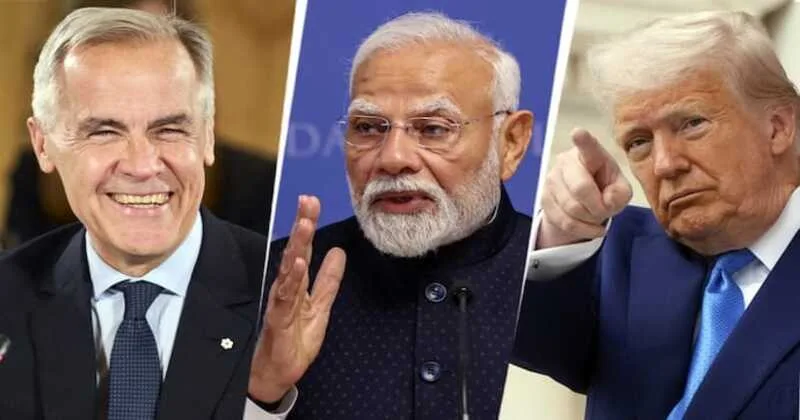
In a significant diplomatic development, India and Canada have moved to normalize relations by appointing new high commissioners, marking an important step forward after months of strained ties. This positive turn comes at a time when the United States has intensified its rhetoric against India, with President Donald Trump’s trade team announcing steep tariffs and linking India’s energy strategy to the Russia- Ukraine European conflict.
Dinesh K. Patnaik, a senior Indian Foreign Service officer from the 1990 batch and currently the Ambassador to Spain, has been appointed as India’s High Commissioner to Canada. On the other side, Canada has named Christopher Coot as its High Commissioner to India. The announcement was made by Canadian Foreign Minister Anita Anand.
This diplomatic reset follows a tense period when India recalled its High Commissioner Sanjay Verma, along with several senior diplomats, after allegations surfaced in Canada last year regarding the killing of Khalistan separatist Hardeep Singh Nijjar. In retaliation, India also asked six Canadian officials, including the then acting High Commissioner Stuart Wheeler, to leave the country.
The new appointments come 11 months after Prime Minister Narendra Modi and Canadian Prime Minister Mark Carney met on the sidelines of the G7 summit, signaling both nations’ willingness to move beyond the standoff and restore full diplomatic engagement. The decision underscores India’s emphasis on strengthening global partnerships based on mutual respect, even in the face of external pressures.
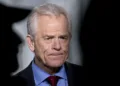
US trade adviser Peter Navarro blames India’s oil imports for prolonging Ukraine war
While India and Canada focus on rebuilding trust, Washington has launched an aggressive trade offensive against New Delhi. Peter Navarro, trade adviser to US President Donald Trump, accused India of indirectly funding Russia’s war in Ukraine by importing discounted Russian crude oil. In a controversial statement, Navarro referred to the ongoing conflict as a “Modi war” and claimed that Russian “blood oil” was reaching India, which was then exported as refined products to Europe.
9/ The Biden admin largely looked the other way at this madness.
President Trump is confronting it.
A 50% tariff—25% for unfair trade and 25% for national security—is a direct response.
If India, the world's largest democracy, wants to be treated like a strategic partner of… pic.twitter.com/XAt6aa4JLA
— Peter Navarro (@RealPNavarro) August 28, 2025
Navarro announced that the Trump administration would impose a massive 50 percent tariff on Indian goods. According to him, 25 percent of this hike targets India’s “unfair trade practices,” while the other 25 percent is being justified as a “national security” measure. He argued that US consumers pay dollars for Indian products, and the same currency is being used by India to purchase oil from Moscow. Navarro alleged that India exports nearly one million barrels of oil daily to Europe, almost half of what it buys from Russia.
He further criticized India for simultaneously seeking advanced defense technology from the United States while maintaining strong energy ties with Russia. “If India, the world’s largest democracy, wants to be a strategic trading partner, it must behave accordingly,” Navarro said, adding that the path to peace in Ukraine “begins in New Delhi.”
India, however, has reiterated that its energy purchases are a matter of national interest and energy security for its 1.4 billion citizens. New Delhi has consistently called for Russia and Ukraine to return to dialogue and end hostilities, emphasizing that its oil imports are purely commercial.
India also reminded that former US President Joe Biden had acknowledged during a meeting with Prime Minister Modi that global oil prices would have skyrocketed had India not sourced affordable Russian crude.
As Washington sharpens its trade stance and attempts to corner India, the strengthening of India–Canada diplomatic channels serves as a timely signal of New Delhi’s ability to build bridges even after disagreements. The restoration of full representation in Ottawa and New Delhi highlights a pragmatic approach to foreign policy, one that prioritizes long-term partnerships over temporary frictions. This development comes at a time when Canada’s own relations with the United States remain strained under President Trump, further underlining the significance of India and Canada choosing engagement over confrontation.











Comments