




The Shah Commission of Inquiry was instituted by the Janata Party Government on May 28, 1977, under the Commissions of Inquiry Act, 1952. Headed by Justice JC Shah, a former Chief Justice of India, the Commission was tasked with investigating the gross misuse of power and violations of civil liberties during the Emergency period (1975–77), declared by Prime Minister Indira Gandhi. This period remains one of the most controversial chapters in Bharat’s democratic history.
The Commission’s findings were deeply unsettling. Thousands of citizens were detained without trial, often under draconian laws like the Maintenance of Internal Security Act (MISA). Press freedom was strangled, with newspapers subjected to pre-censorship and journalists harassed. Democratic institutions were systematically undermined, and bureaucrats were coerced into serving political ends rather than constitutional mandates. Opposition leaders were imprisoned, some reportedly tortured, and marginalised communities bore the brunt of forced sterilisations and arbitrary demolitions.
Between 1978 and 1979, the Commission submitted three comprehensive reports, meticulously documenting how power was concentrated in the hands of a few and wielded to suppress dissent. The Morarji Desai Government began acting on these revelations, initiating legal and administrative reforms.
However, when Indira Gandhi returned to power in 1980, she swiftly halted all proceedings, recalled copies of the reports, and ordered their destruction—an act widely condemned as a serious breach of democratic accountability and historical transparency.
When Indira Gandhi returned to power in 1980, she swiftly halted all proceedings, recalled copies of the reports, and ordered their destruction—an act widely condemned as a serious breach of democratic accountability and historical transparency
Despite official attempts to erase its legacy, the Shah Commission Report endures as a stark reminder of how democratic systems can be subverted. It offers timeless insights into the dangers of unchecked executive power, the fragility of civil liberties, and the importance of institutional safeguards.
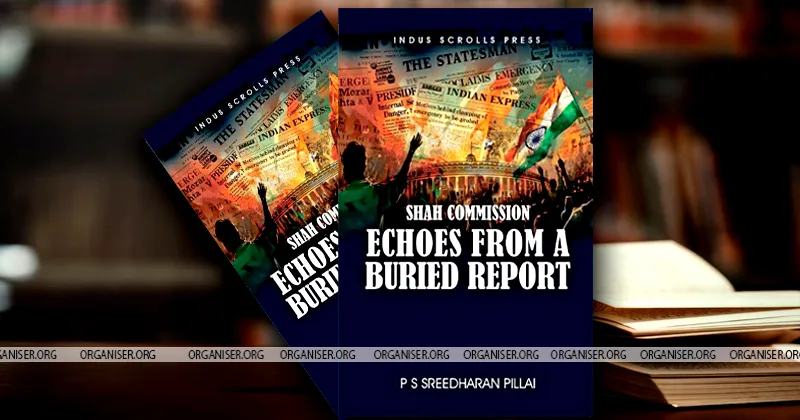
The book Shah Commission: Echoes from a Buried Report by PS Sreedharan Pillai, a seasoned lawyer and former Governor of Goa, revives this forgotten chapter. Released as Bharat marks 50 years since the Emergency, the book re-examines the salvaged report through a legal and constitutional lens, reigniting debate on democratic values, human rights, and institutional integrity. The author brings out certain interesting details about the conduct of inquiry by the Commission. He states: “The Shah Commission report was prepared through a meticulous process of inquiry. The Commission had invited complaints from the public. The well publicised invitation from the Commission resulted in the citizens submitting about 48,500 written complaints to the Commission before the deadline of July 31, 1977. The Commission very meticulously categorised these complaints, and the important cases were prioritised for inquiry. The public hearings, recording of statements of witnesses, etc. began on September 29, 1977. The witnesses who testified before the Shah Commission included former Ministers in the Indira Gandhi Government, bureaucrats and also the victims who suffered the torture and excesses at the hands of the Government machinery. Notably Mrs. Indira Gandhi declined to take oath or make solemn affirmation before the Commission, or to answer the questions put by the Commission. Instead, Ms. Gandhi refused to cooperate with the Commission.”
Shri Pillai also explores the socio-political and international ramifications of the Emergency, highlighting efforts made by civil society and legal scholars to preserve the report’s legacy. Shri Pillai who has participated in agitation against the Emergency as a student leader has written two more books on the topic–Democracy Enchained, Nation Disgraced and Dark Days of Democracy. In these books, he has highlighted the role played by the Rashtriya Swayamsevak Sangh in building public opinion against Emergency.
This work stands as a valuable resource for scholars, lawyers, journalists, policymakers, and citizens committed to defending democracy. It reminds us that truth, though buried, can be resurrected—and must be, if democratic memory is to endure.













Comments