





Temples have always been at the heart of India’s spiritual and cultural life, and the period from 2015 to 2025 has seen a remarkable revival of traditional rituals. Across the nation, age-old practices and regional customs have been performed with renewed fervour, drawing millions of devotees and showcasing the enduring power of faith. This revival is not just about religious ceremonies; it represents a reaffirmation of India’s rich spiritual heritage and its deep-rooted traditions. These rituals, from grand temple consecrations to intricate daily pujas, serve as a bridge between the past and present, highlighting the vibrant and continuous flow of devotion that shapes the country’s cultural landscape.
This report highlights 9 significant rituals performed in temples across Bharat between 2015 and 2025. It showcases the revival of age-old traditions, regional devotion, and the enduring spiritual heritage that continues to shape India’s cultural landscape.
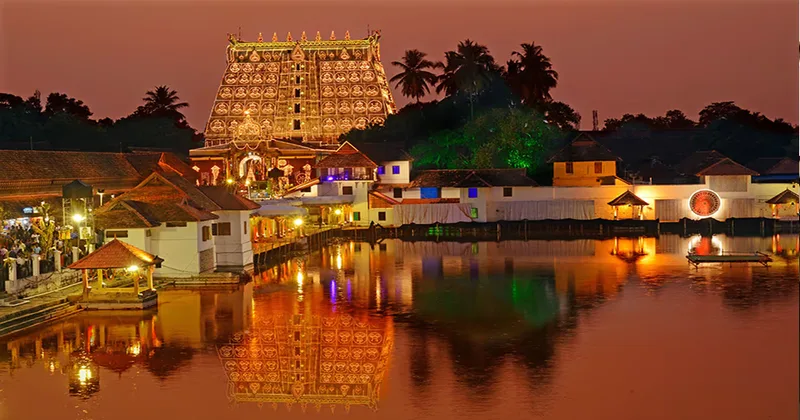
Ancient solar ritual returns to Padmanabhaswamy Temple after six decades
After a gap of nearly six decades, the ancient Bhadradeepam ritual has been revived at the iconic Padmanabhaswamy Temple in Thiruvananthapuram, Kerala, on July 15, 2025. This sacred ceremony, symbolising solar energy and divine protection, reconnects the temple to its Vedic and Tantric roots. It is a three-day ritual whose name means “Auspicious Light” and involves lighting thousands of oil lamps to represent the radiance and energy of the Sun. The ritual was first introduced by the Venad king Veeramarthandan and later institutionalised in 1744 by Anizham Thirunal.
Arulmigu Muthukumaraswamy Temple holds Kumbhabhishekam
On July 15, 2025, the centuries-old Arulmigu Muthukumaraswamy Temple in Madurai, Chennai, performed a Kumbhabhishekam ceremony. This grand consecration ritual took place after a decade-long renovation period, which cost Rs 91.5 lakh. Special rituals were performed for the deities, including Goddess Sridevi, Bhoodevi, Lord Sundararaja Perumal, Sri Madhuravalli Thayar, Sri Andal, among others.
Historic Maha Kumbhabhishekam at Padmanabhaswamy Temple after 270 years
On June 8, 2025, the Sree Padmanabhaswamy Temple in Thiruvananthapuram, Kerala, witnessed a historic Maha Kumbhabhishekam ceremony after a 270-year gap. This grand consecration ritual followed extensive renovations and involved the reinstallation of the 300-year-old Vishwaksena idol, the dedication of three new domes, and other sacred rites. The rituals were performed by priests in the presence of the Travancore royal family and other dignitaries.
After 24-Year hiatus, Veerabhadraswamy Jatre opens with Agni Konda Mahotsava
On May 5, 2025, the Veerabhadraswamy Jatre in Mandya’s Alakere village, Andhra Pradesh, returned after a 24-year hiatus with the sacred Agni Konda Mahotsava fire ritual. The festival, deeply rooted in local tradition, involved elaborate preparations by the villages of Alakere and Keelara. These preparations included building large wooden platforms and towers, strict fasting, and ritual observances.
Maha Kumbhabhishekam revives glory of Papanasanathar Temple after two decades
On May 1, 2025, the Papanasanathar Temple in Tirunelveli, Tamil Nadu, held its Maha Kumbhabhishekam ceremony after a 20-year gap. The ritual, which aimed to restore the temple’s glory, included the consecration of the temple’s sanctum and deities. The ceremony was followed by a Maha Abishekam, the sprinkling of holy water on devotees, and a communal food distribution, drawing thousands of participants.
Grand consecration at Brihadeeswarar Temple after 23 years
On January 27, 2025, the grand Maha Kumbhabhishekam of the iconic Brihadeeswarar Temple in Thanjavur, Tamil Nadu, was held after a 23-year gap. The consecration was performed in both Tamil and Sanskrit, with Odhuvars reciting ancient Thirumurai hymns and priests chanting Vedic hymns. Following the chants, holy water was poured on the temple’s Kalasam, drawing thousands of devotees to witness the event.
Koodal Azhagar Perumal Temple radiates divinity with Kumbabhishekam after 18 years
On January 21, 2024, the sacred Koodal Azhagar Perumal Temple in Madurai, Tamil Nadu, one of the 108 Divya Desams of Lord Vishnu, witnessed its grand Kumbabhishekam after 18 years. The last one was in 2006. In this ritual, holy water was poured over the temple’s gopurams amid chants of “Govinda” and then sprinkled on devotees. Special rituals were performed for deities, including Lord Sundararaja Perumal, Goddess Sridevi, Bhoodevi, and Sri Andal, followed by a traditional Garudasevai procession.
Jambukeswarar Temple shines again with Maha Kumbabhishekam after 18 years
On December 11, 2018, the ancient Thiruvanaikkaval Jambukeswarar Temple in Tiruchirapalli, Tamil Nadu, held its Maha Kumbhabhishekam after a gap of 18 years. The temple, one of the five revered Panchabhootha Sthalams, is uniquely associated with the element of water. Its sanctum is perpetually fed by an underground natural spring. The consecration ceremony drew thousands of devotees, priests, scholars, and cultural enthusiasts, marking a powerful renewal of faith and tradition.
60-year-old Matunga Temple celebrates a grand Kumbhabhishekam
On November 18, 2015, the Sree Ram Mandir (Kochu Guruvayoor) in Matunga, Mumbai, celebrated a grand Maha Kumbhabhishekam. The ceremony marked both the temple’s 60th anniversary and the renovation of its Rajagopuram. The temple, originally dedicated to Lord Rama, now houses several deities, each receiving individual rituals. The five gold-plated pots on the Rajagopuram were redone, and sacred rituals like Kanakabhishekam and Sahasra Kalasabhishekam were conducted.
The various ceremonies and rituals highlighted in this report demonstrate a powerful and ongoing spiritual revival in Bharat. The resurgence of these age-old traditions, many of which had been dormant for decades, reflects a deep-seated desire to reconnect with a rich cultural and religious heritage. These events, often marked by the congregation of thousands of devotees, are not merely religious observances but grand cultural spectacles that reaffirm community bonds and a collective sense of identity. The meticulous and elaborate nature of these ceremonies, from the consecration of temples after decades to the revival of ancient solar rituals, highlights the enduring and vibrant nature of Bharat’s spiritual landscape. It shows that faith continues to be a living and dynamic force, adapting and thriving in the modern world while staying true to its timeless traditions.












Comments