





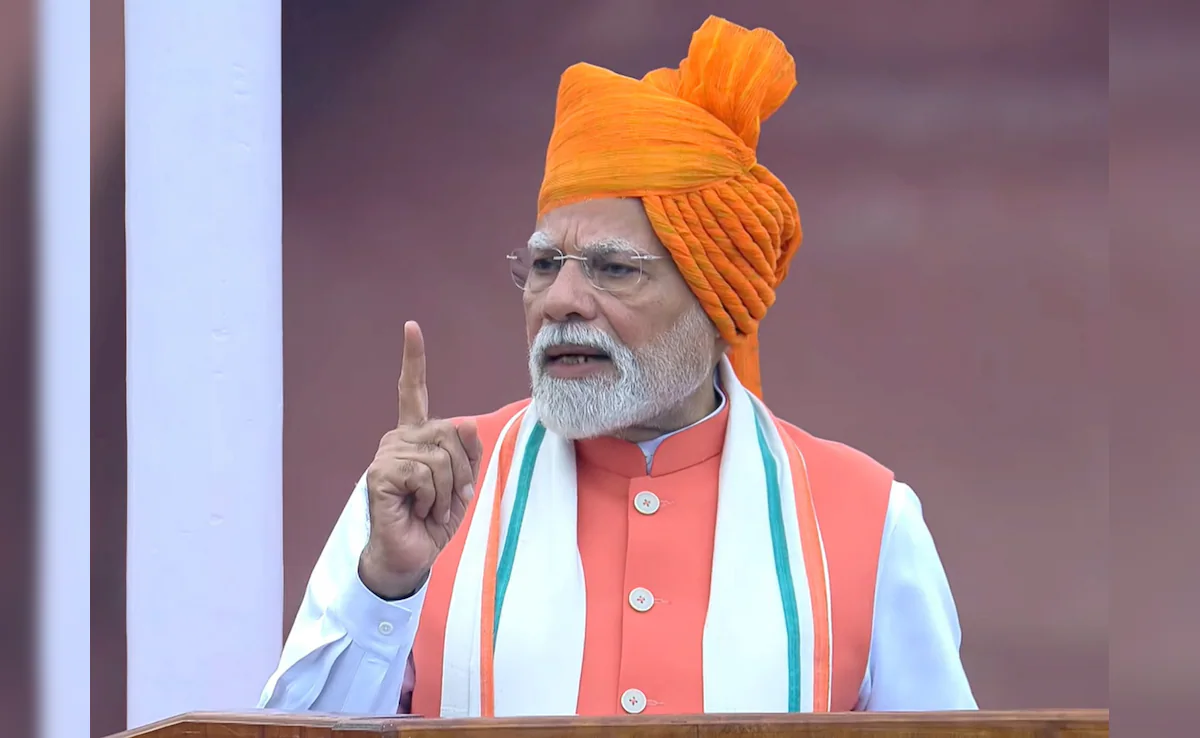
On 79th Independence Day, Prime Minister Narendra Modi declared a bold reform package aimed at transforming India’s governance landscape, making it simpler, transparent, and more conducive to innovation and growth.
PM Modi revealed that his government has abolished over 40,000 redundant compliances and repealed 1,500 obsolete laws, while streamlining numerous others to ease the burden on citizens, businesses, and startups. He emphasised that these reforms are central to the vision of Atmanirbhar Bharat and the goal of making India a developed nation by 2047.
“Reforms are not just changes in laws; they are instruments of nation building,” the Prime Minister said, outlining his government’s commitment to structural, policy, and procedural reforms across sectors.
Key legislative changes:
- Over 40,000 unnecessary compliances removed, reducing red tape for businesses and individuals.
- 1,500 outdated laws were repealed to modernise the legal framework.
- More than a dozen laws simplified through Parliamentary action.
- 280 provisions were deleted in the recent Monsoon Session to make governance accessible and citizen-friendly.
Major policy reforms highlighted:
- Zero income tax up to Rs 12 lakh annual income.
- Faceless assessment under the Income Tax Act.
- Replacement of colonial-era criminal laws with the Indian Justice Code.
- Upcoming GST reforms on Diwali to reduce taxes on essential items.
Next-generation reforms: Task force announcement
In a forward-looking measure, PM Modi announced the formation of a special task force to examine and overhaul laws, rules, and processes affecting economic activities. The task force will work to:
- Further improve the ease of doing business.
- Cut compliance costs for startups and MSMEs.
- Protect entrepreneurs from arbitrary legal hurdles.
PM underlined that these steps will encourage innovation, entrepreneurship, and economic growth, while empowering citizens to focus on productivity instead of bureaucracy.
Vision for the Future
PM Modi called on the nation to focus on expanding its own capabilities rather than comparing with others. He stressed that structural, regulatory, and procedural reforms will be sustained to ensure India’s economic rise and global competitiveness.
“Our progress must be self-driven. We must extend our line of achievement and not be limited by others’ lines,” he said, reinforcing his government’s long-term reform trajectory.
With this announcement, the Modi government has signalled that the reform momentum will not slow down, and that legal and regulatory transformation will remain at the heart of India’s growth journey.















Comments