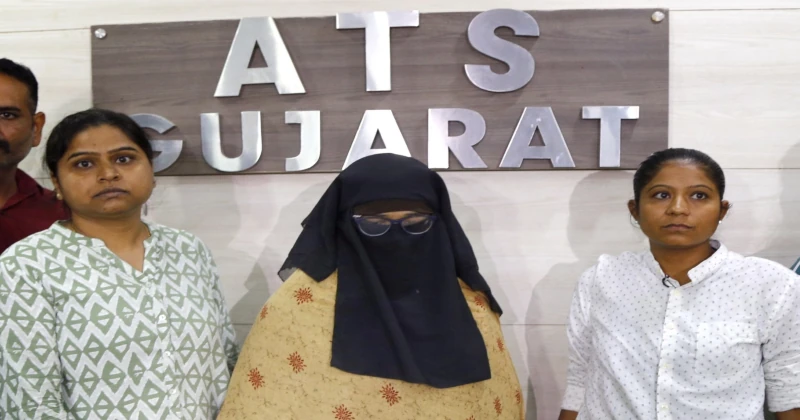
Gujarat Anti-Terrorism Squad (ATS) has dismantled an online terror propaganda network linked to Al-Qaeda in the Indian Subcontinent (AQIS), arresting five individuals, including 30-year-old Shama Parveen Ansari, a Jharkhand-born woman nabbed from Bengaluru’s Hebbal locality.
Shama Parveen, described by investigators as a “star performer” in Al-Qaeda’s digital recruitment ecosystem, had been openly radicalising Indian youth through social media and pushing extremist narratives advocating for the establishment of an Islamic caliphate in India under the so-called “Project Khilafat.” Her arrest on July 29 comes after months of surveillance and digital tracking by ATS operatives.
According to ATS sources, Parveen ran two Facebook pages and one Instagram account with a combined following of around 10,000, which she used to circulate hate-filled, anti-national propaganda, glorify extremist clerics, and promote AQIS ideologies. She allegedly reposted speeches by Pakistan-based radical preacher Abdul Aziz of Lal Masjid in Lahore — notorious for calling for armed rebellion to establish an Islamic state and videos of AQIS leaders invoking the dangerous “Ghazwa-e-Hind” narrative, a jihadist fantasy centred on the conquest of India.
The ATS probe revealed that during Operation Sindoor — India’s military campaign launched on May 7 to strike terror hubs in Pakistan and Pakistan-occupied Kashmir — Parveen openly called on Pakistan Army chief General Asim Munir to launch an invasion of India.
In a May 9 post, she urged Munir to seize what she termed a “golden opportunity” to restore Islamic rule in the region and dismantle ideologies such as Hindutva and Zionism. She brazenly advocated uniting “Muslim lands” under the Project Khilafat banner, directly attacking India’s sovereignty and democratic structure.
Another post allegedly featured an Islamic preacher chastising Indian Muslims for expressing solidarity with the Indian Armed Forces and for condemning the Pahalgam terror attack. Parveen also shared material targeting the Hindu community and democratic institutions, aligning with AQIS’s anti-India and anti-Hindu propaganda framework.
Investigators believe Parveen was not acting alone. Two weeks before her arrest, ATS and central agencies had nabbed four other suspects in multiple states for running similar extremist social media accounts. Parveen is suspected to have links with at least one of these operatives, all of whom were pushing AQIS-aligned content on Instagram to attract and radicalise recruits.
The ATS has charged all five under multiple provisions of the Unlawful Activities (Prevention) Act (UAPA) and continues to interrogate them to uncover deeper links, funding channels, and possible handlers in Pakistan and West Asia.
According to intelligence inputs, Parveen’s online activities were meticulously designed to indoctrinate young minds. By mixing religious rhetoric with geopolitical narratives, she sought to legitimise terrorism as a religious duty. She actively endorsed violent speeches, urged armed action against India, and portrayed Pakistan’s military as the saviour of Muslims in the subcontinent.
Her online strategy mirrored the tactics of AQIS propaganda cells — targeting disenfranchised youth, amplifying grievances, and offering a unifying extremist goal under the Khilafat project. The ATS is analysing her devices for encrypted communications, possible foreign contacts, and any evidence of operational planning.
Officials have underscored that this case is yet another reminder of how online ecosystems are being weaponised by foreign terror organisations to destabilise India from within. Parveen’s direct appeal to Pakistan’s army chief during an active Indian military operation is being viewed as a severe national security breach.
A senior ATS officer stated, “This is not just a case of anti-national speech. This was deliberate incitement to a foreign military to attack India, coupled with active recruitment efforts for a banned terror outfit. The danger is real and immediate.”