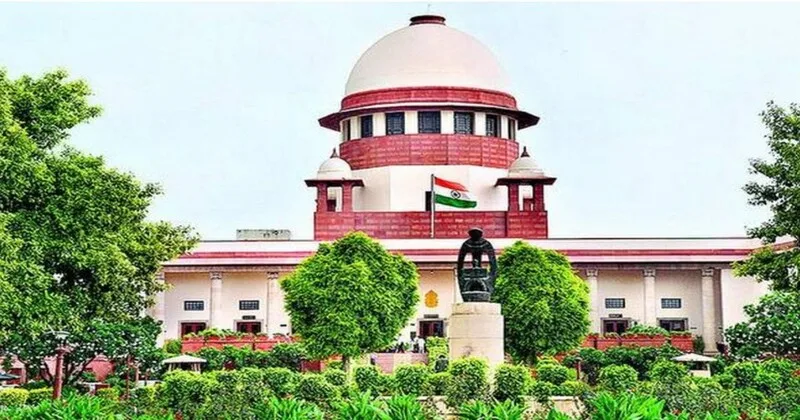
Supreme Court on Thursday clarified that a judge cannot claim immunity if allegations of misconduct are backed by credible evidence. The court made this observation while dismissing the plea of Allahabad High Court judge Yashwant Varma, who had sought to quash an in-house inquiry report finding him guilty in connection with a controversial cash discovery incident.
A bench comprising Justices Dipankar Datta and A.G. Masih emphasised that judicial immunity, which protects judges from civil and criminal proceedings for acts done in the discharge of their official duties, does not extend to shielding them from legitimate scrutiny when the integrity of the judiciary is at stake.
The court underlined the constitutional and moral responsibility of the Chief Justice of India (CJI) in upholding the judiciary’s credibility. Rejecting the notion that the CJI merely forwards inquiry reports to the President or Prime Minister without assessment, the bench observed:
“The CJI is clearly an important person, if not the most, in the larger scheme of maintaining institutional interest and credibility to ascertain whether a Judge has indulged in misconduct.”
The court added that the CJI has a proactive duty to ensure transparency and constitutional propriety in such matters.
Justice Varma had petitioned the apex court to invalidate the in-house inquiry report and quash the May 8 recommendation by then CJI Sanjiv Khanna urging Parliament to initiate impeachment proceedings against him.
He argued that the inquiry process “reversed the burden of proof” by requiring him to disprove the allegations, and that it was conducted in haste, compromising procedural fairness. He also accused the panel of basing its findings on a preconceived narrative without granting him a full hearing.
The Supreme Court, however, rejected these arguments, stating that:
The in-house inquiry process is not a removal mechanism in itself.
No action can be taken against a judge based solely on the committee’s report.
The inquiry is preliminary, ad-hoc, and not final, serving as part of the constitutional procedure for removal.
The bench also clarified that under the Judges (Inquiry) Act, a judge facing charges has the right to present evidence in their defence and challenge the reliability of the committee’s findings.
“If any reliance is placed upon the report of the Committee prepared under the procedure, the judge charged has a right to be informed… and to raise such points as to non-reliability or non-acceptability thereof as are available in law,” the court said.
While reaffirming judicial independence, the Supreme Court’s observation draws a firm boundary; immunity cannot serve as a shield for proven misconduct. Legal experts believe this could strengthen internal accountability mechanisms without undermining the judiciary’s autonomy.