





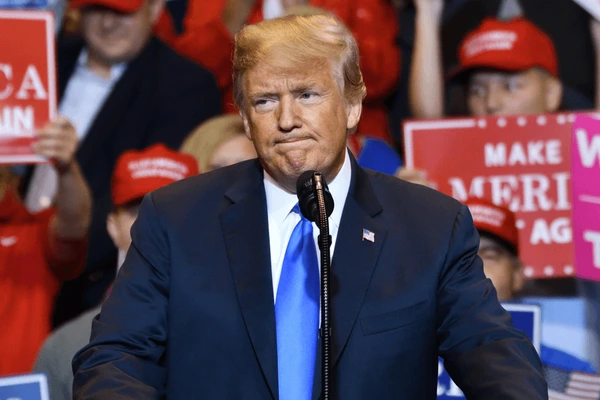
In a sharp, historically loaded response to US President Donald Trump’s recent allegations, the Indian Army’s Eastern Command has shared a decades-old newspaper clipping revealing extensive US military assistance to Pakistan during the 1971 Bangladesh Liberation War.
The archival post, published under the Eastern Command’s social media series “This Day That Year,” appeared just hours after Trump accused India of profiteering from the ongoing Russia-Ukraine war by purchasing and reselling Russian oil.
Trump’s allegations against India
Trump launched a blistering attack on India through a social media post, claiming that New Delhi was purchasing “massive amounts” of Russian crude oil and reselling it for profit, allegedly “fueling Russia’s war machine” and “profiting from Ukrainian deaths.”
Trump also criticised India’s long-standing ties with Moscow and threatened 25 percent tariffs on Indian goods, citing India’s failure to align with US-led sanctions on Russia. His remarks came in the backdrop of Washington’s pressure campaign to isolate Moscow economically since the 2022 Ukraine conflict.
The Army’s silent but stinging rebuttal
While the Ministry of External Affairs (MEA) promptly issued a fact-based statement rejecting Trump’s allegations as hypocritical and misleading, the Indian Army opted for a subtler but equally powerful response.
The Eastern Command posted an image of a 1971 newspaper clipping detailing the scale of US military aid to Pakistan during the Cold War era. The headline from that era read: “US shipped $2 billion in military equipment to Pakistan since 1954”
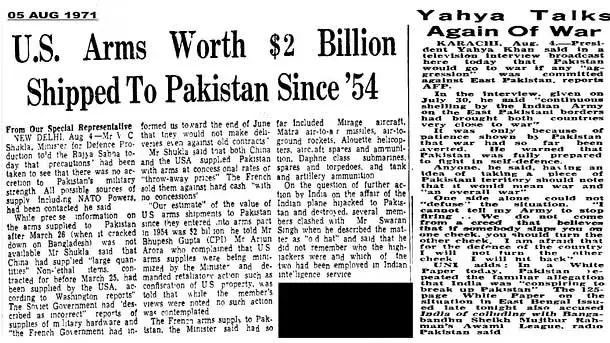
The list of arms supplied included tanks, bombers, submarines, and guided missiles, much of it delivered at “giveaway rates.” This period coincided with the brutal crackdown by Pakistan’s military regime in East Bengal (now Bangladesh), a campaign of atrocities that resulted in the deaths of an estimated 3 million people and the displacement of millions more.
Why India turned to Moscow
The Army’s post, though silent on Trump’s name, served as a blunt historical reminder of why India developed close defence and diplomatic ties with Russia.
Throughout the 1950s and 1960s, successive US administrations armed Pakistan to the teeth, granting it advanced military hardware and political cover—even after repeated acts of aggression against India, including the 1965 war.
During the 1971 Liberation War, the US administration under President Richard Nixon and Secretary of State Henry Kissinger openly tilted toward Pakistan, dispatching the USS Enterprise into the Bay of Bengal in a show of force against India.
Isolated by Washington and facing an American-backed adversary, India naturally turned to the Soviet Union for support. The 1971 Indo-Soviet Treaty of Peace, Friendship, and Cooperation became a cornerstone of India’s security policy, shaping decades of defence collaboration with Moscow.
A reminder amid modern geopolitics
By sharing this archival clipping, the Indian Army implicitly highlighted the double standards of US foreign policy and the enduring necessity for India’s strategic autonomy.
Trump’s remarks ignore this historical context, making his accusations appear both simplistic and ironic, especially when viewed against Washington’s own record of fueling conflicts through proxy alliances.
While New Delhi continues to engage with Washington on multiple fronts, including defence and technology partnerships, the Army’s move underscores that India will not take moral lectures on strategic choices, particularly from leaders who overlook decades of geopolitical realities.











Comments