





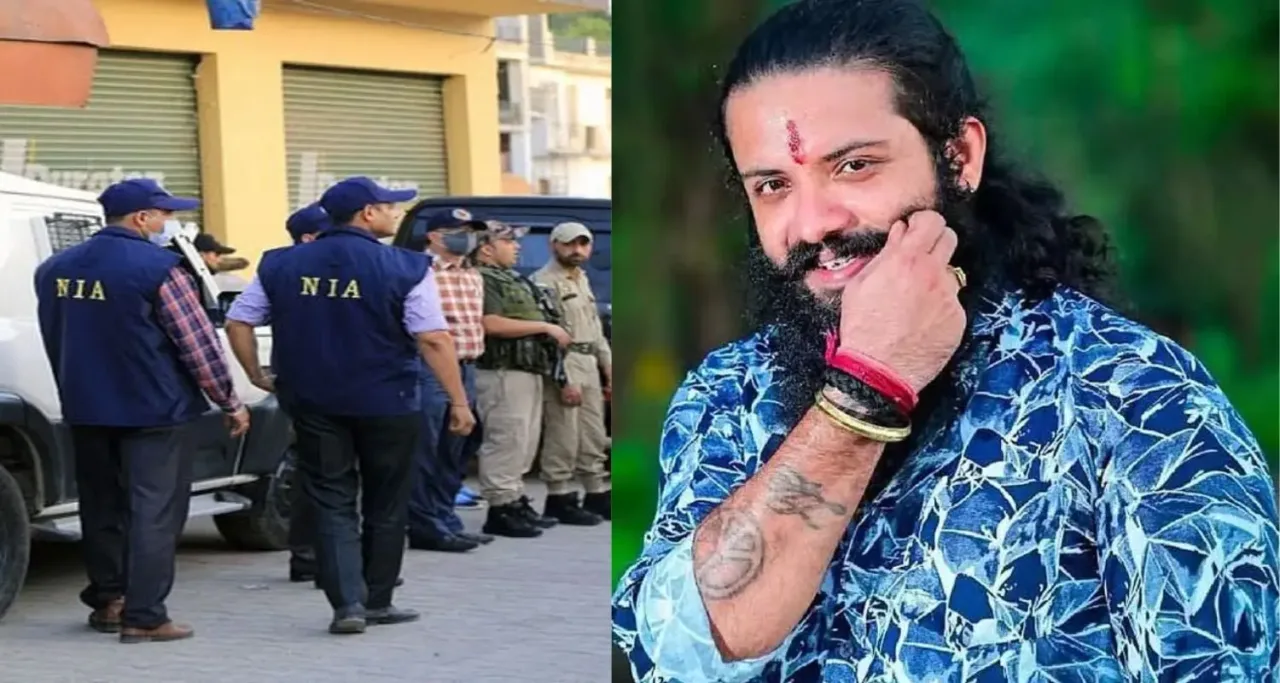
The brutal daylight murder of Hindu activist Suhas Shetty in Mangaluru has now taken a grave turn, as the National Investigation Agency (NIA) deepens its probe into alleged terror links and international funding behind the killing. In a significant development, the NIA on Saturday launched simultaneous raids across 14 locations in Dakshina Kannada district, 10 in Bajpe and four in Suratkal to uncover possible connections to the banned Popular Front of India (PFI) and its suspected role in orchestrating Shetty’s murder.
Sources confirm that NIA officials examined documents, mobile phones, and digital records during the raids and questioned several individuals with suspected links to the accused. The raids were not only part of the investigation into the murder but were reportedly triggered by inputs that pointed to financial and ideological links between some of the arrested suspects and global terror networks.
The murder of 33-year-old Suhas Shetty, a known activist with affiliations to Hindu organisations, sent shockwaves through the coastal belt of Karnataka. On June 1, Shetty was hacked to death in a chillingly premeditated attack at Kinnipadavu in Bajpe on the outskirts of Mangaluru. The attackers, allegedly led by Abdul Safwan and his gang, ambushed Shetty’s vehicle in broad daylight, ramming his car with a mini-container before stabbing him to death in front of bystanders. The entire act was captured on CCTV and mobile cameras and later used by police to track down the culprits.
Initially, Bajpe police arrested 12 individuals, including the direct assailants and those who allegedly provided logistical and financial support. However, the case was soon transferred to the NIA following public outcry, demands from Hindu leaders, and pressure from Shetty’s family, who claimed that only a national-level probe could uncover the truth behind what they termed a “targeted ideological killing.” The Union Home Ministry, reportedly acting on instructions from top leadership, officially handed over the case to the NIA last month.
While earlier investigations pointed to a personal rivalry stemming from a September 2023 altercation where Safwan was allegedly stabbed by Shetty’s associate Prashant the NIA is now pursuing leads suggesting that Shetty was targeted not just in retaliation but as part of a larger ideological campaign aimed at silencing Hindu activists. According to intelligence sources, the conspiracy to murder Shetty was fueled by extremist propaganda and facilitated through funds that may have originated from abroad.
Speaking on condition of anonymity, an NIA official stated: “There are indications that some of the accused maintained digital communication with individuals based in Gulf countries and received unexplained financial transfers around the time of the murder. These patterns are consistent with past PFI-linked operations.”
The alleged involvement of banned outfits has alarmed the security establishment, given the history of ideological killings in coastal Karnataka. The region has seen multiple incidents in recent years, including the murders of RSS and Bajrang Dal members which were later linked to radical groups with cross-border connections. Suhas Shetty’s murder, if confirmed to be part of this chain, would mark another dark chapter in the region’s spiralling communal violence.
NIA officials are now analysing call records, financial trails, and social media communications of the accused. Among those arrested are Safwan, Mohammed Muzamil (the driver of the Swift car used in the attack), Niaz, Mohammed Rizwan, Kalandar Shafi, Ranjith, and Nagaraj. More arrests are expected in the coming days.
Meanwhile, Hindu organisations have renewed their demand for a broader crackdown on sleeper cells allegedly operating in coastal Karnataka. BJP leaders have blamed the Congress-led state government for failing to take preemptive action against radicalised elements, despite repeated warnings.
As investigations continue, the NIA’s findings are likely to have far-reaching implications, not just for the Shetty case, but for Karnataka’s broader fight against ideological extremism and the resurgence of organised terror networks along its western coast.
















Comments