





In a move underscoring India’s national security concerns, Mizoram has commenced the process of biometric and biographic data collection of illegal migrants from Myanmar and Bangladesh who have infiltrated in the state after fleeing internal conflict in their respective countries.
According to official sources in the Mizoram Home Department, district administrations in Champhai and Lunglei began the enrolment process on July 31, joining Serchhip, which launched the drive a day earlier. The initiative aims to document all illegal migrants from Myanmar and Bangladesh residing across the state’s 11 districts using the ‘Foreigners Identification Portal and Biometric Enrolment’ system.
Champhai district, located along the India-Myanmar border, hosts the largest number of illegal migrants, 13,586, followed by Lunglei, which shelters around 2,000. Serchhip, centrally situated in Mizoram, has also seen a steady influx of illegal migrants since political turmoil erupted in neighbouring regions.
Officials said that the biometric and biographic registration process will be gradually extended to all districts, ensuring complete coverage of the illegal migrants. As of now, Mizoram is home to an estimated 33,000 illegal migrants from Myanmar and more than 2,370 from Bangladesh, according to government data.
The biometric registration follows earlier advisories to northeastern states to tighten documentation protocols for illegal migrants. While the central government is expected to fund the operation, the Mizoram administration has already released Rs 38 lakh to facilitate the rollout. Specialised training was provided recently to district-level officials to ensure proper collection and handling of biometric and demographic data.
Security and surveillance concerns underpin this renewed focus on documentation. Mizoram shares a 510-km unfenced mountainous border with Myanmar and a 318-km-long frontier with Bangladesh, terrain that is porous and difficult to monitor, increasing the risks of illegal crossings and unregulated movement.
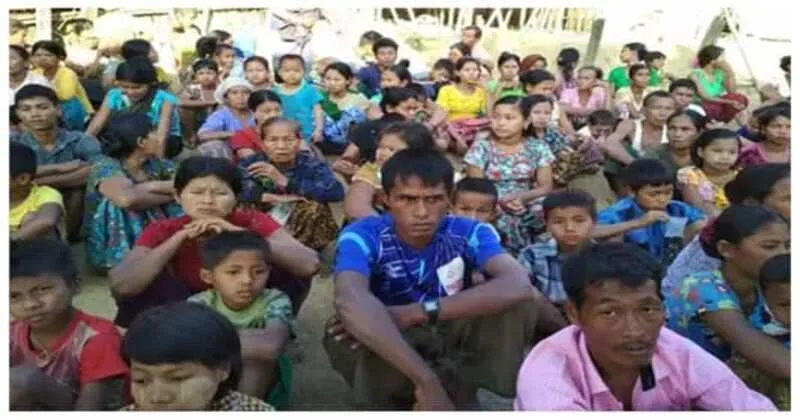
The influx from Myanmar began after the February 2021 military coup, which triggered a wave of violence and led thousands, including women and children, to seek refuge in Mizoram. Most of the Myanmar illegal migrants belong to the Chin community, an ethnic group that shares cultural and linguistic similarities with the Mizos. They are currently housed in camps or with relatives across the state.
More recently, over 4,650 people crossed into Mizoram in early July following intensified fighting between anti-junta ethnic militias, the Chin National Defence Force and the Chinland Defence Force, in Myanmar’s Chin state. The armed clashes between June 28 and July 5 saw civilians fleeing for safety. However, as tensions eased along the border, a majority of these newly arrived migrants have returned to their native villages.
On the other hand, the Bangladeshi illegal migrants in Mizoram belong predominantly to the Bawm tribal community from the Chittagong Hill Tracts. They fled their villages over the past two years following a military crackdown by Bangladeshi security forces amid ethnic unrest. Like the Chin, the Bawm community also shares strong ethnic ties with the Mizos, which has shaped the social reception of the migrants despite the complex legal and administrative issues surrounding their stay.
While the humanitarian dimension remains central to local narratives, the state’s move to document these illegal migrants signals a growing alignment with broader national security imperatives. In regions where international borders are largely unfenced and surveillance infrastructure is limited, proper identification and registration of foreign nationals have become critical priorities for preventing potential security lapses.
Six Mizoram districts, Champhai, Siaha, Lawngtlai, Hnahthial, Saitual and Serchhip, share borders with Myanmar’s Chin state, while the districts of Mamit, Lunglei and Lawngtlai lie adjacent to Bangladesh. Given this strategic location, state authorities are under increased pressure to ensure effective monitoring of cross-border movements and maintain internal security.
With the biometric enrolment drive now underway, Mizoram is taking a significant step toward addressing the dual challenges of humanitarian responsibility and border security.
















Comments