PM Modi vows to turn Maoist-hit areas into peaceful zones
July 15, 2026
  • Read Ecopy
  • Circulation
  • Advertise
  • Careers
  • About Us
  • Contact Us
Android AppiPhone AppArattai
Organiser
  • ‌
  • Bharat
    • Assam
    • Bihar
    • Chhattisgarh
    • Jharkhand
    • Maharashtra
    • View All States
  • World
    • Asia
    • Europe
    • North America
    • South America
    • Africa
    • Australia
  • Editorial
  • International
  • Opinion
  • RSS @ 100
  • More
    • Op Sindoor
    • Analysis
    • Sports
    • Defence
    • Politics
    • Business
    • Economy
    • Culture
    • Special Report
    • Sci & Tech
    • Entertainment
    • G20
    • Azadi Ka Amrit Mahotsav
    • Vocal4Local
    • Web Stories
    • Education
    • Employment
    • Books
    • Interviews
    • Travel
    • Law
    • Health
    • Obituary
  • Subscribe
    • Subscribe Print Edition
    • Subscribe Ecopy
    • Read Ecopy
  • ‌
  • Bharat
    • Assam
    • Bihar
    • Chhattisgarh
    • Jharkhand
    • Maharashtra
    • View All States
  • World
    • Asia
    • Europe
    • North America
    • South America
    • Africa
    • Australia
  • Editorial
  • International
  • Opinion
  • RSS @ 100
  • More
    • Op Sindoor
    • Analysis
    • Sports
    • Defence
    • Politics
    • Business
    • Economy
    • Culture
    • Special Report
    • Sci & Tech
    • Entertainment
    • G20
    • Azadi Ka Amrit Mahotsav
    • Vocal4Local
    • Web Stories
    • Education
    • Employment
    • Books
    • Interviews
    • Travel
    • Law
    • Health
    • Obituary
  • Subscribe
    • Subscribe Print Edition
    • Subscribe Ecopy
    • Read Ecopy
Organiser
  • Home
  • Bharat
  • World
  • Operation Sindoor
  • Editorial
  • Analysis
  • Opinion
  • Culture
  • Defence
  • International Edition
  • RSS @ 100
  • Magazine
  • Read Ecopy
Home Bharat

‘Red To Green Corridor’: PM Modi announces push to transform maoist affected regions into peaceful development zones

Prime Minister Narendra Modi has reaffirmed the government’s firm commitment to eradicate Maoism from India by March 31, 2026, highlighting significant progress in security operations and development efforts in Maoist-affected regions. The transformation of the ‘Red Corridor’ into a ‘Green Growth Zone’ reflects India’s broader vision of peace, prosperity, and empowerment for its tribal heartlands

WEBDESKWEBDESK
Jul 21, 2025, 03:00 pm IST
in Bharat
Follow on Google News
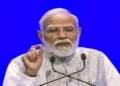
Prime Minister Narendra Modi

Prime Minister Narendra Modi

FacebookTwitterWhatsAppTelegramEmail

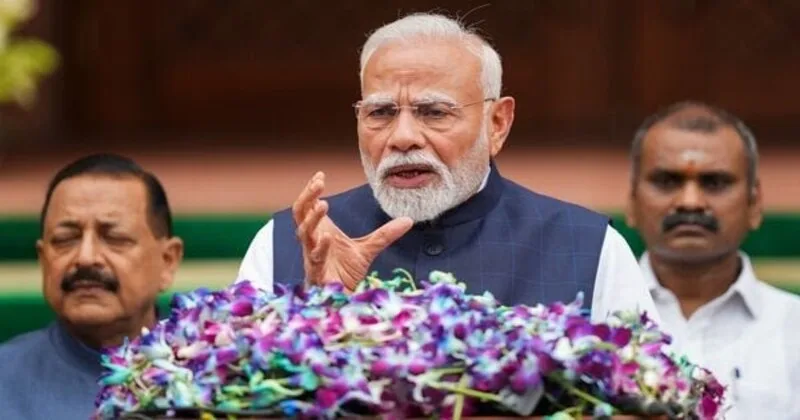
Prime Minister Narendra Modi on July 21 reaffirmed India’s determined resolve to eliminate Maoism, also known as the Maoist insurgency, from the country by March 31, 2026. Speaking ahead of the Monsoon Session of Parliament, the Prime Minister highlighted the significant progress made by Indian security forces in curbing the decades-old extremist movement that once held sway over large parts of the country’s hinterland. Modi also took the opportunity to underscore India’s diplomatic efforts in exposing Pakistan’s role in sponsoring terrorism on the global stage.

May the Monsoon Session of Parliament be productive and filled with enriching discussions that strengthen our democracy. https://t.co/Sj33JPUyHr

— Narendra Modi (@narendramodi) July 21, 2025

The Decline of the ‘Red Corridor’

Maoism, which emerged in the late 1960s as a radical communist uprising advocating for the rights of marginalised tribal and rural communities, has long posed a serious internal security challenge to India. At its peak, the so-called ‘Red Corridor’ spanned over 100 districts across multiple states, including Chhattisgarh, Jharkhand, Odisha, Maharashtra, Bihar, and Andhra Pradesh. Maoist insurgents exploited underdevelopment, poor governance, and socio-economic disparities to recruit cadres and challenge the state’s authority.

However, the last few years have witnessed a dramatic shift. Prime Minister Modi pointed out that “the reach of Maoism is shrinking rapidly” and many districts once considered Maoist strongholds are now “free of Maoists.” The government’s vision of transforming ‘red corridors’ into ‘green growth zones’ signifies a broader strategy combining security operations with development initiatives to reclaim these areas for the rule of law and economic progress.

Decisive Security Operations in Maoist Heartlands

Central to this transformation has been the robust and coordinated action of India’s security forces. The Ministry of Home Affairs (MHA), in collaboration with state governments and paramilitary units like the Central Reserve Police Force (CRPF), has intensified operations targeting Maoist leadership and their infrastructure.

Chhattisgarh, often described as the epicentre of Maoist activity, has witnessed some of the most consequential operations. Several top Maoist commanders, including notorious leaders like Hidma and Sudhir, have been neutralised or captured. These leaders were instrumental in orchestrating violent attacks, extortion, and recruitment drives. Their elimination has caused severe disruption to Maoist command and control.

According to official sources, since 2019 alone, dozens of key insurgent figures have been killed or arrested. These successes are credited to enhanced intelligence gathering, improved tactical training, and the use of technology such as aerial drones and satellite surveillance. With security forces gaining the upper hand, areas that were once inaccessible due to insurgent presence have seen a return of governance and normalcy.

Development and Governance: A Two-Pronged Strategy

While military operations have dealt a crippling blow to Maoist cadres, the government recognises that lasting peace requires addressing the root causes of the insurgency. Chronic neglect, poverty, lack of education, and absence of infrastructure had made tribal areas vulnerable to extremist influence.

To complement security actions, the government has launched numerous development programs targeting the socio-economic upliftment of Maoist-affected districts. These include:

Infrastructure Development: Construction of roads, bridges, schools, and health centers to connect remote villages to mainstream India.

Welfare Schemes: Focused initiatives under schemes like Vanbandhu Kalyan Yojana to improve tribal welfare, housing, sanitation, and livelihood opportunities.

Employment Generation: Skill development and self-employment schemes aimed at youth, alongside promotion of agriculture and allied activities.

Strengthening Local Governance: Empowering Panchayati Raj institutions to enhance local participation in decision-making and ensure efficient delivery of services.

Prime Minister Modi’s emphasis on converting the “Red Corridor” into a “Green Growth Zone” embodies this holistic approach. The government envisions transforming erstwhile conflict zones into engines of economic activity and social harmony.

The government has also initiated surrender and rehabilitation policies encouraging Maoist cadres to lay down arms and reintegrate into society. Rehabilitation packages include financial assistance, vocational training, and educational support.

India’s Broader Security Challenges and International Stance

In his address, PM Modi also touched upon India’s efforts to combat terrorism on multiple fronts. Referring to the Pahalgam terror attack, he lauded the unity shown by political parties and parliamentarians who set aside differences to expose Pakistan’s role as a sponsor of terrorism globally.

India has consistently sought to highlight cross-border terrorism in international forums and rally global support for counterterrorism cooperation. This diplomatic offensive complements the country’s internal security operations against various extremist threats, including Maoism.

The Road Ahead: Eradication By March 31, 2026

With less than a year remaining to the government’s target deadline, optimism runs high. While the geographical spread of Maoism has shrunk considerably, isolated pockets of resistance remain, often in difficult terrain.

As the PM remarked, “The Indian Constitution is emerging victorious against Maoism.” The eradication of Maoism will not only restore peace and security but also open up new avenues for tribal empowerment and regional growth.

India’s journey from ‘Red Corridor’ to ‘Green Growth Zone’ symbolises a remarkable transformation from conflict to development. The decisive action against top Maoist commanders in Chhattisgarh and beyond, coupled with inclusive governance and targeted welfare programs, has set the stage for a historic victory.

Prime Minister Narendra Modi’s reaffirmation of the government’s commitment to eliminate Maoism by March 31, 2026, reflects the culmination of years of effort by security forces, administrators, and communities determined to reclaim their land from the shadows of violence.

 

Topics: PM ModiMaoist insurgencyTribal empowermentAnti-Maoist operationsMaoism EradicationChhattisgarh Security
ShareTweetSendShareSend
✮ Subscribe Organiser YouTube Channel. ✮
✮ Join Organiser's WhatsApp channel for Nationalist views beyond the news. ✮
Previous News

Sadanandan Master takes oath, earns praise as Rajya Sabha welcomes five new members at start of monsoon session

Next News

Police officer targeting illegal liquor in Tamil Nadu suspended; department cites ‘indiscipline’

Related News

The organisers of the 'Melbourne Meets Modi' community have issued a strongly worded open letter to Rahul Gandhi

Don’t insult Indian-Australians: Melbourne Meets Modi organisers demand apology from Rahul Gandhi over paid crowd claim

PIB clarifies PM Modi said "wheat producer," not "beef producer"

Fact Check: Viral clip falsely claims PM Modi called India Beef producer; in original speech he said wheat producer

UP CM Yogi Adityanath inaugurates 'Vriksharopan Mahayagya-2026' in Gorakhpur

‘Ek Ped Maa Ke Naam’: Uttar Pradesh creates green history by planting 40 crore saplings, CM Yogi hails achievement

PM Modi announces UPI integration with New Zealand’s payment network during historic visit

Why India needs a dedicated national award system to honour foreign heads of state and global leaders

My Son Sanctuary, Vietnam

From Vietnam to Bahrain: Inside the Modi government’s mission to restore ancient Hindu Mandir across Asia

Load More

Latest News

PIB organises one-day media workshop Varta

Varta: Bharat targets 15 per cent global orange economy share, IICT unveils massive creative workforce plan

India's Permanent Representative to the UN, Ambassador Harish Parvathaneni, called for urgent reform of the UN Security Council

‘UN must reflect on contemporary realities’: India renews push for security council reform

RSS functionaries with the children after the inauguration of the Mata Revati Bai Sanskar Kendra in Delhi

RSS at 100: Vidya Bharati opens Sanskar Kendra in the name of Dr Hedgewar’s mother, Mata Revati Bai in Delhi

Rudram-1

Rudram-1 in Action: Bharat’s first indigenous missile to hunt and destroy enemy radars

Indian Railways is facing a growing encroachment challenge, with over 1,068 hectares of land under encroachment

RTI Exposes Massive Rail Land Grab: Over 1,068 hectares of Indian Railways land encroached

Madhya Pradesh's Uniform Civil Code draft proposes mandatory registration of live-in relationships

Madhya Pradesh: UCC draft proposes mandatory registration of live-in relationships, divorce & inheritance laws

Devotees gather in large numbers in Puri for Mahaprabhu Jagannath's Nabajaubana Darshan

Odisha: Mahaprabhu Jagannath appears in divine Nabajaubana form after 15-day anasara, thousands gather in Puri

India's Udyam Registration and Udyam Assist platforms are formalising MSMEs and driving inclusive entrepreneurial growth

How Udyam Registration and Udyam Assist are transforming India’s MSME and entrepreneurial ecosystem

Maoist Ravindra Ganjhu (Source: OpIndia)

Jharkhand: Maoist commander Ravindra Ganjhu with bounty of Rs 20 lakh arrested after 16 years

Gyanvapi Complex

Gyanvapi Row: Hindu side demands Mosque premises be vacated, Muslim side rejects mediation; Both seek court verdict

Load More
  • Privacy
  • Terms
  • Cookie Policy
  • Refund and Cancellation
  • Delivery and Shipping

© Bharat Prakashan (Delhi) Limited.
Tech-enabled by Ananthapuri Technologies

  • Home
  • Search Organiser
  • Bharat
    • Assam
    • Bihar
    • Chhattisgarh
    • Jharkhand
    • Maharashtra
    • View All States
  • World
    • Asia
    • Africa
    • North America
    • South America
    • Europe
    • Australia
  • Editorial
  • Operation Sindoor
  • Opinion
  • Analysis
  • Defence
  • Culture
  • Sports
  • Business
  • RSS @ 100
  • Entertainment
  • More ..
    • Sci & Tech
    • Vocal4Local
    • Special Report
    • Education
    • Employment
    • Books
    • Interviews
    • Travel
    • Health
    • Politics
    • Law
    • Economy
    • Obituary
  • Subscribe Magazine
  • Read Ecopy
  • Advertise
  • Circulation
  • Careers
  • About Us
  • Contact Us
  • Policies & Terms
    • Privacy Policy
    • Cookie Policy
    • Refund and Cancellation
    • Terms of Use

© Bharat Prakashan (Delhi) Limited.
Tech-enabled by Ananthapuri Technologies