





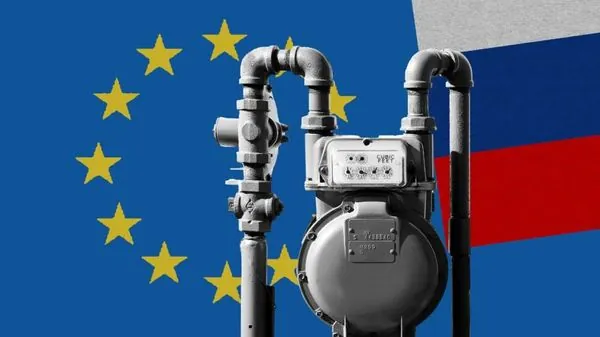
On July 18, 2025, the European Union (EU) announced its 18th round of sanctions against Russia, nearly three years after the Ukraine war began. One of the most contentious and targeted measures this time was the inclusion of India in its sanction framework, a move that drew widespread criticism for its duplicity and arrogance.
The EU imposed sanctions on the Vadinar oil refinery in Gujarat, operated by Nayara Energy, in which Russia’s Rosneft holds a 49 per cent stake. In addition, the EU designated Indian-flagged ships, meaning vessels flying the Indian flag can now be scrutinised or targeted if suspected of transporting Russian oil.
What the EU essentially declared, without even a pretence of subtlety, was this: “We will continue buying Russian oil and gas ourselves, but if India refines it or helps in transporting it, we will impose restrictions.”
EU’s shameless double standards
The latest round of sanctions has exposed the height of Western hypocrisy. While Europe has not completely banned Russian energy, it has placed a symbolic price cap on Russian crude, 15 percent below the global market rate. This gesture allows the EU to appear morally superior while maintaining its own energy security. Russia still profits, and EU nations continue to receive the energy they need, albeit at slightly cheaper rates.
Meanwhile, Indian refineries are being penalised for doing the very same thing: buying Russian crude and processing it to keep domestic fuel prices stable for a country of 1.4 billion people. To penalise Indian shipping lines and oil companies while Europe quietly buys the same energy through backdoor methods is not only unjust but reeks of a neocolonial mindset.
The reality of Europe’s energy imports
Ever since Russia invaded Ukraine in February 2022, Western nations have tried to create a high moral ground by imposing economic sanctions on Moscow. They claimed their intent was to cripple Russia’s war machinery by cutting off vital revenue streams, especially energy exports. But when the dust settled, it became obvious that the enforcement of these sanctions was selective and self-serving.
While the EU and U.S. mounted pressure on India to stop importing Russian crude, they themselves continued to do business with Moscow. Spain and Belgium are among the largest importers of Russian liquefied natural gas (LNG). Germany, despite ceasing pipeline imports, is now purchasing Russian LNG through ports. Italy, too, has been receiving refined Russian oil through intermediaries.
The United States itself has not stopped all Russian imports. It still brings in Russian uranium to power its nuclear reactors. Yet, it regularly preaches to India about supporting democracy and international rules-based order.
India responds with clarity
India has not taken these actions lying down. The Ministry of External Affairs (MEA) issued a clear statement condemning the double standards. MEA spokesperson Randhir Jaiswal said: “Securing the energy needs of our people is understandably an overriding priority for us. In this endeavour, we are guided by what is there on offer in the markets, as also by the prevailing global circumstances.”
India has always prioritised the needs of its people. After the Russia-Ukraine war disrupted global energy markets, India ramped up imports of discounted Russian crude, a move that kept domestic inflation under control and fuel prices affordable.
Union Petroleum Minister Hardeep Singh Puri backed this position unequivocally. He revealed that India now sources oil from over 40 countries, compared to just 27 earlier. India is not dependent solely on Russia, but chooses options that are in its national interest.
Sanctioning India, but not themselves?
In 2022, EU countries paid more than $120 billion to Russia for fossil fuels. India, on the other hand, paid about $50 billion in the same period. Yet, it is India that faces international scrutiny, diplomatic pressure, and now economic sanctions. The absurdity cannot be ignored.
Adding to this, many European companies are importing refined fuels from India’s own refineries, the same ones that are now being sanctioned for processing Russian crude. So Europe is happy to buy fuel after it is refined in India, but wants India punished for buying the crude in the first place. This two-faced approach is not just unethical, it is geopolitically corrosive.
A colonial tone in new avatar
The Western world’s current approach reflects a persistent colonial hangover. The idea seems to be that non-Western nations should fall in line, comply with imposed rules, and sacrifice their own interests for the strategic goals of Europe and the United States.
India is not a vassal state. It is the world’s most populous democracy and the fifth-largest economy. It has every right to make decisions that serve its people. Attempting to guilt-trip or blackmail India into abandoning a practical energy strategy for the sake of Western optics is not only patronising but doomed to fail.
Energy security is non-negotiable
India has 1.4 billion citizens. Managing energy costs is vital for everything from transportation to agriculture to manufacturing. Unlike Europe, where the population is ageing and declining, India is a young, developing nation. It requires energy not just to survive but to grow.
While Western countries have existing infrastructure and capital to absorb shocks, India does not have the luxury of choosing costly moral symbolism over affordable fuel. The EU must understand this before passing unilateral judgments.
India is not funding war
India’s oil purchases from Russia are not driven by ideology, but by necessity and economics. The claim that India is financing Russia’s war effort is baseless and insulting. If that argument were valid, then Spain, Belgium, Germany, Italy, and the U.S. should all be accused of the same.
India is not at war. It is not supplying weapons. It is not sending troops. It is merely purchasing oil on the open market, something every sovereign nation has a right to do. Any effort to penalise India for this is an attack on its economic freedom.
India’s strategic autonomy must be respected
India has always maintained strategic autonomy in its foreign policy. It did not join NATO. It did not become part of any Cold War bloc. Even today, it maintains relationships with the U.S., Russia, France, and Iran, each based on mutual interest.
Its defence ties with Russia are long-standing, with 60–70 percent of Indian military equipment being of Russian origin. The U.S. and EU cannot expect India to dismantle decades of defence cooperation overnight. Ironically, Turkey, a NATO member, purchased Russian S-400 missile systems and was slapped with minor sanctions, yet continues business as usual with Russia. No calls for isolation or boycotts there.
Why this selective outrage when it comes to India?
Western threats and India’s firm response
Recently, a U.S. bill was proposed in Congress to impose 500 percent tariffs on countries that continue to buy Russian oil. Though India was not named, the implication was clear. Some American lawmakers have even hinted at secondary sanctions and 100% tariffs on nations refusing to toe the line.
NATO Secretary-General Mark Rutte called on nations like India and China to “do more” to isolate Russia. But India has made its position clear. During a visit to Washington, External Affairs Minister S. Jaishankar strongly defended India’s energy decisions, stating that national interest and energy security are non-negotiable.
“We are not part of the conflict, and we do not intend to carry someone else’s burden while neglecting our own people.”
India’s peaceful role
It is also crucial to remember that India has been actively engaging both sides in the Russia-Ukraine conflict. It has extended humanitarian aid to Ukraine, held diplomatic conversations with both President Zelensky and President Putin, and consistently called for a peaceful resolution.
Unlike Western powers, India has not armed either side. Its actions have always been guided by peace, diplomacy, and humanitarian principles.
At its core, this is not just about oil or shipping. This is about global fairness and respect. If the West wants to lead, it must lead with character. It cannot hold other nations to standards it does not follow itself. It cannot preach restraint while practising indulgence. It cannot speak of justice while acting with prejudice.
India will not be dictated to. It will continue to buy energy from wherever it sees fit to ensure the well-being of its people. The EU’s latest sanctions not only damage diplomatic goodwill but also expose their own lack of consistency.
This is not India’s war. And India will not sacrifice the needs of 1.4 billion citizens to satisfy Western egos.










Comments