





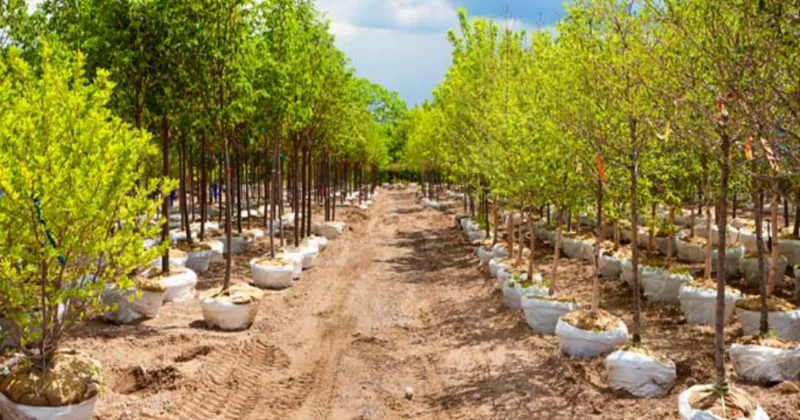
When 37.21 crore saplings were planted in Uttar Pradesh on July 9, it was not only a record plantation drive but also a war against environmental degradation. Under the leadership of Chief Minister Yogi Adityanath Ji, the state has made afforestation efforts as people’s movement by launching Vishisht Van abhiyan. Government has also demonstrated that climate action is not to be remain confined in meeting rooms or international summits, it has to be at the grassroots level in society.
The Vishisht Van Abhiyan, started from July 18 and ends on September 5. It is an experiment to connect ecological renewal with cultural pride, social values and emotional connection. This is not a routine government plantation drive, it is a part of afforestation revolution that will break political barriers and become a cultural practice among citizens.
Normally in plantation drives, saplings usually dry or dies away after a photo session. But this drive is one of the unique idea where each of these forests embodies a message that touches people’s heart. “Eklavya Van”, being the first in the chain starting on July 18 in Pilibhit, represents a sense of respect for learning and traditional customs. “Shourya/Sindoor Van”, which is to be planted on Independence Day to honour the bravery of Indian soldiers. “Bhai-Bahen Van” on Raksha Bandhan will also be known as Rakshabandhan Vatika and “Ek Ped Guru Ke Naam” on Teacher’s Day which will represent a living bond between teacher and students. Under the initiative of “Ek Ped Maa Ke Naam 2.0”, individuals planted a tree for their mothers, the trees are much more likely to be guarded than another tree planted by the government.
When people plant trees in memory of their mothers or teachers, or when students go to forests for plantation, named after their teacher or festivals, the survival rates won’t rest on government machinery it will rest on human emotions and that is a game-changer
More than 15 special forests or Vishisht Van will be established in every district of Uttar Pradesh. These industrial units from Kanpur, Bareilly and Meerut etc. have been enlisted to contribute in plantation drives. The forests will be established in all divisions of forests of U.P., several programs will be organized at the state level. The project will be monitored by the nodal officers for state-level programs.
The programme is directly related to India’s Green India Mission and its international climate goal commitments under the Paris Agreement and COP28 targets. By increasing green cover area, Uttar Pradesh is helping India to achieve its goal of developing 2.5 to 3 billion tonnes of CO2-equivalent carbon sinks by 2030.
As India wrestles with increasing heat, unpredictable monsoons and suffocating air pollution. Efforts like this are not only a blessing but also becomes a necessity. The most impressive thing about Yogi Ji plan is to fuse cultural aspects and conservation. This is not only plantation drive but its collective consciousness of citizens. Saplings tied to festivals, national dignity and religious tradition removes the proprietorship of government. Rather it becomes family property, tokens of thanks and reminders of obligation. This is where Uttar Pradesh is leading the rest of India by initiatives.
Yogi Adityanath Ji afforestation initiative conveys a powerful message of conservation of the environment, which cannot be only done through policies, but it also requires pride, involvement and enthusiasm. If India is to take its climate targets seriously, it requires many more states replicating this example of Vishisht Van. Uttar Pradesh is not going to plant only trees, it has seeded a vision of hope a vision in which development, culture and green consciousness walk together.
If other states replicate this model of turning tree planting into a family pride, national honor, and cultural tradition. India would not only achieve its targets but even surpass it. It’s more than a plantation drive; it is a change of heart. Uttar Pradesh has sown a hope of greener Uttar Pradesh.
















Comments