





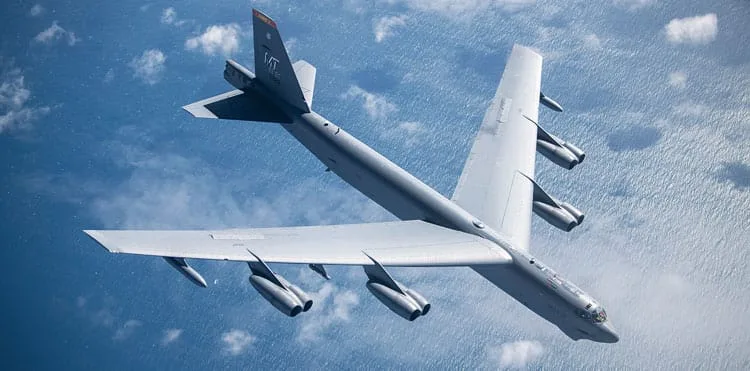
Only two countries in the world, the United States and Russia, currently possess bomber aircraft capable of striking targets on any continent. India is now poised to join this exclusive group. According to defence media reports, India has launched a project to develop a strategic bomber for the Indian Air Force (IAF), signalling a major leap in its global strike capability.
The project, known as the Ultra Long Range Strike Aircraft (ULRA), remains highly classified, with few details officially released. However, initial reports indicate that the aircraft will boast a range of at least 12,000 kilometres. It is expected to draw inspiration from advanced platforms such as Russia’s Tu-160 and the United States’ B-21 Raider.
India’s ULRA will feature stealth capabilities to evade radar detection and the capacity to carry a heavy weapons payload. If the project comes to fruition, the Indian Air Force will gain the ability to strike anywhere in the world. In the event of a nuclear confrontation, this bomber would allow India to deliver nuclear payloads across global distances, adding to its current intercontinental missile capabilities, and overcoming the limitations of missile-based retaliation.
The aircraft is being designed to carry up to 12,000 kilograms of weapons over a range of 12,000 kilometres. Its arsenal is expected to include India’s own BrahMos-NG supersonic cruise missiles, Agni-1P short-range ballistic missiles, laser-guided bombs, and anti-radiation missiles designed to detect and destroy enemy radar systems. This wide weapons range will significantly enhance India’s offensive capabilities.
Reports also indicate that India will receive technical assistance from Russia and France. Russia is likely to share its expertise with the Tu-160 bomber, especially in airframe design and propulsion systems. Meanwhile, France may provide inputs on avionics and stealth technologies to ensure the aircraft’s survivability in contested enemy airspace.
While the current plan sets the bomber’s payload capacity at 12 tons, comparisons show that Russia’s Tu-160 can carry up to 40 tons, and the US B-21 up to 10 tons. The Tu-160 can fly a distance of 12,300 kilometres without refuelling, while the B-21 has a range of about 10,000 kilometres. India aims to match or exceed these capabilities.
A critical component of the project will be the engine. No final decision has been made yet. The Russian NK-32 engine is currently under consideration; it delivers 245 kilonewtons of thrust and powers the Tu-160. Alternatively, India is evaluating the possibility of modifying the General Electric GE-414 engine, which currently provides 98 kilonewtons of thrust. However, a bomber aircraft with a heavy payload will require an engine with significantly greater thrust. Given these requirements, the Russian NK-32 remains the primary candidate. The final configuration of the bomber, whether it will use two or four engines, will depend on the engine selection.
India already possesses a robust nuclear triad: land-based intercontinental ballistic missiles, submarine-launched ballistic missiles, and air-launched short-range missiles. A strategic bomber will complete this triad by enabling global nuclear strike capability through air power. Unlike missiles or fighters with limited range or reliance on forward airbases for refuelling, the strategic bomber will allow India to conduct large-scale, long-range missions from home soil.
According to reports, the design phase for the bomber’s internal weapons bay has already been completed. The preliminary design of the aircraft is expected to be revealed in the coming years, with prototype testing targeted for 2035. If successful, the ULRA will become India’s most ambitious defence project since the development of the fifth-generation Advanced Medium Combat Aircraft (AMCA).
The Indian Air Force is expected to require at least 12 to 14 of these bombers. Given the scale and complexity of the programme, the project is likely to cost billions of dollars and significantly increase India’s defence budget in the years to come.













Comments