





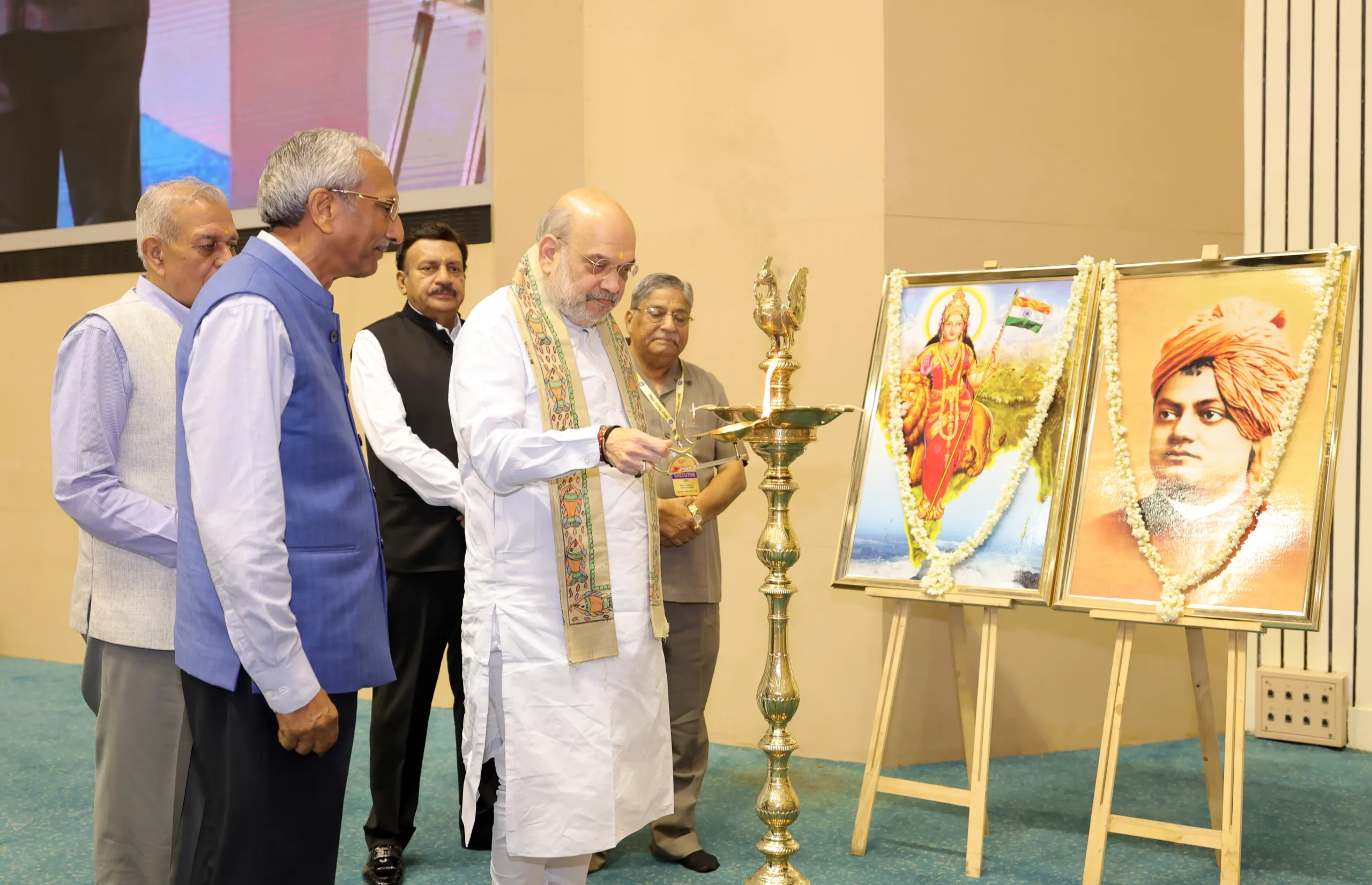
In a stirring address at the 63rd Foundation Day of the Bharat Vikas Parishad (BVP), Union Home Minister and Minister of Cooperation Amit Shah hailed the Parishad as a shining example of service-driven nationalism and deeply aligned it with Prime Minister Narendra Modi’s vision of Viksit Bharat by 2047.
Speaking at the ceremony attended by retired Justice Adarsh Kumar Goel, the national president of BVP, and other dignitaries, Shah stated that the Parishad is not just an organisation but a living embodiment of the values of Swami Vivekananda, combining dedication (samarpan), organisation (sangathan), and values (sanskar).
“Bridge Between Seva and Sanskar”
Praising the Parishad for working quietly for over six decades without seeking recognition, Shah said, “This organisation has connected service to structure, structure to values, and values to the mission of nation-building.” He noted its impact through disaster relief, blood donation camps, and cultural education in villages and schools.
With over 1,600 branches across 412 districts and more than 84,000 families involved, Shah described the BVP as a model for grassroots community engagement in the development process.
Modi Government’s Dual Push: Heritage and Modernity
Highlighting the Modi government’s transformative initiatives, Shah said, “PM Modi Ji has shown that development and heritage can move forward together.” He cited examples like the construction of the Ram Mandir, the revival of temples in Kashi, Ujjain, and Shardapith, and renaming of Rajpath to Kartavya Path as acts of cultural reawakening.
He juxtaposed this with rapid technological advancement, noting:
1) 5G connectivity reaching the masses
2) Digital payments extending to street vendors
3) Tripling of IITs, IIMs, and AIIMS
4) Push in AI, cybersecurity, and space tech
“From yoga to drones, from green hydrogen to Chandrayaan, India is scripting a unique development story under Modi Ji,” Shah asserted.
“Freedom from Every Kind of Slavery”: The Five Pledges
Linking the Parishad’s mission with the PM’s five key pledges—a developed India, freedom from colonial mindsets, pride in heritage, unity, and civic duty—Shah said that BVP has been living these principles long before they were articulated.
He emphasised how the replacement of the British-era Navy insignia with Shivaji Maharaj’s sword, the installation of Sengol in Parliament, and renaming of Andaman islands are symbolic acts of reclaiming India’s civilisational ethos.
Social Impact Metrics and Inclusive Growth
Shah highlighted Modi government’s socio-economic achievements in the past 11 years:
1) 55 crore Jan Dhan accounts opened
2) 15 crore households got piped drinking water
3) 12 crore toilets built
4) 4 crore houses provided under PMAY
5) 10 crore LPG connections via Ujjwala Yojana
6) Rs 20 lakh crore in Mudra loans, two-thirds to women
He said schemes like Lakhpati Didi and the Ministry of Cooperation are empowering the rural poor and small farmers, reiterating the government’s commitment to inclusive growth.
Honouring Forgotten Heroes and Cultural Unity
Shah also paid tribute to freedom fighter Hemam Nilamani Singh of Manipur, posthumously honoured at the event. Singh, inspired by Netaji Subhas Chandra Bose, had joined the Azad Hind Fauj and worked tirelessly for linguistic and cultural unity in the North-East.
“Government alone can’t do it all”: A call to social organisations
In his concluding remarks, Shah asserted, “Governments alone cannot solve every challenge. Organisations like Bharat Vikas Parishad are vital partners in the journey of Viksit Bharat.”
He urged the Parishad and other service organisations to continue their efforts with renewed vigour and ensure that India’s rise is rooted in both progress and pride.
As India marches toward its centenary of independence in 2047, the collaboration between civil society and government, as symbolised by this event, is being seen as pivotal in shaping a self-reliant, culturally rooted, and technologically advanced Bharat.
















Comments