





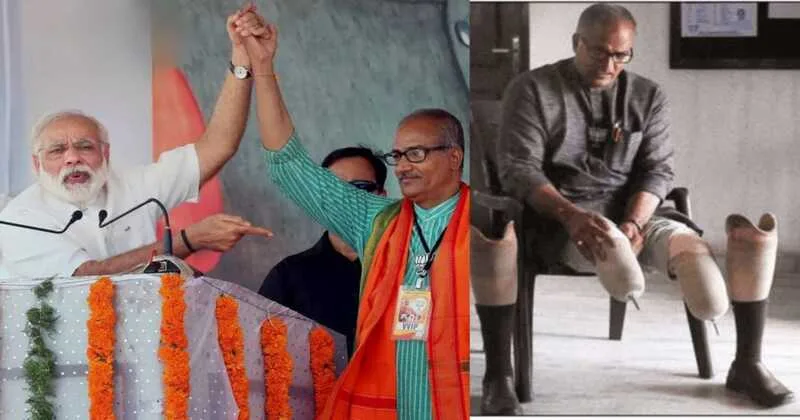
In a move loaded with political symbolism, President Droupadi Murmu has nominated C. Sadanandan Master, a respected teacher and survivor of Communist violence, to the Rajya Sabha. His inclusion under Article 80(1)(a) of the Constitution is not only a recognition of his contribution to public life and education but also a direct message against the long history of political violence in Kerala, especially that associated with the Communist Party of India (Marxist). However, the muted and disrespectful response from sections of the media and political opponents has exposed a deep-rooted intolerance towards those who challenge Kerala’s entrenched leftist establishment.
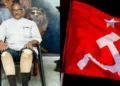
C Sadanandan Master’s life is emblematic of courage and resilience. A high school teacher from Kannur district with over two decades of service, he taught social science at Sree Durga Vilasam Higher Secondary School in Peramangalam. He holds degrees from Gauhati and Calicut Universities and currently serves as vice-president of the National Teachers Union in Kerala. He also edits its publication, Deshiya Adhyapaka Vartha. But his story took a tragic turn on January 25, 1994, when CPI(M) cadres attacked him near his home in Kannur, a district infamous for bloody political clashes. Then an RSS district sah- karyavah, Sadanandan was brutally assaulted, resulting in the amputation of both his legs. He now walks with artificial limbs but has never stepped back from public life. He contested the 2016 assembly election from Koothuparamba, a region steeped in CPI(M)-led political violence, and Prime Minister Narendra Modi personally campaigned for him, calling him a “living symbol” of political persecution.
Yet, despite his decades of public service and his status as a revered educator, many media outlets have deliberately chosen to address him simply as “C Sadanandan,” dropping the honorific “Master” that traditionally accompanies teachers’ names in Kerala. This erasure is not accidental; it reflects a deep-seated ideological bias in a media landscape heavily dominated by left-leaning journalists and activists.
In sharp contrast, leaders affiliated with the CPI(M) are consistently referred to with respectful titles—Govindan Master for CPI(M) Kerala State Secretary M.V. Govindan, Shailaja Teacher for former Health Minister and CPI(M) leader K.K. Shailaja, and Sreemathi Teacher for CPI(M) leader P.K. Sreemathi, also a former Health Minister. Even Ramesh Chennithala, senior Congress leader and former Opposition Leader in the Kerala Assembly, echoed this media narrative by referring to Sadanandan merely by his first name, omitting the title that recognises his educational contributions. This calculated omission is a form of soft censorship and ideological exclusion that reeks of selective intolerance.
Meanwhile, Kerala Governor Rajendra Vishwanath Arlekar set the record straight with a dignified congratulatory message that addressed him appropriately: “Hearty congratulations to Shri C. Sadanandan Master on becoming Rajya Sabha MP. His decades of service in public life and unwavering commitment to social welfare will enrich the Upper House. He is a living symbol of nationalist resistance against the violence of an inhuman ideology.”
Hearty congratulations to Shri C. Sadanandan Master on becoming #RajyaSabhaMP. He is a living symbol of nationalist resistance against the violence of an inhuman ideology. His decades of service in public life & unwavering commitment to social welfare will enrich the Upper House pic.twitter.com/MvTgPNcEjl
— Kerala Governor (@KeralaGovernor) July 13, 2025
The media’s refusal to acknowledge Sadanandan’s professional identity and stature mirrors a wider pattern of intolerance in Kerala’s political discourse. The same media that preaches tolerance and pluralism regularly denies respect and recognition to those who oppose the dominant left-Congress narrative. In doing so, they betray their own ideological biases while marginalising individuals like Sadanandan Master, who represent alternative voices and lived resistance.
Sadanandan’s nomination is a surgical strike not just on CPI(M)’s violent political legacy but also on the hypocrisy of Kerala’s so-called progressive intelligentsia. It is a reminder that resistance comes not only through protests and rhetoric, but also through the quiet strength of individuals who survive violence and continue to serve society. In deliberately misnaming such a figure, Kerala’s media and political elite have only exposed the intolerance they claim to oppose.












Comments