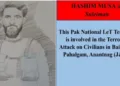
Ever since the early 1990s, India has been fighting a relentless, state-sponsored asymmetric war that has claimed thousands of innocent lives and destabilised the peaceful environment of its northern states, particularly Jammu and Kashmir. The architect of this proxy war is not the so-called non-state actor or a rogue militia, but a nuclear-armed state — Pakistan. Decades of India’s diplomatic overtures and peace initiatives have repeatedly run aground against the hard reality of Islamabad’s entrenched policy of using terrorism as an instrument of state policy.
India’s fight against terrorism is not just about national security; it is a fight for civilisational values, democratic ethos, and regional stability. The recently concluded Shanghai Cooperation Organisation (SCO) Summit held in Astana, China, once again offered a platform where India made it unequivocally clear that the menace of terrorism — especially that emanating from state sponsors — cannot be brushed aside in the name of diplomatic formalities or regional harmony.
Pakistan’s Decades-Long Strategy of Proxy War
The early 1990s marked the beginning of an orchestrated campaign by Pakistan to destabilise J&K through infiltration, subversion, and terrorism. Backed by the Inter-Services Intelligence (ISI), numerous terror outfits such as Lashkar-e-Taiba (LeT), Jaish-e-Mohammad (JeM), and Hizbul Mujahideen received arms, training, and safe havens within Pakistani territory. Their objective was clearly defined: to bleed India with a thousand cuts!
The nature of this proxy war was brutal. Civilians were massacred in markets, temples, and schools. The Kashmiri Pandit exodus from the Valley in the 1990s remains one of the darkest episodes of this campaign. Armed militants targeted minority communities, moderate Kashmiri leaders, and anyone who believed in the Indian Constitution.
Despite India’s repeated diplomatic efforts to engage Pakistan in meaningful dialogue—from the Lahore Bus initiative in 1999 to the Agra Summit in 2001—every gesture was met with betrayal. The 1999 Kargil War was a glaring example. Even as the then Prime Minister Vajpayee extended the hand of friendship, Pakistani soldiers dressed as shepherds crossed the Line of Control and occupied Indian positions in Kargil, forcing India into a full-scale military operation.
A Shift in India’s Response
Under the leadership of Prime Minister Narendra Modi, India’s counter-terrorism posture witnessed a strategic shift. From being reactive and restrained, India adopted a more assertive, proactive stance. The Uri terror attack in September 2016, in which 19 Indian soldiers were martyred, proved to be the tipping point. In a bold and unprecedented move, India launched surgical strikes across the Line of Control, targeting terror launchpads in Pakistan-occupied J&K (PoJK).
Again, in February 2019, following the Pulwama suicide bombing that killed 40 CRPF personnel, the Indian Air Force conducted air strikes deep inside Pakistan at Balakot, destroying a major Jaish-e-Mohammad training facility. These actions marked a paradigm shift: India would now hold not just terror groups but their state sponsors accountable!
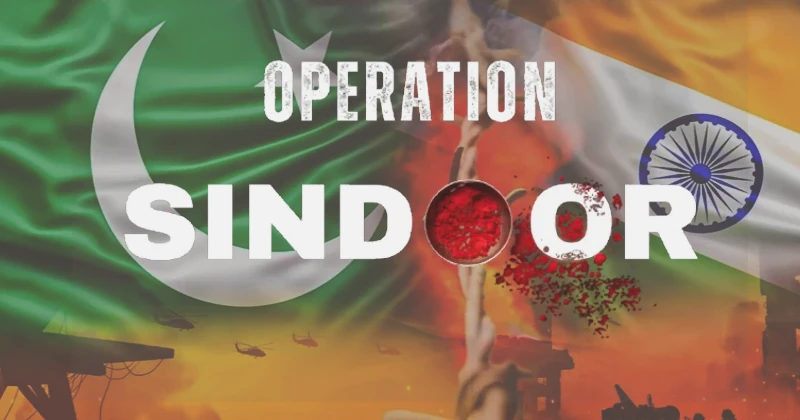
In May 2025, the Modi government once again demonstrated India’s hard power through a lightning operation— ‘Operation Sindoor’—carried out in response to a brutal terror attack on holidaying civilians in Pahalgam. This operation, targeting terrorist camps and select military installations in Pakistan, resulted in a humbling response from Pakistan’s DGMO, who was compelled to seek an immediate ceasefire. Such a move underscored India’s resolve and signalled a new doctrine: cross-border terrorism would henceforth invite disproportionate retaliation!
India’s Moral High Ground in Global Forums
India’s stance against terrorism has consistently resonated at international forums. Whether at the United Nations, G20, BRICS, or the SCO, New Delhi has always advocated for a rules-based international order where state sponsorship of terrorism must be universally condemned and sanctioned.
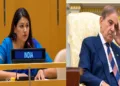
The recent Shanghai Cooperation Organisation Summit held in Astana, China, brought this challenge to the forefront once again. As Pakistan sought to dilute the language around terrorism in the Joint Declaration, India took a firm and principled stand. Led by Defence Minister Rajnath Singh, India made it unequivocally clear that peace and prosperity cannot co-exist with terrorism, nor can terrorism be sanitised or justified under any geopolitical pretext. India refused to endorse any document that failed to acknowledge terrorism as a principal threat to regional peace and stability.
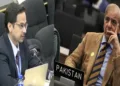
Pakistan, unsurprisingly, insisted on the omission of any explicit reference to terrorism. Its delegation pushed for vague references to “extremism” and “security challenges,” attempting to equate genuine political dissent with state-sponsored terror. But India countered this duplicity with facts, statistics, and examples of cross-border infiltration, drone-supplied arms, and terror funding networks that originate from Pakistani soil.
Thanks to India’s firm diplomacy and the growing global acknowledgement of its legitimate concerns, a separate note of dissent was recorded, and the SCO Summit saw India reiterate its red lines: “There can be no justification for terrorism. It must be stopped in all forms, including state-sponsored terrorism.”
The International Community’s Changing Tone
For years, India’s assertions on Pakistan’s role in global terrorism were met with ambivalence by many Western powers due to strategic compulsions in the Afghan theatre. However, that tide has turned. The 26/11 Mumbai attacks, where even American citizens were killed, exposed the Pakistani nexus. The killing of Osama bin Laden in Abbottabad in 2011 further sealed global doubts about Pakistan’s double game.
Today, countries like France, the US, Germany, and even Gulf nations such as the UAE and Saudi Arabia have extended unequivocal support to India’s fight against terrorism. Pakistan is now on the grey list of global watchdogs like the Financial Action Task Force (FATF) for failing to curb terror financing.
The fact that even China—Pakistan’s all-weather ally—was forced to eventually lift its technical hold on the UNSC listing of Masood Azhar as a global terrorist reflects the shifting sands of geopolitics. India’s growing economic clout, strategic partnerships, and principled diplomacy have begun to isolate Pakistan globally.
The Domestic Imperative: Strengthening Internal Security
While India’s external posture has hardened, equal focus has been placed on strengthening the internal mechanisms. The National Investigation Agency (NIA) has expanded its reach and capacity. The Unlawful Activities (Prevention) Act has been amended to enable the designation of individuals as terrorists, not just organisations. Enhanced coordination between intelligence agencies, border fencing, and advanced surveillance systems, such as drones and sensors, has significantly reduced infiltration.
Kashmir, though still targeted, is witnessing a declining graph in recruitment and local support for terrorism. Development projects, direct central funding, and the abrogation of Article 370 have ushered in new hope. For the first time, grassroots democracy through Panchayat elections is taking root in the Valley. A new generation of Kashmiri youth is more inclined toward technology and education than ideology and violence.
The Way Forward
India’s battle against Pakistan-sponsored terrorism is far from over. While tactical responses are necessary, they must be supplemented with strategic international pressure and sustained regional isolation of the perpetrators. Diplomatic tools, such as the FATF and Interpol’s Red Corner Notices, and economic sanctions must continue to be used effectively.
But beyond statecraft, India must continue to project its moral authority and civilisational values. Unlike Pakistan, whose strategic identity is built on perpetual hostility, India stands for peace, pluralism, and progress. This is not a war of weapons alone, but a war of narratives, where India must continue to expose Pakistan’s duplicity to the global audience.
The SCO platform, despite its limitations, remains an important arena. By standing firm against Pakistan’s denial and obfuscation, India has sent a clear message: we will not be silenced, compromised, or coerced when it comes to terrorism. Our national interest, our people’s security, and our moral clarity will continue to guide our actions, both at home and abroad.
India’s ongoing fight against Pakistan-sponsored terrorism is a story of remarkable restraint, strategic clarity, and calibrated strength. The recent developments at the SCO Summit once again underlined that New Delhi is no longer willing to play by the old rules of silence and appeasement. It is a new India that engages with the world from a position of strength, unafraid to speak the truth and determined to act against those who threaten its sovereignty and security.
As we move forward, the world must ask itself: How long will the global community tolerate state actors who use terrorism as policy? And how long before justice prevails for the victims of this long and bloody proxy war?
India, for its part, has made its choice abundantly clear. It shall fight for its people, for peace, and a better world.