





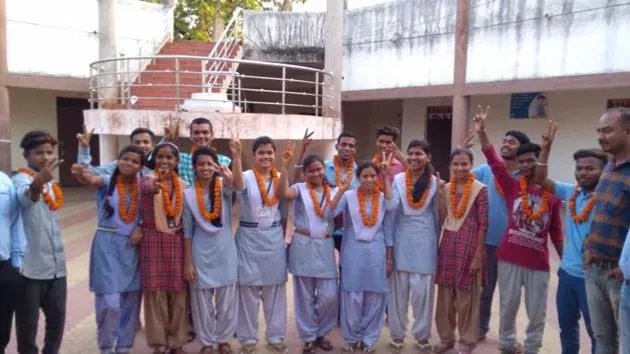
In a first-of-its-kind series of events that are likely to transform the landscape of tribal education and employment in India, the Ministry of Tribal Affairs, in its autonomous wing, National Education Society for Tribal Students (NESTS), has initiated three life-changing initiatives in partnership with Tata Motors Limited and UNICEF.
These initiatives are going to make a difference in the lives of more than 1.38 lakh tribal students studying at Eklavya Model Residential Schools (EMRSs) across 28 states and 8 union territories, giving them an opportunity to continue higher studies, acquire life skills, and career-specific training. The National Education Society for Tribal Students (NESTS) is a self-governing organisation that functions under the Ministry of Tribal Affairs to provide tribal students with good education through Eklavya Model Residential Schools (EMRSs) throughout India.
This three-way collaboration of the government, corporate sector, and an international humanitarian agency suggests a strong and comprehensive model of universal development. The three schemes are rigorous coaching for entrance tests like JEE and NEET, a virtual platform to build aptitude and confidence, and an employment-linked training scheme with industrial training and placement.
JEE and NEET Coaching: Reducing Competitive Exams Barrier for Tribal Students
The initial milestone was the signing on July 9, 2025, of a five-year Memorandum of Understanding (MoU) between NESTS, Tata Motors Limited, and Ex-Navodayan Foundation (ENF). The MoU is to provide IIT-JEE and NEET entrance exam intensive coaching to students pursuing studies in EMRSs to enable them to compete with their urban counterparts. The partnership seeks to bridge the long-standing history of educational imbalance that has kept tribal communities out of reach of elite higher learning institutions.
The program introduces a home-based Centre of Excellence (CoE) Programme for students in Grades XI and XII in the Science stream with excellent performance. The initial two centres will be established in Chankapur (Maharashtra) and Chintapalle (Andhra Pradesh) and expand depending on student performance and demand. Centres will provide classroom coaching according to national-level entrance exam specifications.
Besides physical academies, the program would be available to all digitally empowered EMRSs through virtual coaching modules. This virtual program would help students across the country, including remote tribal belts, avail structured test preparation and mentoring. There is particular emphasis on the students of Grades IX and X as well, who will receive basic training for Olympiads, National Talent Search Examination (NTSE), and the Kishore Vaigyanik Protsahan Yojana (KVPY).
The project, which will benefit directly over 1.38 lakh students, takes advantage of ENF’s hybrid learning expertise and Tata Motors’ social development orientation. The project is a significant drive towards democratising high-stakes educational opportunities for young tribal learners and aligns with national initiatives on inclusive education and talent development.
TALASH Initiative: Building Self-Awareness and Life Skills
In addition to the academic motivation, NESTS also launched TALASH (Tribal Aptitude, Life Skills and Self-Esteem Hub) in collaboration with UNICEF India. The country’s first national program is designed for tribal students studying in EMRSs with the goal of building up their personal development, emotional quotient, and career direction.
TALASH is a digital platform-based programme and offers self-discovery resources, confidence-building, and development of talents. The title represents the vision of making learners embark on an intensive search for their own potential. Inspired by the ‘Tamanna’ programme of NCERT, TALASH has psychometric tests to allow learners to identify their talents as well as their areas of interest. Based on the test results, each student is provided with a Career Card suggesting suitable careers according to their aptitudes as well as interests.
The curriculum goes a step further by introducing life skills training that prepares the learners with the capacity to solve problems, communicate, manage stress, and boost emotional intelligence. This focus on all-around development ensures that the students are not just academically prepared but also emotionally resilient and socially capable.
Understand the critical position of teachers in the development of a student, the programme also includes a robust e-learning portal for teachers. So far, 189 teachers from 75 EMRSs have been trained under TALASH and are now facilitating students with the support of tools available through the program. By December 2025, TALASH will operate in all EMRSs, reaching the entire tribal student base in India.
NESTS Commissioner Ajeet Kumar Srivastava also added that TALASH is a futuristic guarantee of chances for tribal students to be capable of unleashing their complete potential. He further emphasised that the platform fills in the gaps in education while cultivating a next generation of tribal leaders and agents of change.
Skill-Linked Education and Employment: Kaushalya Program with Tata Motors
In another collaborative plan, NESTS and Tata Motors have signed a second MoU on July 9, 2025, for offering skill-linked education and jobs to EMRS students who complete Grade XII. In this collaboration, tribal students will be inducted into the Tata Motors Kaushalya Program, which is a formal academia-industry interface that integrates formal schooling with vocational training and employment facilitation.
This five-year program targets over 50,000 students in the 18-23 years age group, who have passed Class X with a minimum of 60 percent marks and are studying Class XII in EMRSs. The candidates will be trained under an “Earn and Learn” system with the incorporation of a Diploma in Engineering and on-the-job training at Tata Motors manufacturing facilities. The scholarly component will be delivered through weekly classes with respective partner universities, and experiential training as per National Skills Qualification Framework (NSQF) norms.
An entire support package is included in the program. Students will receive a monthly stipend as per labour law, subsidised food and transport, uniforms, and personal protection equipment. They will also be covered under schemes like Mediclaim and personal accident.
Crucially, the program includes placement assistance with a “One Trainee, One Job” policy that guarantees employment opportunities at Tata Motors manufacturing and service locations nationwide. Top-performing students will have further opportunities to pursue higher education through programs such as BITS Pilani’s Work Integrated Learning Program. Oversight of the initiative will be carried out by a Joint Review Committee composed of representatives from both NESTS and Tata Motors.
This program not only improves employability among the youth of the tribal community but also supports the wider goals of the government in terms of economic development, social justice, and nation-building. By linking learning directly with employment, the program has the potential to create long-term value, ensuring monetary self-reliance and skill development for the tribal population.
Unified Vision for Empowerment
Together, these three programs form a powerful, integrated system for tribal youth development in India. By offering advanced education training, emotional and psychological guidance, and direct entry into industrial employment, NESTS and its partners are confronting tribal development on all angles necessary, intellectual, personal, and economic.
These initiatives align with the National Education Policy 2020 of holistic and inclusive learning and the United Nations Sustainable Development Goals, in particular those pertaining to quality education, decent work, and reduced inequalities. They also align with the vision of Atmanirbhar Bharat and Digital India by promoting digital empowerment and self-sufficiency among tribal communities.
The wider implications of these developments will take years to emerge, but the direction is certain. Students who were previously exposed to geographical confinement, economic disadvantage, and limited access to quality education are now being given institutional opportunities to thrive in universities, companies, and society at large.
Once the first class of EMRS students begins appearing in India’s IITs, medical schools, and auto plants, it will unmistakably become clear that this is not a policy but an issue of fairness. It is about a future where tribal children are not defined by what they can’t do but by all that they can.











Comments