





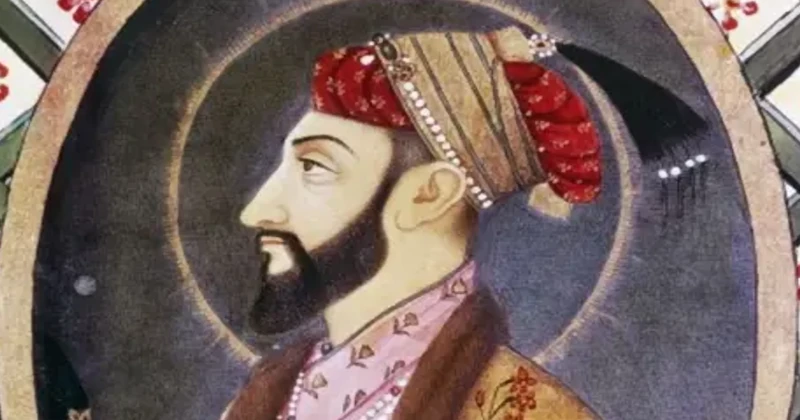
There has been a familiar and well-worn pattern to many recent communal conflagrations: An event, social media post or speech goes viral where a historical figure is celebrated for presumably no other reason than their perpetration of genocide and zealotry against innocent civilians and their religious practices.
In response to this thinly veiled glorification of genocide, there is an upsurge of outrage from society, leading to hot-headed youth engaging in counter-provocations and religious jibes that erupt into riots, claiming innocent lives across communities and destroying livelihoods. At the same time, a flurry of media articles and prime-time news discussions engage in a farcical and unnecessary debate: whether genocidal individuals in Indian history who wanted to be known – nay, celebrated – for their actions were truly as bad as society remembers them to be.
Previously, I believed that these debates were necessary to communicate the reality of history to younger generations. Yet, I increasingly question the utility of carting out the same set of misinformation specialists, who put forth historically illiterate but attractive-sounding arguments, and giving them airtime as if their view might be reasonable. This is a cycle that recurs frequently, particularly around election time.
Genocide Justification: A Tiring Farrago of Distortions & Selective Logic
We are told that historical narratives on the number of people killed or temples destroyed are likely exaggerated. Still, similar narratives about such despots’ allowing’ a temple to be built somewhere or marrying someone from a different community are to be taken as an unquestioned truth and symbol of religious tolerance, as if the incentive to exaggerate does not logically go both ways (for example, to confuse the restive native population as part of information warfare). Alternatively, we are told that, irrespective of the historical record, the justification for these actions was ‘political’ and not ‘religiously motivated’, which somehow makes it more acceptable for the proponents of this argument. Curiously, they do not apply similar logic to modern Indian political ideologies they dislike.
If all else fails, decontextualised ‘evidence’, such as the presence of Rajput rulers in Aurangzeb’s darbar, is used to deny genocidal intent on the basis that members of the targeted community being part of the administration must imply that it was not bigoted. This is an attractive-sounding distortion, that flies in the face of countless examples in history where members of victimised communities have either sought to reach a détente with their persecutors to try and protect their community and family or in some cases, have collaborated to immorally advance their self-interest at the cost of the lives of their people (for instance: the existence of Jewish collaborators of Nazi Germany despite the horrors of the Holocaust).
History demonstrates that it is often only a short walk from permitting an insidious ideology to facing the violent consequences of its zealotry. To continue to let these narratives fester in society, fits well what Austrian philosopher Karl Popper famously described as the Paradox of Tolerance:
“Unlimited tolerance must lead to the disappearance of tolerance. If we extend unlimited tolerance even to those who are intolerant […] then the tolerant will be destroyed, and tolerance with them. As long as we can counter [intolerant philosophies] by rational argument and keep them in check by public opinion, suppression would certainly be most unwise. But we should claim the right to suppress them if necessary even by force […if] they are not prepared to meet us on the level of rational argument, but begin by denouncing all argument” – Note 4, Notes to Ch.7, Notes to Volume I, The Open Society and Its Enemies (https://doi.org/10.1515/978069121206)
In essence, toleration is not an absolute virtue but a conditional one. We already recognise this; there is no toleration of a right to murder, nor a right to casteist or misogynistic speech. Why do we then tolerate the glorification of genocide – the attempted eradication of an entire community?
This cycle of provocation and violence must stop. There is no need for society to have to constantly re-litigate the reasons why Aurangzeb is rightfully believed to have conducted a genocide on religious grounds. Irrespective of ideological inclination, any reasonable person will accept that this is prima facie true, given the mountain of evidence available – and passed down from generation to generation. That Indian civilisation continued to survive and thrive after their rule is evidence of their failure in completely achieving their aim, not a sign of moderation or complexity of character.
A harsh line needs to be drawn between genuine discussion/debate over complex historical figures (such as Akbar, Shah Jahan, Awadh Nawabs) and propagandistic genocide denials attempting to rehabilitate or celebrate figures like Taimur.
What should be the solution?
Sustained peace and harmony can never materialise if we continue to shy away from facing the truth. The solution must be to recognise our own historical experience of genocide and oppression, as others, including the Armenian and Jewish communities, have done. A conclusive law is needed that enshrines this reality through the Indian Parliament.
Such Memory Laws are present around the world. Many European nations, e.g. Germany, along with Israel, have laws against Holocaust denial that include fines and jail terms. Armenia actively advocates for countries around the world to recognise the Armenian Genocide. Ukraine used its Parliament to recognise the 1932-33 famine (termed the Holodomor) as a genocide and advocates for global recognition of this event. Spain exhumed the remains of notorious dictator Francisco Franco to rebury them in a separate location and has introduced the Law of Democratic Memory, which allows for the removal of symbols of Francoism and prescribes fines. For India to recognise its history, then, would place it at a diverse table of nations that includes Western liberal democracies.
To properly construct such a Genocide Memory and Remembrance Law, extensive historical evidence should be collated with the assistance of Indian experts, particularly Indian scholarship and Indian-language evidence that is often ignored by the wider world. This should identify a select group of individuals, such as Aurangzeb, Taimur, Mahmud Ghazni, Bakhtiar Khilji, and Sikander Shah Miri ‘Butshikan’, who aimed to brutally eradicate India’s native communities and way of life in a manner that fits the definition of genocide. It may also include individuals more recent in India’s history, such as British officials involved in perpetrating the Bengal Famine of 1943.
Four Key Characteristics of a Genocide Memory and Remembrance Law
- Serving Historical Remembrance: It should lay out the extensive evidence of genocidal actions of such figures to lock this into the Indian Parliament’s historical record and hinder ill-informed/biased media sources framing this as a decision with politico-religious motivations. Provisions should be made to ensure that students following any education syllabus (national, State or international boards) are appropriately educated about these crimes against humanity.
- Ban on Rehabilitation: To protect communities and preserve lives, it should include harsh sanctions for those attempting to do so, with jail terms that significantly exceed standard incitement to hate and a ban on sharing any work to this effect. However, the law should not just stop there. For Indian citizens, such actions should lead to a permanent bar on any form of government employment/association, including Central, State or PSU employment, without a reassessment by the Ministry of Home Affairs. For Foreign citizens, this should include permanent bans on travelling to India.
- No Positive Commemoration: No form of positive commemoration should be acceptable, whether in the form of the names of social, physical and cultural infrastructure or events and fairs. This would include mandatory renaming of any towns named after such figures. I would argue that there should also be a bar on naming future children after these figures – a practice employed in Germany.
- Asset Restitution: All land and assets that were acquired through the course of genocide should be returned to the State (or rightful owners, if they can be found) as a matter of due justice, as was done after WWII with the assets plundered by the Nazis. It would be inappropriate to continue to signal to society that one can plunder and slaughter, but can still enjoy the proceeds of the crime in perpetuity.
What about the forbidden fruit effect?
A common argument, particularly from developed nations, is that banning speech like Holocaust denial will make it more appealing. This works through the forbidden fruit effect, where humans are often attracted to things/ideas that seem forbidden to them.
Yet, there are major issues with the forbidden fruit argument itself. For one, there remains broad support in developed nations for prohibitions on terrorist speech and other forms of hate speech, such as dehumanising racist speech. These forms of speech are not exceedingly common either. What this suggests is that as long as the risks of certain kinds of inciteful speech are considered serious enough, and punishments are severe enough, laws tend to be fairly effective in keeping the peace. That Holocaust denial might suffer from the forbidden fruit effect might have more to do with weak enforcement/punishments and longstanding anti-Semitic undercurrents in some societies, than an issue with Genocide Memory Laws in general.
More importantly, there are major differences between the experiences of these nations and those of India. Genocide glorification is not limited to separate Internet cesspools or the corners of society. Still, it is actively promoted on social media, through large rallies, and receives political and academic backing. This is an active challenge that continues to cause communal tensions, economically damaging bandhs and claims lives. The risks to society are much greater, and demand correspondingly greater punishment – something already recognised in prohibitions against casteist speech. Moreover, when the public is confident that harsh action will be taken under the law, the likelihood of escalation to unnecessary communal conflict (especially around election time) should decrease, benefiting everyone.
For far too long, sentiments have been insidiously hurt through genocide celebration masquerading as historical debate or freedom of speech – it’s time to put this to a stop.














Comments