





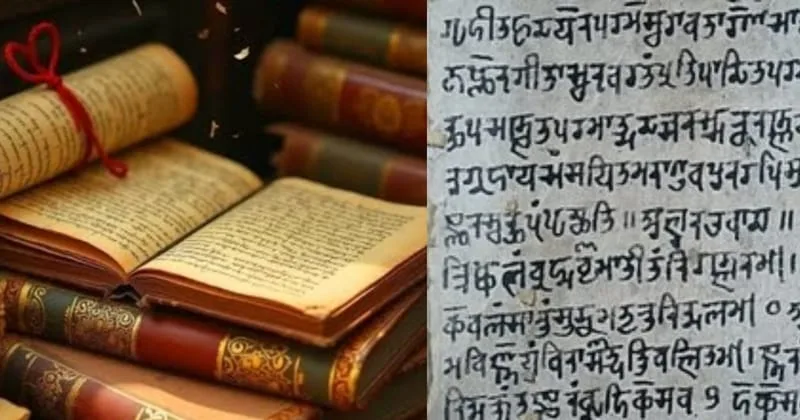
The Ministry of Culture has launched a landmark initiative under the Gyan Bharatam Mission to preserve and digitise nearly 50 crore pages of rare Indian manuscripts.
These manuscripts—inscribed on palm leaves, birch bark, paper, and cloth—represent a rich cultural legacy and are written in diverse languages such as Sanskrit, Tamil, Telugu, Arabic, Persian, Bengali, and Malayalam.
The ambitious digitisation effort is expected to take at least three years, with the ministry already beginning the tendering process to appoint an agency for the task. Once completed, the digitised content will be made freely accessible to the public through an online portal, opening up centuries of knowledge to scholars, students, and the general public alike.
Many of the manuscripts are extremely fragile due to their age and require careful, delicate handling. Some contain intricate visual content such as maps, charts, and illustrations, though the full extent of this material will only become clear during the digitisation process. Common challenges include ink bleeding, worm damage, stains, and the use of translucent pages.
The Gyan Bharatam Mission aims to safeguard India’s ancient knowledge systems and cultural heritage, ensuring they are preserved for future generations and made globally accessible.
Officials note that digitisation will not only aid long-term conservation but also make India’s vast and diverse manuscript heritage accessible from anywhere in the country.
To support this effort, the government has restructured the National Mission for Manuscripts into the Gyan Bharatam Mission—a Central Sector Scheme running from 2024 to 2031, with a budget allocation of Rs 482.85 crore dedicated to digitisation and public outreach.
As of April, approximately 3.5 lakh manuscripts—comprising over 3.5 crore folios—have already been digitised. Of these, around 1.35 lakh have been uploaded online, with nearly 76,000 manuscripts available for free public access.
















Comments