Iran-Israel war escalates: Hospital hit, Nuclear sites struck
June 9, 2026
  • Read Ecopy
  • Circulation
  • Advertise
  • Careers
  • About Us
  • Contact Us
Android AppiPhone AppArattai
Organiser
  • ‌
  • Bharat
    • Assam
    • Bihar
    • Chhattisgarh
    • Jharkhand
    • Maharashtra
    • View All States
  • World
    • Asia
    • Europe
    • North America
    • South America
    • Africa
    • Australia
  • Editorial
  • International
  • Opinion
  • RSS @ 100
  • More
    • Op Sindoor
    • Analysis
    • Sports
    • Defence
    • Politics
    • Business
    • Economy
    • Culture
    • Special Report
    • Sci & Tech
    • Entertainment
    • G20
    • Azadi Ka Amrit Mahotsav
    • Vocal4Local
    • Web Stories
    • Education
    • Employment
    • Books
    • Interviews
    • Travel
    • Law
    • Health
    • Obituary
  • Subscribe
    • Subscribe Print Edition
    • Subscribe Ecopy
    • Read Ecopy
  • ‌
  • Bharat
    • Assam
    • Bihar
    • Chhattisgarh
    • Jharkhand
    • Maharashtra
    • View All States
  • World
    • Asia
    • Europe
    • North America
    • South America
    • Africa
    • Australia
  • Editorial
  • International
  • Opinion
  • RSS @ 100
  • More
    • Op Sindoor
    • Analysis
    • Sports
    • Defence
    • Politics
    • Business
    • Economy
    • Culture
    • Special Report
    • Sci & Tech
    • Entertainment
    • G20
    • Azadi Ka Amrit Mahotsav
    • Vocal4Local
    • Web Stories
    • Education
    • Employment
    • Books
    • Interviews
    • Travel
    • Law
    • Health
    • Obituary
  • Subscribe
    • Subscribe Print Edition
    • Subscribe Ecopy
    • Read Ecopy
Organiser
  • Home
  • Bharat
  • World
  • Operation Sindoor
  • Editorial
  • Analysis
  • Opinion
  • Culture
  • Defence
  • International Edition
  • RSS @ 100
  • Magazine
  • Read Ecopy
Home World

Iranian missile hits Israeli hospital, Netanyahu vows crushing response as Israel pounds Nuclear sites in Arak & Natanz

An Iranian missile struck an Israeli hospital, prompting Israel to retaliate with precision strikes on Iran's key nuclear sites in Arak and Natanz. As missile exchanges intensify, the region teeters on the brink of full-scale war with potential US involvement looming

WEBDESKWEBDESK
Jun 19, 2025, 04:30 pm IST
in World, West Asia, Asia, International Edition
Follow on Google News
FacebookTwitterWhatsAppTelegramEmail

A week of relentless missile exchanges between Israel and Iran has reached a new and dangerous threshold, plunging West Asia toward a broader regional war. The seventh consecutive day of hostilities saw a major Iranian missile strike hitting Soroka Medical Center in southern Israel, prompting a furious response from Israeli leadership, who vowed to “exact the full price” from Tehran. Israel, in turn, responded with precision strikes on Iran’s sensitive nuclear facilities in Arak and Natanz—marking an escalation not seen in the region since the Gulf War.

As the world watches with mounting alarm, a deeper conflict between two of the most ideologically and militarily opposed nations in the Middle East is not just unfolding—it is accelerating with each passing hour.

In what Israeli officials are calling a “war crime,” an Iranian ballistic missile struck the Soroka Medical Center in Be’er Sheva, southern Israel, early Thursday morning. The attack severely damaged the emergency trauma unit and forced dozens of patients, doctors, and medical staff to flee to underground shelters. The hospital, one of the largest in southern Israel, plays a key role in treating both civilian and military casualties, making it a critical infrastructure node.

According to eyewitnesses, “windows shattered, ceilings collapsed, and smoke filled the wards.” Three staff members were reportedly injured, and at least one patient remains in critical condition. While the Iranian regime has not officially commented on the targeting of the hospital, Israeli authorities say the action is part of a calculated campaign to spread psychological terror.

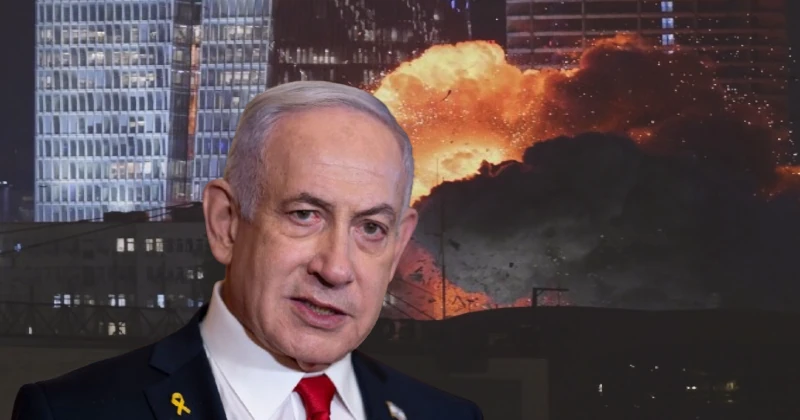
Prime Minister Benjamin Netanyahu addressed the nation shortly after the attack, warning Tehran of dire consequences. “The Iranian regime will pay the full price for every drop of Israeli blood. We will hunt down their military assets, nuclear facilities, and command structures wherever they are,” he declared.

Within hours of the hospital strike, the Israel Defense Forces (IDF) launched a series of coordinated airstrikes inside Iranian territory, directly targeting Iran’s nuclear infrastructure—a move laden with geopolitical risk. According to IDF sources, the Arak heavy water reactor and a suspected weapons development site near Natanz were among the primary targets.

The Arak reactor, which Iran claims was decommissioned under the 2015 Joint Comprehensive Plan of Action (JCPOA), had been the subject of suspicion for years. Heavy water reactors produce plutonium as a byproduct, which can be used for making nuclear weapons. Although the reactor was filled with concrete under the terms of the JCPOA, Iran has since informed the International Atomic Energy Agency (IAEA) of its plans to reactivate the facility by 2026.

In a pre-strike announcement on social media, the IDF warned civilians in Arak to evacuate immediately. Iranian state media later confirmed that the facility had been evacuated prior to the attack and that no radiation leak or casualties were reported. However, satellite images reviewed by regional defence analysts indicate that structural damage to the core seal component may have rendered the facility inoperable for years.

Meanwhile, Israel targeted additional assets at Natanz, a site central to Iran’s uranium enrichment programme. While Natanz has been attacked previously, the latest air raids reportedly struck deeper underground facilities believed to be housing advanced centrifuges. The IDF stated: “We are taking all necessary measures to neutralise Iran’s capacity to build a nuclear weapon. The Natanz strike was precise and aimed at crippling high-value assets.”

In retaliation, Iran launched approximately 30 ballistic missiles into Israeli territory, targeting both military and civilian areas. Several missiles struck apartment complexes in central Israel, including cities like Holon and Petah Tikva, wounding at least three civilians and damaging multiple buildings. While Israel’s multi-layered missile defence systems—Iron Dome, David’s Sling, and Arrow—intercepted the majority of incoming missiles, the barrage underscored Iran’s capacity to overwhelm even the most advanced defences.

Also Read: Judge Cash Row: SC inquiry panel finds multiple witnesses saw huge pile of cash in Justice Varma’s home

As tensions spiral, the United States finds itself at the edge of military involvement. Former President and current Commander-in-Chief Donald Trump, known for his strategic unpredictability, was asked on June 19, whether the US would join Israeli efforts. “I may do it, I may not do it. I mean, nobody knows what I’m going to do,” Trump said, adding fuel to the geopolitical uncertainty.

However, defence insiders reveal that the Pentagon has activated operational readiness for a potential deep-strike mission against Iran’s Fordow and Natanz nuclear sites, possibly in coordination with the Israeli Air Force. US intelligence also confirms increased activity in the Persian Gulf, with carrier strike groups repositioning near the Strait of Hormuz.

If the US joins Israeli operations, it could tip the balance of power significantly and draw in regional actors such as Hezbollah, the Houthis, and even Iraqi Shia militias, thereby risking a full-fledged multi-front war.

In Brussels, Paris, and Berlin, diplomats issued urgent appeals for de-escalation, but their influence over the two warring nations remains minimal. European Union High Representative for Foreign Affairs, Josep Borrell, stated: “The strikes on nuclear facilities raise global security concerns. We call for immediate cessation of hostilities.” However, no concrete diplomatic initiative has emerged beyond statements.

The UN Security Council, paralysed by veto threats, has yet to issue a unified resolution. Russia and China have blamed Israel for escalating the situation, while India and Japan have issued neutral calls for peace, citing concerns over oil supply chains and regional security.

Topics: Israel-Iran WarNetanyahuNuclear SitesIsraeli hospitalIranian missileArakNatanzIDF
ShareTweetSendShareSend
✮ Subscribe Organiser YouTube Channel. ✮
✮ Join Organiser's WhatsApp channel for Nationalist views beyond the news. ✮
Previous News

Judge Cash Row: SC inquiry panel finds multiple witnesses saw huge pile of cash in Justice Varma’s home

Next News

Beyond Belief: 16 cases of Muslim sacrilege excused by claims of “mental instability”

Related News

Gholamreza Soleimani, commander of Iran's Basij paramilitary force

“Eliminated”: Israeli Defence Forces confirm death of senior Iran military chief Soleimani

Ambassador of Israel to India, Reuven Azar

Israel envoy Reuven Azar says duration of conflict with Iran depends on Tehran’s willingness to change course

Israeli Airforce carried out a series of strikes on the Basij and internal security command centres in Tehran (Image Source: Israel Defense Forces)

Israel Air Force says “extensive” wave of strikes against Iranian regime targets in Tehran

Representative Image

Israel activates interception systems as Iranian missile barrages trigger nationwide alerts

Iran carried out a missile strike on the main headquarters of the U.S. Navy’s 5th Fleet in Manama

Iran launches targeted strikes against US military base in Bahrain

Raed Saad, Hamas Leader eliminated by Israel

Israel eliminates Hamas leader Raed Saad, kingpin of October 7 massacre; Gains edge in dismantling terror network

Load More

Latest News

Beyond Alignment: How India is Carving Its Own Strategic Space Amid Global Power Play

Beyond Alignment: How India is Carving Its Own Strategic Space Amid Global Power Play

Chinese President Xi Jinping, Russian President Vladimir Putin and Prime Minister Narendra Modi

China’s New Tone Towards India: Tactical shift or strategic necessity? What Beijing’s push for RIC ties really signals

Keralam’s 2026 Fiscal Health White Paper has unveiled a mounting debt burden of Rs 5.07 lakh crore, exposing deep structural challenges in the state’s economy

Keralam’s Financial Reality Check: White Paper exposes Rs 5.07 lakh crore debt crisis

Tamil Nadu: TVK government arrests YouTuber Maridhas; BJP alleges crackdown on dissent

‘Every grave or dargah is not automatically Waqf property’: Madras High Court’s landmark verdict

US Court strikes down Trump’s $100,000 H-1B fee as executive overreach; Lawmakers & Republicans welcome the verdict

Union Defence Minister Rajnath Singh

Uttar Pradesh: Defence land goes green; Rajnath Singh clears 250 MW solar project in Sitapur

Afghanistan Foreign Minister Amir Khan Muttaqi and External Affairs Minister Dr. S. Jaishankar(File Photo)

India extends gratis long-term business visas to Afghan traders; Slams Pakistan for “trade & transit terrorism”

How Modi's Zero-tolerance doctrine reshaped India's anti-terror policy (This is an AI generated image)

Twelve Years of Modi Government and the rise of India’s zero-tolerance doctrine against terrorism

Press Conference organised by Janjati Suraksha Manch at the Press Club, Ranchi, National Convener Dr Raj Kishore Hansda

Success of Janjati Sanskritik Samagam symbolises unity and cultural pride: Dr Raj Kishore Hansda

Load More
  • Privacy
  • Terms
  • Cookie Policy
  • Refund and Cancellation
  • Delivery and Shipping

© Bharat Prakashan (Delhi) Limited.
Tech-enabled by Ananthapuri Technologies

  • Home
  • Search Organiser
  • Bharat
    • Assam
    • Bihar
    • Chhattisgarh
    • Jharkhand
    • Maharashtra
    • View All States
  • World
    • Asia
    • Africa
    • North America
    • South America
    • Europe
    • Australia
  • Editorial
  • Operation Sindoor
  • Opinion
  • Analysis
  • Defence
  • Culture
  • Sports
  • Business
  • RSS @ 100
  • Entertainment
  • More ..
    • Sci & Tech
    • Vocal4Local
    • Special Report
    • Education
    • Employment
    • Books
    • Interviews
    • Travel
    • Health
    • Politics
    • Law
    • Economy
    • Obituary
  • Subscribe Magazine
  • Read Ecopy
  • Advertise
  • Circulation
  • Careers
  • About Us
  • Contact Us
  • Policies & Terms
    • Privacy Policy
    • Cookie Policy
    • Refund and Cancellation
    • Terms of Use

© Bharat Prakashan (Delhi) Limited.
Tech-enabled by Ananthapuri Technologies