Rakhine Corridor: Power struggle between the great powers in the Indo-Pacific region
December 5, 2025
  • Read Ecopy
  • Circulation
  • Advertise
  • Careers
  • About Us
  • Contact Us
Android AppiPhone AppArattai
Organiser
  • ‌
  • Bharat
    • Assam
    • Bihar
    • Chhattisgarh
    • Jharkhand
    • Maharashtra
    • View All States
  • World
    • Asia
    • Europe
    • North America
    • South America
    • Africa
    • Australia
  • Editorial
  • International
  • Opinion
  • RSS @ 100
  • More
    • Op Sindoor
    • Analysis
    • Sports
    • Defence
    • Politics
    • Business
    • Economy
    • Culture
    • Special Report
    • Sci & Tech
    • Entertainment
    • G20
    • Azadi Ka Amrit Mahotsav
    • Vocal4Local
    • Web Stories
    • Education
    • Employment
    • Books
    • Interviews
    • Travel
    • Law
    • Health
    • Obituary
  • Subscribe
    • Subscribe Print Edition
    • Subscribe Ecopy
    • Read Ecopy
  • ‌
  • Bharat
    • Assam
    • Bihar
    • Chhattisgarh
    • Jharkhand
    • Maharashtra
    • View All States
  • World
    • Asia
    • Europe
    • North America
    • South America
    • Africa
    • Australia
  • Editorial
  • International
  • Opinion
  • RSS @ 100
  • More
    • Op Sindoor
    • Analysis
    • Sports
    • Defence
    • Politics
    • Business
    • Economy
    • Culture
    • Special Report
    • Sci & Tech
    • Entertainment
    • G20
    • Azadi Ka Amrit Mahotsav
    • Vocal4Local
    • Web Stories
    • Education
    • Employment
    • Books
    • Interviews
    • Travel
    • Law
    • Health
    • Obituary
  • Subscribe
    • Subscribe Print Edition
    • Subscribe Ecopy
    • Read Ecopy
Organiser
  • Home
  • Bharat
  • World
  • Operation Sindoor
  • Editorial
  • Analysis
  • Opinion
  • Culture
  • Defence
  • International Edition
  • RSS @ 100
  • Magazine
  • Read Ecopy
Home Bharat

Rakhine Corridor: Power struggle between the great powers in the Indo-Pacific region

The proposed Rakhine Corridor has ignited geopolitical tensions involving China, the US, India, and Bangladesh, each vying to protect strategic interests amid Myanmar's instability. Internal rifts in Bangladesh and rising regional stakes underscore the urgent need for multilateral diplomacy and regional cooperation

Vedika ZnwarVedika Znwar
May 29, 2025, 09:00 pm IST
in Bharat, World
Follow on Google News
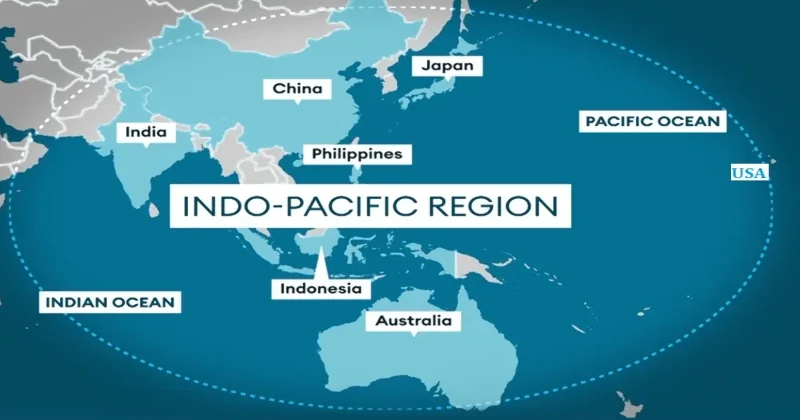
Representative Image

Representative Image

FacebookTwitterWhatsAppTelegramEmail

The unfolding crisis in Myanmar’s Rakhine State has emerged as a focal point of geopolitical contention, drawing the strategic interests of China, the United States, and India into a complex interplay. At the heart of this turmoil lies the proposed Rakhine Corridor, a development that has significant implications for regional stability and power dynamics.

Recently, A political and military deadlock has begun in Bangladesh over the proposed Rakhine Corridor. Interim government chief advisor Mohammad Yunus has supported the US-backed corridor. At the same time, Bangladesh Army Chief General Walker-uz-Zaman has strongly opposed it. This incident made public the gap between the army and the government.

China’s Strategic Imperatives

China’s vested interests in Rakhine are deeply rooted in its ambitious Belt and Road Initiative (BRI), particularly the China-Myanmar Economic Corridor (CMEC). This corridor, encompassing the Kyaukphyu deep-sea port and oil and gas pipelines, offers Beijing a critical maritime outlet to the Indian Ocean, effectively circumventing the strategic vulnerability of the Malacca Strait. The recent territorial gains by the Arakan Army (AA), which now controls a significant portion of Rakhine, pose a direct threat to these Chinese investments. In response, Beijing has actively engaged with various ethnic armed organizations, including brokering ceasefires to safeguard its infrastructural projects and maintain regional influence.

The United States’ Strategic Calculus

The United States perceives the instability in Rakhine as an opportunity to counterbalance China’s expanding footprint in Southeast Asia. Reports suggest that Washington is exploring the establishment of a humanitarian corridor through Bangladesh into Myanmar, ostensibly to provide aid but also potentially to support anti-junta forces. Such a move would not only challenge China’s dominance in the region but also align with U.S. interests in promoting democratic governance and human rights. However, this strategy risks escalating tensions and drawing the U.S. deeper into the complexities of Myanmar’s internal conflicts.

India’s Strategic Dilemma

India finds itself navigating a delicate balance amid the escalating US-China rivalry in its neighbourhood. The stability of Rakhine is crucial for India’s own strategic projects, notably the Kaladan Multi-Modal Transit Transport Project, which aims to enhance connectivity between India’s northeastern states and the Bay of Bengal. The ascendancy of the AA and the potential for increased Chinese or American influence in Rakhine could jeopardize these initiatives. Moreover, India’s concerns are compounded by the possibility of insurgent groups in Myanmar forging ties with separatist movements in India’s northeast, thereby exacerbating security challenges.

Bangladesh’s Internal Turmoil and Strategic Positioning

Bangladesh, sharing a border with Rakhine and hosting a substantial Rohingya refugee population, is directly impacted by the region’s instability. The proposal of the Rakhine Corridor has sparked internal discord, notably between the interim government led by Muhammad Yunus and the military establishment. While some factions view the corridor to address humanitarian concerns and assert regional influence, others fear it could entangle Bangladesh in broader geopolitical conflicts. This internal division reflects the broader challenges Bangladesh faces in balancing relations with both China and the United States.

Regional Implications and the Path Forward

The contest over the Rakhine Corridor underscores the broader strategic competition in the Indo-Pacific region. For China, securing its infrastructural investments and maintaining a strategic foothold in the Indian Ocean are paramount. The United States seeks to counter China’s influence and promote democratic values, while India aims to protect its regional interests and prevent the spillover of instability. Bangladesh, caught in the crosscurrents, must navigate its own domestic challenges while managing external pressures.

In this complex landscape, multilateral engagement and dialogue are essential. Regional stakeholders must prioritize diplomatic solutions that address humanitarian concerns, respect national sovereignties, and promote stability. Collaborative efforts, possibly under the auspices of ASEAN or the United Nations, could facilitate a coordinated response to the crisis in Rakhine, mitigating the risks of further escalation and fostering a more stable regional order.

Therefore, a sustainable resolution requires multilateral engagement and a commitment to regional stability. Stakeholders must prioritise dialogue, respect for sovereignty, and the well-being of affected populations. Collaborative efforts to address humanitarian concerns, support inclusive governance in Myanmar, and ensure the security of strategic projects can pave the way for a more stable and prosperous region.

In conclusion, the Rakhine Corridor serves as a microcosm of the intricate geopolitical dynamics in South and Southeast Asia. Navigating this complex landscape necessitates nuanced diplomacy, strategic foresight, and a commitment to regional cooperation.


Topics: Bangladesh ArmyMohammad YunusRakhine CorridorCMECUS-China rivalryASEAN
ShareTweetSendShareSend
✮ Subscribe Organiser YouTube Channel. ✮
✮ Join Organiser's WhatsApp channel for Nationalist views beyond the news. ✮
Previous News

Jora Shiva mandir in Bangladesh needs restoration

Next News

Odisha: Hardcore Maoist apprehended by police in Koraput, AK-47, ammunition seized

Related News

Defence Minister Rajnath Singh(File Photo)

Rajnath Singh hails ASEAN as cornerstone of Indo-Pacific peace, pitches MAHASAGAR vision for inclusive security

India's Prime Minister Narendra Modi, US President Donald Trump and Pakistan's Prime Minister Shehbaz Sharif

India moves toward $500bn US trade pact; Pakistan reels as Afghan conflict fuels crisis, tomato prices up 400 per cent

The Never-Ending Persecution of Minorities in Bangladesh — ‘If the world fails to act, Hindus will disappear entirely’

Advantage Assam 2.0:  Forging new frontiers in Assam’s global business engagement

Archipelago to Peninsula: India and Indonesia expand their strategic embrace

Bangladesh army personnel standing behind the barricades

In an atmosphere of chaos, Bangladesh army has become the collateral damage

Load More

Comments

The comments posted here/below/in the given space are not on behalf of Organiser. The person posting the comment will be in sole ownership of its responsibility. According to the central government's IT rules, obscene or offensive statement made against a person, religion, community or nation is a punishable offense, and legal action would be taken against people who indulge in such activities.

Latest News

Fact Check: Rahul Gandhi false claim about govt blocking his meet with Russian President Putin exposed; MEA clears air

Union Minister for Road Transport and Highways Nitin Gadkari (Right)

India set for highway overhaul as Union Minister Nitin Gadkari unveils nationwide shift to MLFF electronic tolling

RSS Akhil Bharatiya Prachar Pramukh Shri Sunil Ambekar

When Narrative Wars result in bloodshed, countering them becomes imperative: Sunil Ambekar

Ministry of Civil Aviation mandates emergency action: IndiGo ordered to stabilise flight operations by midnight

Chhattisgarh CM Vishnu Deo Sai at Panchjanya Conclave, Nava Raipur, Image Courtesy - Chhattisgarh govt

Panchjanya Conclave: Chhattisgarh CM Sai shares views on development projects in Maoist hotbed, women empowerment

Union Finance Minister Nirmala Sitharaman

‘TMC is holding Bengal back’: Sitharaman slams Mamata govt over industrial & healthcare setbacks

Karnataka: Muslim youth Mohammed Usman accused of sexual assault, blackmail & forced conversion in Bengaluru

Social Justice Is a cover; Anti-Sanatana dharma is the DMK’s real face at Thirupparankundram

Karnataka: Hindus demand reclaiming of Anjaneya Mandir at the site of Jamia Masjid; Setting wrongs of Tipu Sultan right

Assam govt proscribes all forms of Jihadi literatures in state; Islamic terror groups trying to recruit Muslim youth

Load More
  • Privacy
  • Terms
  • Cookie Policy
  • Refund and Cancellation
  • Delivery and Shipping

© Bharat Prakashan (Delhi) Limited.
Tech-enabled by Ananthapuri Technologies

  • Home
  • Search Organiser
  • Bharat
    • Assam
    • Bihar
    • Chhattisgarh
    • Jharkhand
    • Maharashtra
    • View All States
  • World
    • Asia
    • Africa
    • North America
    • South America
    • Europe
    • Australia
  • Editorial
  • Operation Sindoor
  • Opinion
  • Analysis
  • Defence
  • Culture
  • Sports
  • Business
  • RSS @ 100
  • Entertainment
  • More ..
    • Sci & Tech
    • Vocal4Local
    • Special Report
    • Education
    • Employment
    • Books
    • Interviews
    • Travel
    • Health
    • Politics
    • Law
    • Economy
    • Obituary
  • Subscribe Magazine
  • Read Ecopy
  • Advertise
  • Circulation
  • Careers
  • About Us
  • Contact Us
  • Policies & Terms
    • Privacy Policy
    • Cookie Policy
    • Refund and Cancellation
    • Terms of Use

© Bharat Prakashan (Delhi) Limited.
Tech-enabled by Ananthapuri Technologies