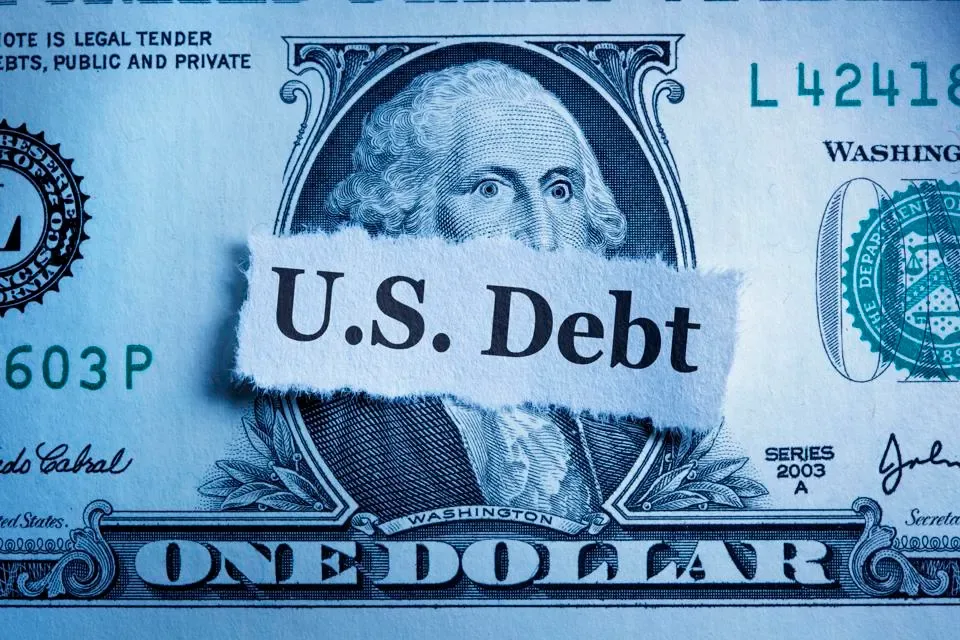
IMF warns debt-ridden US: Every American owes 3118, total soars to 36.2 trillion dollars; Nation runs on printing money
December 5, 2025
  • Read Ecopy
  • Circulation
  • Advertise
  • Careers
  • About Us
  • Contact Us
Android AppiPhone AppArattai
Organiser
  • ‌
  • Bharat
    • Assam
    • Bihar
    • Chhattisgarh
    • Jharkhand
    • Maharashtra
    • View All States
  • World
    • Asia
    • Europe
    • North America
    • South America
    • Africa
    • Australia
  • Editorial
  • International
  • Opinion
  • RSS @ 100
  • More
    • Op Sindoor
    • Analysis
    • Sports
    • Defence
    • Politics
    • Business
    • Economy
    • Culture
    • Special Report
    • Sci & Tech
    • Entertainment
    • G20
    • Azadi Ka Amrit Mahotsav
    • Vocal4Local
    • Web Stories
    • Education
    • Employment
    • Books
    • Interviews
    • Travel
    • Law
    • Health
    • Obituary
  • Subscribe
    • Subscribe Print Edition
    • Subscribe Ecopy
    • Read Ecopy
  • ‌
  • Bharat
    • Assam
    • Bihar
    • Chhattisgarh
    • Jharkhand
    • Maharashtra
    • View All States
  • World
    • Asia
    • Europe
    • North America
    • South America
    • Africa
    • Australia
  • Editorial
  • International
  • Opinion
  • RSS @ 100
  • More
    • Op Sindoor
    • Analysis
    • Sports
    • Defence
    • Politics
    • Business
    • Economy
    • Culture
    • Special Report
    • Sci & Tech
    • Entertainment
    • G20
    • Azadi Ka Amrit Mahotsav
    • Vocal4Local
    • Web Stories
    • Education
    • Employment
    • Books
    • Interviews
    • Travel
    • Law
    • Health
    • Obituary
  • Subscribe
    • Subscribe Print Edition
    • Subscribe Ecopy
    • Read Ecopy
Organiser
  • Home
  • Bharat
  • World
  • Operation Sindoor
  • Editorial
  • Analysis
  • Opinion
  • Culture
  • Defence
  • International Edition
  • RSS @ 100
  • Magazine
  • Read Ecopy
Home World North America USA

IMF warns debt-ridden US: Every American owes 3118, total soars to 36.2 trillion dollars; Nation runs on printing money

The United States is grappling with an unprecedented fiscal crisis, with its national debt soaring to 36.2 trillion dollars, equating to roughly 3118 dollars per citizen, as the nation increasingly relies on borrowing and monetary expansion

WEBDESKWEBDESK
May 22, 2025, 11:00 am IST
in USA, World
Follow on Google News
U.S. Sustains Itself With Debt and Dollars, but For How Long?

U.S. Sustains Itself With Debt and Dollars, but For How Long?

FacebookTwitterWhatsAppTelegramEmail

The United States is grappling with a fiscal crisis of unprecedented proportions, with its national debt set to surpass historical records in the coming years. At the end of 1945, following the economic strains of the Great Depression and World War II, the U.S. national debt briefly exceeded the size of its entire economy, reaching a debt-to-GDP ratio of approximately 106 per cent. According to projections from the Congressional Budget Office (CBO) released in January 2025, this record is likely to be broken by 2032, with the debt-to-GDP ratio projected to reach 117 per cent by 2034 under current laws.

However, the proposed Republican tax and spending megabill could accelerate this timeline, pushing the debt to 129 per cent of GDP by 2034, according to estimates from the Committee for a Responsible Federal Budget (CRFB).

Historical Context and Current Trajectory of U.S. National Debt

Historically, high U.S. debt levels have been associated with major crises such as wars, recessions, or pandemics. The post-World War II debt peak was a direct result of massive wartime spending. Similarly, debt surged during the 2008 financial crisis, the wars in Iraq and Afghanistan under President George W. Bush, and the COVID-19 pandemic under Presidents Donald Trump and Joe Biden.

However, the current escalation in debt is occurring during a period of relative economic stability, with low unemployment and no major wars or recessions. This anomaly is driven by persistent federal deficits, as government spending has consistently outpaced tax revenues over the past two decades.

As of January 2025, the U.S. national debt stands at over 36.2 trillion dollars, with a debt-to-GDP ratio of approximately 122.5 per cent, making it the eighth highest globally, according to the International Monetary Fund (IMF).

The CBO projects that without changes to current fiscal policies, the federal debt will climb to 49.6 trillion dollars by 2034, equivalent to 118 per cent of GDP, surpassing the 1945 record. The Republican megabill, which includes extending the 2017 Tax Cuts and Jobs Act, expanding tax cuts, and increasing military spending, could exacerbate this trend. The CRFB estimates that if the bill’s temporary tax provisions are made permanent, the debt could reach 129 per cent of GDP by 2034. Even if some tax cuts expire as written, the debt is still projected to hit 125 per cent of GDP.

More alarmingly, the Centre for American Progress, a liberal research group, forecasts that if all provisions are extended permanently, the debt could balloon to nearly 200 per cent of GDP by 2055, compared to 156 per cent under current law.

The rising cost of servicing this debt is a significant concern. In 2024, net interest payments on the federal debt reached 870 billion dollars, surpassing expenditures on both the military and Medicare. Elevated interest rates, which have risen from 1.1 per cent on 10-year Treasury securities in 2021 to a high of 5.0 per cent under the Biden administration, have increased borrowing costs. This trend, coupled with higher deficits, has prompted Moody’s to downgrade its assessment of U.S. government debt in 2025, citing the growing debt burden and increased risk of default.

U.S. Tariffs on India and India’s Reciprocal Response

Amid these fiscal challenges, the U.S. has implemented trade policies that could further complicate its economic landscape, including reciprocal tariffs introduced on April 2, 2025, targeting over 50 countries, including India. Reciprocal tariffs are designed to match the tax rates imposed by other countries on U.S. goods, aiming to protect domestic industries and pressure trading partners to lower their tariffs.

For India, which accounts for approximately 18 per cent of its 437 billion dollars in merchandise exports to the U.S. (valued at 78.66 billion dollars in FY 2023-24), these tariffs primarily affect sectors such as automobiles and electronics. The U.S. argues that these tariffs address perceived trade imbalances, but they risk escalating into trade wars, as seen in previous U.S.-China trade disputes.

India, in response, has imposed retaliatory tariffs on U.S. goods, mirroring the U.S. approach to ensure fairness in trade. These reciprocal tariffs target American products such as agricultural goods, chemicals, and machinery, aiming to offset the impact of U.S. tariffs on Indian exports. India’s economy, which is projected to grow at 6.7–6.8 per cent over the next two years, is less reliant on exports compared to other nations, with domestic demand driving much of its growth. S&P Global Ratings notes that India’s domestically oriented economy mitigates the impact of U.S. tariffs, estimating minimal disruption to its GDP growth.

The Irony of U.S. Economic Lectures to India

Despite its mounting debt crisis, the U.S. has often positioned itself as a global economic arbiter, offering critiques and policy recommendations to nations like India. U.S. officials and institutions, including the IMF and World Bank, have historically advised India on fiscal discipline, structural reforms, and economic liberalisation.

For instance, IMF Article IV consultations with India in 2023 emphasised fiscal consolidation and debt management, even as India’s economy demonstrated resilience with a government debt-to-GDP ratio of 89.26 per cent in 2023, significantly lower than the U.S.’s 122.5 per cent. India’s external debt stood at 629.1 billion dollars in 2023, a manageable figure relative to its 3.4 trillion dollars GDP, and its fiscal deficit targets of 4.8 per cent for FY 2024-25 and 4.4 per cent for FY 2025-26 are on track, supported by strong domestic demand and central bank dividends.

This contrast is stark. While the U.S. faces a debt-to-GDP ratio projected to exceed its historical peak, India’s economy is projected to grow robustly, with S&P Global Ratings affirming its ‘BBB-’ rating and positive outlook in May 2024. India’s fiscal metrics, including a tax revenue-to-GDP ratio of 12 per cent, reflect a stable economic trajectory, despite challenges like income tax cuts and global trade tensions. The U.S., with its debt projected to reach 129 per cent of GDP under the Republican bill, is in a precarious position to lecture India, particularly when its own fiscal policies—such as extending tax cuts without sufficient spending offsets—exacerbate its debt burden.

The U.S. national debt, projected to surpass its 1945 record in the coming years, poses significant risks to its economic stability and global standing. The proposed Republican tax and spending bill could accelerate this trajectory, pushing the debt-to-GDP ratio to unprecedented levels.

While the U.S. lectures India on economic management, India’s robust growth and relatively stable fiscal metrics contrast sharply with the U.S.’s challenges.


Topics: IMFTrump AdministrationUS DebtsTariff wars
ShareTweetSendShareSend
✮ Subscribe Organiser YouTube Channel. ✮
✮ Join Organiser's WhatsApp channel for Nationalist views beyond the news. ✮
Previous News

Gujarat: Teen Jasim Shahnawaz Ansari arrested for launching 50+ cyber attacks during Operation Sindoor

Next News

Why did India choose these 32 countries for Operation Sindoor’s diplomatic outreach?

Related News

US President Donald Trump and Venezuelan President Nicolas Maduro brace for heightened tensions as regional pressure mounts

US prepares military strike on Venezuela’s drug cartels while criticising India for targeting terror hubs in Pakistan

Representative image

US signals breakthrough in long-pending trade deal with India as negotiations gain strong new momentum

Representative Image

The BBC’s War of Words: How western media wages a psychological battle against India’s rise

“India’s growth shaping global opportunities”: PM Modi

US President Donald Trump unexpectedly invited Pakistan Prime Minister Shehbaz Sharif to speak at the Sharm el-Sheikh Summit on Gaza yesterday

US government shutdown enters 14 days as Trump diverts attention with global peace deals amid mass federal layoffs

Punishing allies and courting Moscow, the Trump administration reveals its blatant double standards

US Hypocrisy: Tariffs on India, clash with EU, and Trump holds secret trade talks with Russia

Load More

Comments

The comments posted here/below/in the given space are not on behalf of Organiser. The person posting the comment will be in sole ownership of its responsibility. According to the central government's IT rules, obscene or offensive statement made against a person, religion, community or nation is a punishable offense, and legal action would be taken against people who indulge in such activities.

Latest News

Russian Sber bank has unveiled access to its retail investors to the Indian stock market by etching its mutual fund to Nifty50

Scripting economic bonhomie: Russian investors gain access to Indian stocks, Sber unveils Nifty50 pegged mutual funds

Petitioner S Vignesh Shishir speaking to the reporters about the Rahul Gandhi UK citizenship case outside the Raebareli court

Rahul Gandhi UK Citizenship Case: Congress supporters create ruckus in court; Foreign visit details shared with judge

(L) Kerala High Court (R) Bouncers in Trippoonithura temple

Kerala: HC slams CPM-controlled Kochi Devaswom Board for deploying bouncers for crowd management during festival

Fact Check: Rahul Gandhi false claim about govt blocking his meet with Russian President Putin exposed; MEA clears air

Union Minister for Road Transport and Highways Nitin Gadkari (Right)

India set for highway overhaul as Union Minister Nitin Gadkari unveils nationwide shift to MLFF electronic tolling

RSS Akhil Bharatiya Prachar Pramukh Shri Sunil Ambekar

When Narrative Wars result in bloodshed, countering them becomes imperative: Sunil Ambekar

Ministry of Civil Aviation mandates emergency action: IndiGo ordered to stabilise flight operations by midnight

Chhattisgarh CM Vishnu Deo Sai at Panchjanya Conclave, Nava Raipur, Image Courtesy - Chhattisgarh govt

Panchjanya Conclave: Chhattisgarh CM Sai shares views on development projects in Maoist hotbed, women empowerment

Union Finance Minister Nirmala Sitharaman

‘TMC is holding Bengal back’: Sitharaman slams Mamata govt over industrial & healthcare setbacks

Karnataka: Muslim youth Mohammed Usman accused of sexual assault, blackmail & forced conversion in Bengaluru

Load More
  • Privacy
  • Terms
  • Cookie Policy
  • Refund and Cancellation
  • Delivery and Shipping

© Bharat Prakashan (Delhi) Limited.
Tech-enabled by Ananthapuri Technologies

  • Home
  • Search Organiser
  • Bharat
    • Assam
    • Bihar
    • Chhattisgarh
    • Jharkhand
    • Maharashtra
    • View All States
  • World
    • Asia
    • Africa
    • North America
    • South America
    • Europe
    • Australia
  • Editorial
  • Operation Sindoor
  • Opinion
  • Analysis
  • Defence
  • Culture
  • Sports
  • Business
  • RSS @ 100
  • Entertainment
  • More ..
    • Sci & Tech
    • Vocal4Local
    • Special Report
    • Education
    • Employment
    • Books
    • Interviews
    • Travel
    • Health
    • Politics
    • Law
    • Economy
    • Obituary
  • Subscribe Magazine
  • Read Ecopy
  • Advertise
  • Circulation
  • Careers
  • About Us
  • Contact Us
  • Policies & Terms
    • Privacy Policy
    • Cookie Policy
    • Refund and Cancellation
    • Terms of Use

© Bharat Prakashan (Delhi) Limited.
Tech-enabled by Ananthapuri Technologies