





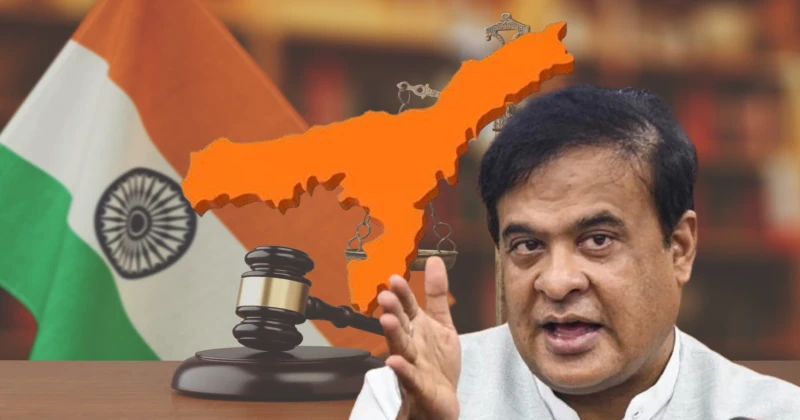
In the dynamic landscape of governance, few aspects reflect the strength of democracy more powerfully than the accessibility and efficiency of the judicial system. In Assam, under the visionary leadership of Chief Minister Dr. Himanta Biswa Sarma, the Bharatiya Janata Party (BJP)-led government has embarked on a transformative journey to modernize, digitize, and humanize the judicial landscape of the state. Over the past four years, numerous initiatives have been launched to ensure that justice is not only done, but also made more accessible, affordable, and efficient for every citizen of Assam. This comprehensive article highlights the key achievements in judicial reforms undertaken by the government from 2021 to 2025.
E-Filing Services: Moving Towards Paperless Courts
One of the hallmark achievements of the Himanta Biswa Sarma government has been the implementation and expansion of the e-Filing system across High Courts and District Courts in Assam. By enabling litigants and advocates to electronically file both civil and criminal cases, this initiative has ushered in a new era of digital judiciary, reducing the dependency on paper documents, cutting down costs, and significantly speeding up the initial process of case registration.
The impact of this reform is manifold:
- It brings convenience to both lawyers and litigants.
- Reduces physical visits to courts.
- Promotes environmental sustainability by minimizing paper use.
It represents a major step toward achieving a transparent, accountable, and efficient justice delivery system in line with Prime Minister Narendra Modi’s vision of “Digital India.”
E-Office System: Automating Court Administration
Efficiency in courtrooms is deeply tied to efficient office systems behind the scenes. In this regard, the e-Office system, which is now being adopted by the Gauhati High Court, has digitized key administrative processes within the judiciary. From workflow management to document tracking, this system brings about:
- Faster internal communication.
- Minimal reliance on manual records.
- Greater transparency in decision-making and document handling.
In the coming weeks, the full-fledged implementation of the e-Office in Gauhati High Court will serve as a model for courts across the country.
E-Sewa Kendras: Empowering the Common Litigant
Perhaps one of the most citizen-centric achievements of this tenure is the establishment of e-Sewa Kendras in the Gauhati High Court. Launched on March 3 2022, these centers are revolutionising public access to justice. Through these Kendras:
- Litigants can check case statuses.
- Obtain certified copies of judgments and orders.
- Receive assistance with e-filing of cases.
This initiative is especially beneficial to those who are less tech-savvy or unable to afford legal counsel, thereby strengthening inclusive justice.
MACT Portal: Justice for Accident Victims
Launched in May 2024, the Motor Accident Claim Information Portal (MACT) is a groundbreaking step in making compensation and justice more accessible to victims of motor accidents. By streamlining the process of filing, tracking, and processing claims, this portal ensures:
- Timely relief to accident victims.
- Easy access for advocates and representatives.
- Transparent management of claim data.
This citizen-centric innovation is a testament to the state government’s compassionate and responsive governance.
Virtual Courts: Justice at Your Fingertips
The Virtual Court for Traffic Violation Cases is a pioneering move by the Gauhati High Court and supported fully by the state government. Designed to eliminate the need for physical presence in court, virtual courts have:
- Saved time and money for citizens.
- Reduced congestion in traditional courts.
- Allowed for speedy adjudication of minor cases.
This initiative is not just a response to pandemic-induced constraints, but a future-oriented judicial innovation, ensuring that even minor violations are addressed without causing inconvenience to the public.
AI-Assisted Legal Translation: Bridging the Language Divide
In a state with a rich linguistic heritage, access to legal documents in the Assamese language is critical for ensuring true justice. The AI-Assisted Legal Translation of Judgments project, launched in collaboration with IIT Guwahati and funded with a generous budget of Rs 3 Crores by the Government of Assam, has enabled:
- Automatic translation of English judgments into Assamese.
- Enhanced understanding and accessibility of legal texts.
- Empowerment of non-English-speaking litigants.
Furthermore, the Digital Law Reports and e-High Court Reports in Assamese ensure that legal literacy penetrates deeper into the social fabric.
E-Supreme Court Reports (e-SCR): National-Level Judgments, Regionally Accessible
The launch of e-Supreme Court Reports (e-SCR) in Assam underlines the government’s commitment to integrating national legal resources into regional contexts. By translating landmark judgments into Assamese, the government is democratizing legal knowledge and bringing constitutional wisdom to the people’s doorstep.
Strengthening Judicial Infrastructure: Building for the Future
Infrastructure is the backbone of any efficient institution. Recognizing this, the Assam government has made unprecedented investments in judicial infrastructure:
- New Court Buildings were inaugurated on 27th March 2022 in Golaghat, Barpeta, Sivasagar, and Dhubri.
- Modern SDJM courts with advanced facilities were constructed in Bokakhat and Lakhipur, equipped with:
- Mediation rooms.
- Vulnerable Witness Deposition Centers.
- CCTV control rooms.
- Accessible toilets for men, women, transgender persons, and differently-abled individuals.
- Libraries and video conferencing rooms.
Further, new judicial complexes and residences have been planned in Majuli, Goalpara, Darrang, Tinsukia, Gohpur, Diphu, among others.
These infrastructure developments reflect not just architectural growth but a humanistic approach to judicial delivery, accommodating modern needs and vulnerable groups alike.
Fast Track Special Courts (FTSCs): Speedy Justice for the Vulnerable
In alignment with the Hon’ble Supreme Court’s directive, the Assam Government under Dr. Sarma has prioritized the establishment of Fast Track Special Courts (FTSCs) exclusively for POCSO cases.
- 7 FTSCs were created in FY 2019–20 in districts such as Baska, Cachar, Kokrajhar, etc.
- An additional 10 FTSCs were established in FY 2021–22 across districts like Barpeta, Dhubri, Kamrup, Golaghat, Lakhimpur, etc.
- As of 2025, Assam proudly hosts 17 operational FTSCs, ensuring that victims of heinous crimes, especially minors, receive timely and dedicated justice.
Expansion of District Judiciary: Justice to the Last Mile
Under the current BJP government, newly created districts have seen the establishment of their own district judiciary:
- South Salmara Mankachar (2021)
- Bajali, Biswanath, Majuli (2022)
These moves ensure that no citizen, no matter how remotely located, is denied judicial access due to geographical constraints. It reflects the government’s commitment to justice as a basic right and not a privilege.
A Judicial Revolution in Motion
In just four years, the government led by Chief Minister Dr. Himanta Biswa Sarma has accomplished what many administrations have only envisioned. The combined impact of digital transformation, infrastructural growth, linguistic inclusivity, and citizen-centric reforms is transforming Assam’s judicial landscape into a model for the rest of India.
What stands out most about this transformation is its people-first approach. Whether it’s a common citizen accessing legal help through an e-Sewa Kendra, a victim of child abuse finding swift justice through FTSCs, or a villager reading a translated landmark judgment in Assamese—every citizen is being brought into the fold of justice.
This is not just a testament to visionary governance; it is a reaffirmation of democracy—one where justice is not delayed, denied, or distant. Assam, under the BJP-led government, is not only witnessing growth in roads and industries but also in values and rights that form the bedrock of a just society.
As Dr. Sarma’s government moves forward, one can only expect further strides that will continue to make Assam a beacon of judicial reform and social progress in India.
















Comments