





The demand for a caste-based census among Muslims in Assam has gained fresh momentum as representatives of indigenous Assamese-speaking Muslim communities called for official recognition of their distinct identities through comprehensive enumeration.
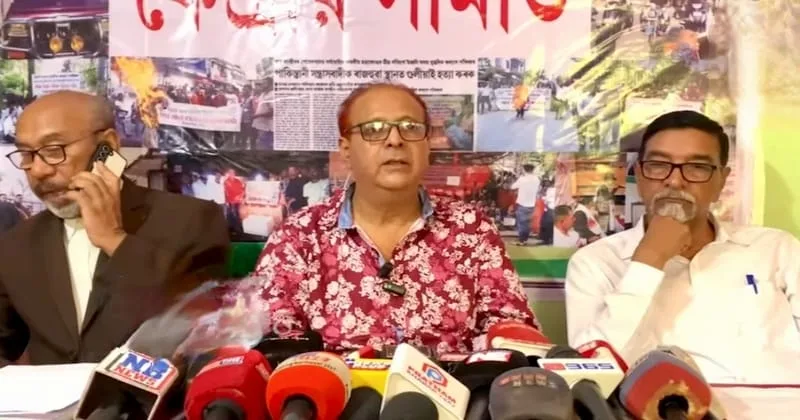
In a press conference held in Guwahati, the Upper Assam Muslim Welfare Council stressed the urgent need for a caste census among Muslims in the state. Monirul Islam Bora, President of the Council, stated that such a move would enable various indigenous Muslim groups to reclaim and assert their unique cultural and social identities.
“We welcome the Centre’s initiative under Prime Minister Narendra Modi and urge that a caste census be carried out for Muslims across all Indian states,” said Bora. He emphasised that communities like Syed, Jolha (Julha), Goriya, and Moriya—all indigenous to Assam—deserve recognition beyond the generalised category of ‘Muslims’.
“A broad religious classification does not reflect the cultural, linguistic, and social diversity within the Muslim population,” Bora added. “With a proper caste census, these groups can be documented with their original identities, and their distinct traditions and heritage can be preserved.”
The demand comes amid growing discourse around caste-based enumeration in the country. In Assam, the issue has taken a specific turn due to the unique demographic and historical context of the state.
Chief Minister Himanta Biswa Sarma, who has officially supported the idea, echoed similar sentiments on social media. In a post on X, he stated that indigenous Muslim communities of Assam have long sought a caste census to establish their socio-cultural uniqueness.
“These communities—including the Goria, Moria, Deshi, Syed, and Jolha Muslims of the Brahmaputra Valley, as well as the Kiren and Maimal Muslims of the Barak Valley—possess distinct cultural, linguistic, and historical identities,” wrote CM Sarma. “While Islam is their faith, their lived experiences and cultural roots are deeply tied to Assam’s civilisational fabric.”
The Chief Minister added that in recognition of this long-standing demand, the Government of Assam has initiated preparatory steps to conduct a detailed caste enumeration of these groups. The move, he said, aims to distinguish Assam’s indigenous Muslim population from migrant-origin or non-indigenous groups that settled in the state during different historical periods.
According to CM Sarma, the proposed enumeration will be incorporated into the upcoming national census and is expected to fulfil a decades-old aspiration for formal recognition and data-driven policymaking for these communities.
The caste census is also seen as a step toward ensuring social justice, better representation, and access to targeted welfare schemes based on the specific needs of these indigenous Muslim groups.
As the debate around caste census continues to evolve nationally, Assam’s indigenous Muslim communities hope that this long-overdue recognition will strengthen their place within the state’s socio-political narrative, affirming that religion is just one aspect of their identity, not the only one.
.
















Comments