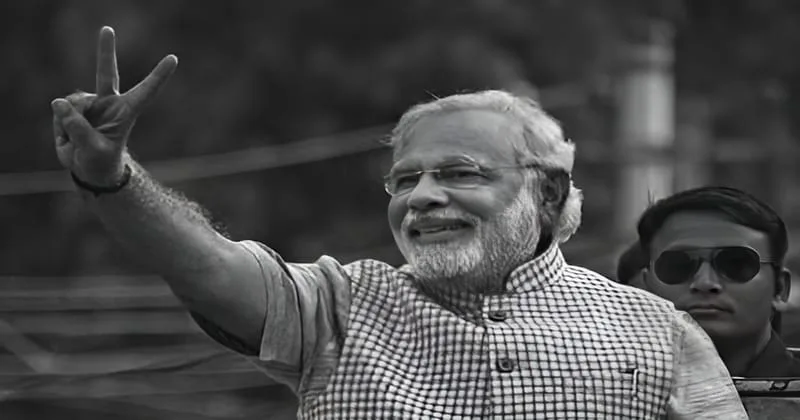
On May 16, 2014, Indian politics witnessed a seismic shift that would redefine the country’s democratic landscape for years to come. It was the day when the Bharatiya Janata Party (BJP), under the leadership of Narendra Modi, secured a historic and resounding mandate, ending the Congress party’s decade-long rule. The results were more than just an electoral victory—they marked the crumbling of an era and the birth of a new political narrative that would go on to shape India’s domestic and global identity.
As counting began on the morning of May 16, 2014, the writing on the wall became clearer by the hour. What started as a strong showing for the BJP soon turned into a landslide. By the end of the day, the BJP had clinched 282 seats on its own—the first time in 30 years that any single party had crossed the halfway mark in the Lok Sabha. Along with its allies in the NDA, the tally soared to 336 seats. India had spoken—and spoken decisively.
This day. 11 years ago. Sonia Gandhi conceded defeat. Congress collapsed to 44.
~ The throne slipped. The crown fell.
Dynasty dethroned.That moment still gives goosebumps. Beginning of the MODI ERA 🇮🇳👑
pic.twitter.com/7uBCZxbsE9— The Analyzer (News Updates🗞️) (@Indian_Analyzer) May 16, 2025
Modi Wave
Narendra Modi, the former Chief Minister of Gujarat, had campaigned with relentless energy, crafting a narrative centred around development, governance, nationalism, and a break from dynastic politics. His oratory, organisational discipline, and direct connection with the people turned the 2014 general elections into a presidential-style contest, and he emerged as the clear choice of a nation hungry for change.
Modi’s messaging was simple yet powerful: “Minimum government, maximum governance”, promises of economic reform, job creation, a strong foreign policy, and an end to corruption that had marred the UPA era.
The Collapse of Congress
In stark contrast, the Indian National Congress suffered its worst-ever defeat. From 206 seats in 2009, it plummeted to a mere 44 seats, failing even to qualify for the official Opposition status. The Gandhi family’s aura had faded, and Sonia Gandhi’s concession speech that evening became symbolic—not just of electoral defeat, but of dynastic decline. The crown had fallen; the throne had slipped.
A Nation Transformed
May 16, 2014, was more than just a transfer of power—it was a transformation in the national psyche. For the first time in decades, a leader from humble beginnings had risen to the top without the backing of elite political lineage. Modi’s rise gave voice to millions who had long felt excluded from Lutyens’ Delhi.
In the years that followed, the Modi government would roll out landmark reforms like GST, Digital India, Swachh Bharat, Ujjwala Yojana, and later, the abrogation of Article 370. Critics and supporters alike would debate his methods and policies, but one thing became indisputable: May 16, 2014, was a watershed moment in India’s post-independence history.
Legacy of the Moment
Even 11 years later, the memory of that day continues to evoke strong emotions. For supporters, it was the dawn of a new India—assertive, aspirational, and unafraid. For detractors, it marked the beginning of a different kind of political order. However, regardless of perspective, May 16, 2014, remains etched as the day India decisively turned the page on its political past.
Economic Reforms and Infrastructure
GST (Goods and Services Tax): Unified the nation under one indirect tax system, replacing multiple state and central taxes.
Insolvency and Bankruptcy Code: Overhauled how bankrupt companies are handled.
Startup India & Make in India: Promoted manufacturing and entrepreneurship.
Massive infrastructure push: New highways, expressways (like Delhi–Mumbai Expressway), airports, and bullet train projects.
Digital India: Promoted internet access, e-governance, and digital payments. UPI became a global model.
Financial Inclusion
Jan Dhan Yojana: Over 500 million zero-balance bank accounts opened.
Direct Benefit Transfer (DBT): Subsidies and aid are transferred directly into bank accounts to prevent corruption.
Mudra Yojana: Easy loans to small entrepreneurs and women-led businesses.
Welfare & Social Schemes
Ujjwala Yojana: Provided free LPG connections to over 90 million households.
Ayushman Bharat: World’s largest health insurance scheme, covering 500 million people.
Swachh Bharat Abhiyan: Massive sanitation drive. Over 100 million toilets built.
PM Awas Yojana: Affordable housing for urban and rural poor.
Jal Jeevan Mission: Piped water to rural households.
Foreign Policy & Global Image
Strengthened ties with major powers like US, France, Japan, Australia.
Asserted leadership in Global South, BRICS, Quad, and G20.
Hosted G20 Summit in 2023 in Delhi, showcasing India’s diplomatic stature.
Strengthened ties with neighbours through “Neighbourhood First” and “Act East” policies.
National Security and Strategic Decisions
Surgical Strikes (2016) & Balakot Airstrikes (2019): In response to terrorist attacks.
Abrogation of Article 370 (2019): Special status to Jammu & Kashmir was removed, and it is integrated fully into India.
Citizenship Amendment Act (CAA): Granted citizenship to persecuted minorities from neighbouring countries.
Boost to defence: Focus on indigenous manufacturing through Atmanirbhar Bharat in defence.
Cultural & Religious Landmarks
Ram Mandir: Oversaw the construction and inauguration of the Ram Temple in Ayodhya.
Kashi Vishwanath Corridor and Mahakal Corridor: Revamped iconic Hindu spiritual centres.
Promoted traditional Indian knowledge systems like Ayurveda and Yoga globally.
Environment and Renewable Energy
Major push toward solar energy via International Solar Alliance.
Target: 500 GW of renewable energy by 2030.
Massive afforestation drives and bans on single-use plastics.
Pandemic Response (COVID-19)
Free vaccination drive: Over 2 billion doses administered.
PM Garib Kalyan Yojana: Free ration to 800 million people during the pandemic.
Built capacity for ventilators, oxygen plants, and vaccine production under emergency conditions.
Digital Governance
Revolutionised public services via DigiLocker, e-Shram, Cowin, UPI, BHIM, and MyGov platforms.
Promoted AI, semiconductor missions, 5G rollout, and digital infrastructure expansion.
Political Stability and Popular Mandate
Won two consecutive Lok Sabha elections with full majority (2014 & 2019).
Expanded BJP’s presence in multiple states, establishing dominance across the political landscape.
Maintained a strong leadership image, with high approval ratings even after a decade.
PM Modi’s era is defined by bold decisions, large-scale delivery of services, infrastructure development, strategic diplomacy, and centralised governance.
From a chaiwala in Vadnagar to the highest office in the land, Narendra Modi’s ascent on this day changed the course of Indian history. And as the years roll on, May 16 will forever stand as the day when the people of India reclaimed their voice and redrew the nation’s political map.