





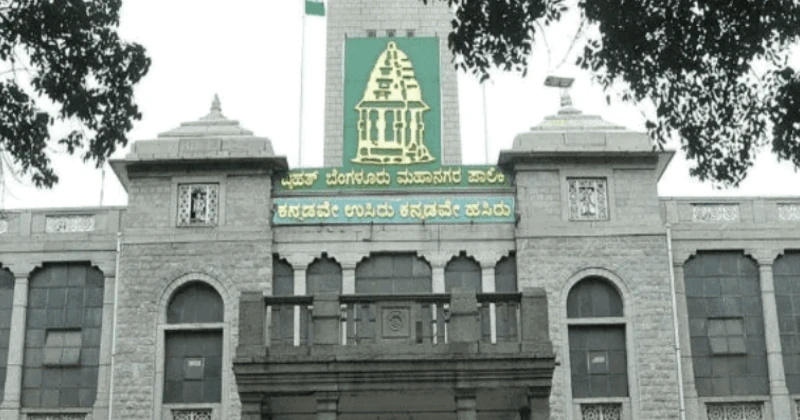
In a landmark move to reshape the administrative framework of Karnataka’s capital, the Government of Karnataka officially implemented the Greater Bengaluru Authority (GBA) on May 16. Effectively dissolving the Bruhat Bengaluru Mahanagara Palike (BBMP), which had governed the city for decades. The move, which has triggered strong opposition and warnings of legal challenges from the Bharatiya Janata Party (BJP) and other critics, marks a significant shift in how Bengaluru will be governed.
Despite stiff resistance from opposition parties, particularly the BJP and JD(S), the Congress-led state government planned to divide the existing BBMP into multiple smaller municipal corporations. The Greater Bengaluru Governance Bill, which had been hotly debated in the previous legislative session, has now been implemented with an official government notification.
New Administrative Era: What Changes with GBA?
With the coming into force of the Greater Bengaluru Authority, the capital will now be governed by a multi-tiered urban administrative structure. According to the government’s outline:
- The Greater Bengaluru Authority will serve as the apex urban planning and financial authority, overseeing the entire metropolitan region.
- The GBA’s jurisdiction will span approximately 1,400 sq. km, encompassing both core and peripheral areas of Bengaluru.
- The city will be subdivided into 3 to 10 smaller corporations, each headed by its commissioner.
- The revised urban framework will include around 400 wards, ensuring more granular representation.
- Key agencies such as BWSSB (Water Board), BDA (Bangalore Development Authority), and BESCOM (Electricity) will function under the umbrella of GBA for better coordination.
- This structure is expected to address long-standing administrative inefficiencies in the rapidly expanding metropolitan region.
Government’s Justification: Population Growth and Urban Expansion
Chief Minister Siddaramaiah, addressing the media today, hailed the implementation of the Greater Bengaluru Authority as a “historic and necessary reform.”
“Bengaluru has outgrown its existing administrative structure. The GBA is not just a name change – it is a shift towards efficient governance, better planning, and responsive urban management. The formation of at least three new corporations under GBA will allow for decentralised administration, reducing the burden on a single entity like BBMP,” he said.
Urban Development Minister Ramalinga Reddy emphasised that the city’s expansion, including 110 surrounding villages, new layouts, and residential high-rises, necessitated a change in governance. “We’re not playing politics. We are planning from an administrative standpoint. The BJP is only interested in obstructing. During their tenure, they themselves created new districts. Why this hypocrisy now?” he asked.
He further confirmed that BBMP elections, pending since 2020, would be held within the year, asserting that the Congress government is committed to restoring elected representation locally.
Opposition Reaction: Accusations of Political Conspiracy
The decision has met fierce resistance from the BJP and JD(S), who allege that the restructuring is a political ploy to delay elections and weaken Bengaluru’s identity. Leader of the Opposition R. Ashoka denounced the move as a “conspiracy to dismantle Kempegowda’s Bengaluru.”
“The Congress is playing a drama to avoid BBMP elections. They fear facing the public. This Act will be repealed the moment BJP returns to power,” he declared, signalling an impending legal battle in the courts.
Senior BJP leader and MLA Dr CN Ashwath Narayan echoed the sentiment, calling the GBA “anti-development” and warning that such a move would lead to confusion, not reform. The JD(S), too, criticised the move with a pointed jibe on X “Only the incompetent focus on renaming; great leaders create legacies.”
Battle Moves to the Courts
The implementation of GBA has now become a battle between the ruling Congress and the opposition. With the BJP indicating legal recourse, the fate of the Greater Bengaluru Authority could ultimately rest with the judiciary.
For now, BBMP once one of India’s largest municipal corporations has been formally erased from Bengaluru’s governance structure, ushering in a new chapter in urban administration.
Public Reactions and Urban Planning Implications
While politicians debate the merits and motivations behind GBA, urban planners and civic activists are watching closely. Many acknowledge that BBMP had become unwieldy and over-centralised, struggling to cope with the demands of a rapidly growing megacity.
Yet, they warn that mere structural change without capacity building, transparency, and citizen engagement may not yield the desired outcomes.
















Comments