





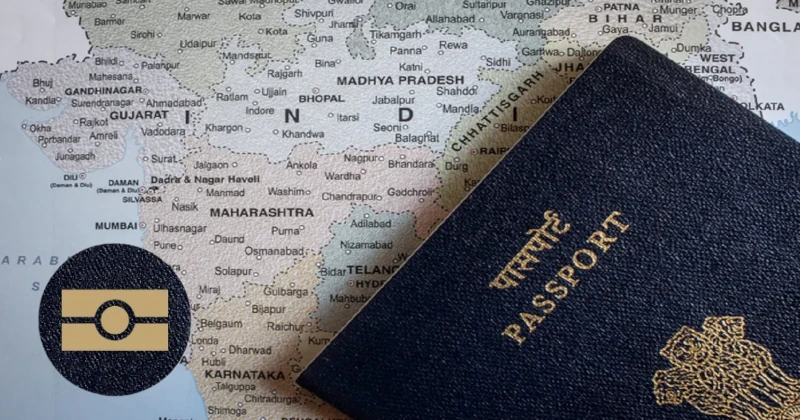
The Government of India is launching the nationwide rollout of chip-based e-passports starting May 2025. The initiative spearheaded by the Ministry of External Affairs (MEA) in collaboration with the India Security Press (ISP), Nashik is being hailed as a historic step in India’s passport and immigration modernisation journey.
The announcement marks the formal transition of India into the league of technologically advanced nations like Germany, the United States, and the United Kingdom, who have already adopted biometric-based travel documents to bolster security and efficiency.
What is an e-Passport?
An e-passport is an upgraded travel document embedded with a Radio Frequency Identification (RFID) chip, integrated into the traditional passport booklet. The chip stores biometric and personal information of the passport holder in both printed and encrypted digital formats, making the passport nearly impossible to forge or tamper with. It also ensures rapid and secure verification at immigration counters, thus slashing processing times and minimising human error.
The initiative was quietly launched in pilot mode on April 1, 2024, as part of the revamped Passport Seva Programme Version 2.0. Since then, Regional Passport Offices (RPOs) in 12 cities including Chennai, Jaipur, Hyderabad, Nagpur, Amritsar, Goa, Raipur, Surat, Ranchi, Bhubaneswar, Jammu, and Shimla have been issuing the chip-based passports to select applicants.
Tamil Nadu has been a frontrunner in the pilot phase. In Chennai, issuance commenced on March 3, 2025, and in less than three weeks—by March 22—a total of 20,729 e-passports had already been successfully issued across the state, demonstrating the system’s readiness for a full-scale rollout.
The new e-passports come equipped with advanced encryption technologies and multi-layered authentication protocols, which not only shield sensitive data from cyber threats but also ensure privacy and integrity of personal information. These features are a major deterrent to identity theft, duplication, or any form of unauthorised access.
By aligning with International Civil Aviation Organisation (ICAO) standards, India’s e-passport will enable automated identity verification, allowing its citizens faster access through e-gates in international airports and more seamless visa processing.















Comments