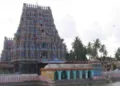
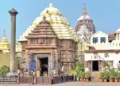
World Heritage Day, International Day for Monuments and Sites, is celebrated every April 18. This year, it will be observed under the theme, “Heritage under Threat from Disasters and Conflicts: Preparedness and Learning from 60 Years of ICOMOS Actions.” Bharat is a great ancient civilisation home to many UNESCO-recognised world heritage sites. As of today, there are 43 UNESCO World Heritage sites in our country. The latest addition to the list is Moidams – the Mound-Burial System of the Ahom Dynasty that ruled Assam for nearly 600 years. Ram Setu is one of the heritage monuments representing the history of Bharat and is an integral part of our culture and beliefs. However, rather than conserving this, the Sethusamudram Shipping Canal Project was approved by the Congress-led UPA government in 2005. Amid opposition to the proposed project by the people of Bharat, Prime Minister Manmohan Singh formed a six-member committee headed by Rajendra Kumar Pachauri (IPCC Chairman, 2002-2015) to look at an alternative route to avoiding the sensitive Rama Setu stretch. The committee released its report in 2013, citing the project unviable from economic and ecological angles.
The Congress-led government rejected the committee report and decided to go ahead with the project, hurting the sentiments of the people. A British Commander, AD Taylor, originally conceived the Sethusamudram project in 1860, which had nothing to do with our history, culture and belief system. However, when the same project was approved by our people in independent Bharat, it can be considered colonisation of Bhartiya’s minds.
The colonisation of Bhartiya’s minds refers to foreign rule’s profound psychological and cultural impact on our society. The British and other invaders imposed foreign values, beliefs, and systems, causing us to view their history, culture, and identity through a colonial lens. This included the systematic undermining of Bharatiya traditions, languages, and historical achievements, with Western education often depicting our culture as inferior or mythological. Labelling the great Bharatiya past as merely mythology undermines this ancient country’s significant historical and cultural achievements. This view disregards our ancient civilisation, scientific advancements, and rich traditions that have significantly contributed to global knowledge as Vishva Guru. Archaeological findings, such as those from the Indus Valley Civilization and ancient universities such as Taxila, Nalanda and Vikramshila, provide substantial evidence of a sophisticated ancient society. Ancient Bharat’s contributions to science, mathematics, astronomy, medicine, and literature are crucial for a balanced understanding of global history.
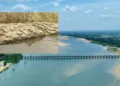
Moreover, the ancient epics such as Ramayana and Mahabharata are integral to Bharat’s cultural and religious identity. Attempts have been made to portray these epics as mythical or fictional during the colonial era and after. Dismissing these as myths disrespects our beliefs, alienates individuals from our heritage, and undermines our sense of identity. Referring to the great Bhartiya’s past solely as mythology is a reductive and misinformed perspective that ignores her rich legacy. As a result, many of us began to question and devalue our heritage, leading to cultural and intellectual colonisation. This shift in our minds marginalised traditions, altered historical narratives, and created an identity crisis, as traditional values conflicted with colonial influences. Ram Setu or Setu bandh Rameswaram represents a link to the history and tradition of Bharat. It symbolises our cultural pride and identity and is celebrated for its engineering feats and historical significance. The Ram Setu stretches between Rameswaram Island, off the southeast coast of Bharat, connecting the Mannar Island in Sri Lanka. It separates the Gulf of Mannar in the Indian Ocean from the Palk Strait in the Bay of Bengal. Ramanathaswamy Temple of Tamilnadu records suggest that Ram Setu was above water until a violent storm broke the original form of the Ram Setu in 1480.
The description of Ram Setu appears in various Bharatiya texts, with the primary sources being the Valmiki Ramayana and the Ramcharitmanas. The Valmiki Ramayana describes Ram Setu (Nala Setu) in the Yuddha Kanda (Book of War). In the Ramcharitmanas (written by the saint Tulsidas), the description of the construction of Ram Setu appears in the Lanka Kand (Book of Lanka). In the Mahabharata, particularly in the Vana Parva (Book of the Forest), there are references to the Ramayana story, including the construction of the Ram Setu. Moreover, there are references in various ancient texts where the reference to Ram Setu can be traced, such as Skand Purana, Vishnu Purana, Agni Purana and Narada Purana.
The Book of Roads and Kingdoms (Kitāb al-Masālik wa-l-Mamālik written in 850 CE) is a geography text written by the Persian geographer Ibn Khordadbeh, refers to the Ram Setu as Set Bandhai (i.e. Bridge of the Sea) which resembles the popular name Setu bandh. Around the time of Al-Biruni (1030 CE), the colonised name Adam’s Bridge appeared in public discourse. Using names like Adam’s Bridge undermines Bharat’s historical and cultural heritage and reflects the colonisation of our minds. The term (Adam’s Bridge) was popularised by the British explorer and cartographer James Rennell in the 18th century. Thereafter, the name became widely used in Western literature and scientific discussions, particularly during the colonial period, leading to its adoption in various contexts around the globe.
There are numerous theories among scientists and geologists about how the Ram Setu was formed. Geological evidence suggests that the limestone shoals are the remnants of the Ram Setu that once linked Bharat with Sri Lanka. Researchers conduct many conflicting studies to discover the Ram Setu or Ramayana period. Scientists have derived many possible conclusions about Ram Setu from limestone shoals, corals, and sediments.
The Archaeological Survey of India (ASI) and the National Institute of Oceanography (NIO), collaborating with researchers from many other institutes in Bharat, are actively working in this direction to discover scientific conclusions. Recently, a study was conducted by a group of Indian Scientists to understand the physical features of the Ram Setu structure using data from NASA’s ICESat-2 satellite. ICESat-2 can detect seafloor topography up to 100 feet (30m) below the surface in clear watered coastal areas, which can help us understand the Ram Setu architecture. It is a good initiative by our Bharatiya scientists to use the latest technology to uncover the facts related to our ancient history. However, we should also be careful about using the name Adam’s Bridge instead of Ram Setu in our research works and publications.
The real problem lies in our perspective of understanding history, which is fine with the history, literature, books, or texts written by Al-biryani, Ibn Khordadbeh, Britishers, and Western historians. Still, we question our history, which Saint Valmiki and Vedavyas wrote. We do not question the name Adam’s Bridge popularised by a Britisher, but we question the existence of Shri Ram and Ram Setu. These are some prominent examples of the intellectual colonisation of our minds. Since its independence, Bharat has attempted to reclaim and revive its cultural legacy and intellectual independence. Efforts to decolonise Bhartiya’s minds involve reassessing historical narratives, reviving traditional knowledge systems, and fostering a renewed sense of cultural pride and self-worth. Our ancient history was undermined by our colonial past and was labelled as mythology. Therefore, we must challenge colonial mindsets and feel proud of our rich ancient history, culture, and heritage.
Overall, Ram Setu is not just a physical structure but a potent symbol of our historical, cultural, and religious heritage. Hence, Ram Setu should be preserved as a heritage structure and national monument. In 2014, the NDA government led by the BJP decided to implement the project by deepening the Pamban Pass to save the Rama Setu from destruction. Ram Setu has yet to be declared a national heritage site, we believe one day it will be.