





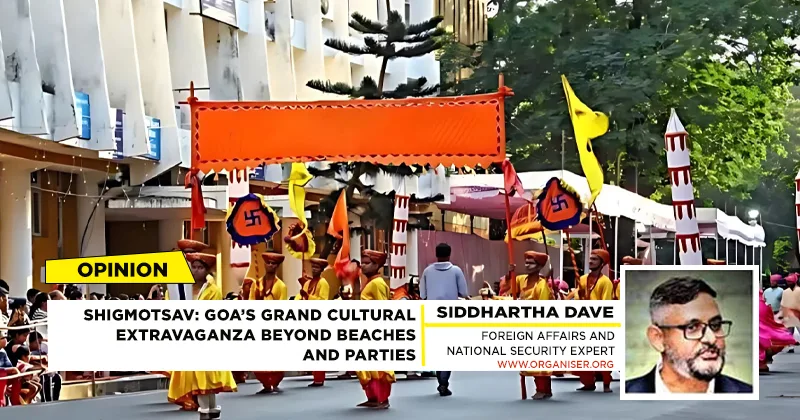
Goa is often synonymous with pristine beaches, vibrant nightlife, and laid-back tourism. However, beneath this modern image lies a land with a deep historical and cultural essence, tracing its roots from the legendary Parshuram land to the Gomantak Pradesh era. One of the finest testaments to Goa’s rich heritage is the grand celebration of Shimgotsav (Shimgo Festival)—a festival that transforms the state into a mesmerising spectacle of tradition, history, and artistic expression. If there’s one time of the year when every Indian must visit Goa, it is during Shimgotsav.
The Legacy of Goa: From Parshuram’s Land to Gomantak Pradesh
Goa’s history is far older than its colonial Portuguese influence. According to Hindu legends, Bhagwan Parshuram, the sixth avatar of Vishnu, reclaimed Goa from the sea by shooting an arrow into the ocean. The newly emerged land came to be known as Gomantak Pradesh, a land of sages, temples, and spiritual enlightenment. Over centuries, Goa was a flourishing Hindu kingdom, deeply rooted in Vedic traditions, long before European settlers arrived. This ancient history is beautifully preserved in festivals like Shimgotsav, which reflects the cultural identity of Goa that has withstood the test of time.
Shimgotsav: Goa’s Traditional Carnival of Colours and Culture
Celebrated from March 15 to March 29, 2025, Shimgotsav is much more than a festival—it is an ode to Goa’s agrarian past, Hindu history, and folk traditions. The festival marks the end of the farming season, allowing farmers to rejoice and honor their deities. But its significance goes beyond agriculture; Shimgotsav is a vibrant portrayal of epics like the Ramayana and Mahabharata, which are brought to life through intricately designed floats, folk dances, and mesmerizing performances.
Just like Holi, predominantly a festival of colors, Shimgo blends music, dance, temple rituals, and artistic street performances, offering an immersive experience into Goa’s traditional roots.
Dhakto Shimgo vs. Vhadlo Shimgo: Understanding the Two Variants
Shimgotsav is celebrated in two distinct forms:
Dhakto Shimgo (Small Shimgo): Observed mainly in rural villages, focusing on traditional temple rituals, folk performances, and intimate community gatherings. It is deeply spiritual and preserves the authenticity of Goa’s age-old customs.
Vhadlo Shimgo (Grand Shimgo): This is the more elaborate version celebrated in cities like Panaji, Mapusa, Vasco, and Margao. It features grand processions, massive floats, folk dancers, and a large-scale carnival atmosphere.
For those seeking an authentic, grassroots experience, Dhakto Shimgo in Goa’s villages is a must-visit. However, if you want to witness the grandeur of Goa’s biggest cultural parade, then Vhadlo Shimgo is the ideal choice.
Highlights of Shimgotsav 2025: A Spectacular Visual Feast
Float Parades (Chitrarath): Living Museum of Hindu Legends
The highlight of Shimgotsav is the magnificent float parades, where intricately designed moving tableaux depict legendary tales from Hindu epics and Goan folklore.
Where to Witness: Major processions in Panaji, Margao, Vasco, Mapusa, and Ponda.
Who Creates Them: Skilled local artisans and village communities dedicate months to designing these masterpieces.
What Makes It Unique: These aren’t just static floats but interactive performances where actors reenact scenes from ITIHAS in traditional attire.
Traditional Folk Dances: The Soul of Shimgo
Goa’s folk dances are a mesmerizing blend of rhythm, energy, and storytelling.
Rommatamel: A high-energy warrior dance featuring large drums, spears, and swords.
Fugdi & Dhalo: Traditional women’s folk dances performed in circles with synchronized claps and steps.
Goff Dance: A vibrant ribbon dance where performers create intricate patterns mid-air.
Ghode Morni: A dramatic horse-dance symbolizing valor and martial prowess.
Veerbhadra Dance: Depicts the fury of Lord Shiva’s warrior, Veerbhadra, in an intense and powerful performance.
These performances take place along parade routes, in temple courtyards, and in village squares, making them accessible to all visitors.
Gulalotsav: Goa’s Own Festival of Colours
Gulalotsav is Shimgotsav’s answer to Holi. While Holi is widely known for its colors, Shimgo’s color celebrations are more symbolic, spiritual, and rooted in temple rituals.
Best Locations: Village celebrations in Ponda, Quepem, and Sanguem.
Natural Colours: Shimgo’s gulal is traditionally made from flowers and herbs.
Who Can Join: Everyone, including tourists, is welcome to partake in this vibrant celebration of joy.
Rituals and Spiritual Ceremonies
Beyond its festivities, Shimgo holds deep spiritual significance.
Naman: A ritualistic folk song performance seeking divine blessings.
Gade Padap: A mystical spirit-possession ceremony, believed to be divine intervention.
Mand Davaar: The final purification ritual marking the festival’s conclusion.
Witness these rituals at iconic temples like Shantadurga Temple (Ponda), Mangeshi Temple (Priol), and Mahalsa Temple (Mardol).
Shimgo-Themed Goan Delicacies: A Culinary Delight
No festival is complete without food, and Shimgo offers an array of traditional Goan Hindu dishes.
Puran Poli: Sweet flatbread stuffed with jaggery and lentils.
Neureos: Deep-fried dumplings with coconut, sugar, and nuts.
Chana Usal: A spicy chickpea curry, best paired with puris.
Sannas: Fluffy rice cakes, mildly sweet and fermented.
Sol Kadhi: A tangy kokum and coconut milk drink that cools the body.
Best places to savor these delights include street stalls along parade routes in Panaji, Margao, and Mapusa, as well as traditional Goan eateries in Ponda and Mardol.
Why Every Indian Must Experience Shimgotsav in Goa
Shimgotsav is not just a festival—it is an experience that connects you to India’s ancient traditions, historical heritage, and vibrant artistic expressions. While Goa is often reduced to a party destination, Shimgo reveals the true cultural heart of the state, reminding visitors that Goa’s legacy is far older and deeper than its modern reputation suggests.
If you are an Indian who values heritage, history, and authentic traditions, visiting Goa during Shimgotsav should be on your bucket list. It’s an opportunity to witness a side of Goa that few tourists ever see—a Goa that is colorful, spiritual, and deeply rooted in its Hindu past.
So, this March, skip the beaches for a day and dive into a world of folklore, dance, and devotion. Experience Goa beyond the beaches—experience Shimgotsav!













Comments