Unveiling the rich cultural past: ASI confirms rock carvings discovered in Goa are from neolithic period
July 30, 2026
  • Read Ecopy
  • Circulation
  • Advertise
  • Careers
  • About Us
  • Contact Us
Android AppiPhone AppArattai
Organiser
  • ‌
  • Bharat
    • Assam
    • Bihar
    • Chhattisgarh
    • Jharkhand
    • Maharashtra
    • View All States
  • World
    • Asia
    • Europe
    • North America
    • South America
    • Africa
    • Australia
  • Editorial
  • International
  • Opinion
  • RSS @ 100
  • More
    • Op Sindoor
    • Analysis
    • Sports
    • Defence
    • Politics
    • Business
    • Economy
    • Culture
    • Special Report
    • Sci & Tech
    • Entertainment
    • G20
    • Azadi Ka Amrit Mahotsav
    • Vocal4Local
    • Web Stories
    • Education
    • Employment
    • Books
    • Interviews
    • Travel
    • Law
    • Health
    • Obituary
  • Subscribe
    • Subscribe Print Edition
    • Subscribe Ecopy
    • Read Ecopy
  • ‌
  • Bharat
    • Assam
    • Bihar
    • Chhattisgarh
    • Jharkhand
    • Maharashtra
    • View All States
  • World
    • Asia
    • Europe
    • North America
    • South America
    • Africa
    • Australia
  • Editorial
  • International
  • Opinion
  • RSS @ 100
  • More
    • Op Sindoor
    • Analysis
    • Sports
    • Defence
    • Politics
    • Business
    • Economy
    • Culture
    • Special Report
    • Sci & Tech
    • Entertainment
    • G20
    • Azadi Ka Amrit Mahotsav
    • Vocal4Local
    • Web Stories
    • Education
    • Employment
    • Books
    • Interviews
    • Travel
    • Law
    • Health
    • Obituary
  • Subscribe
    • Subscribe Print Edition
    • Subscribe Ecopy
    • Read Ecopy
Organiser
  • Home
  • Bharat
  • World
  • Operation Sindoor
  • Editorial
  • Analysis
  • Opinion
  • Culture
  • Defence
  • International Edition
  • RSS @ 100
  • Magazine
  • Read Ecopy
Home Bharat

Unveiling the rich cultural past: ASI confirms rock carvings discovered in Goa are from neolithic period

The vibrant state of Goa, known for its picturesque beaches and vibrant culture, harbours a lesser-known but equally fascinating prehistoric heritage. Among its hidden treasures, the ancient rock carvings in Mauxi village in the Sattari taluka stand out as remarkable relics of the Neolithic period

WEBDESKWEBDESK
May 23, 2024, 05:00 pm IST
in Bharat, Culture, Goa, International Edition
Follow on Google News
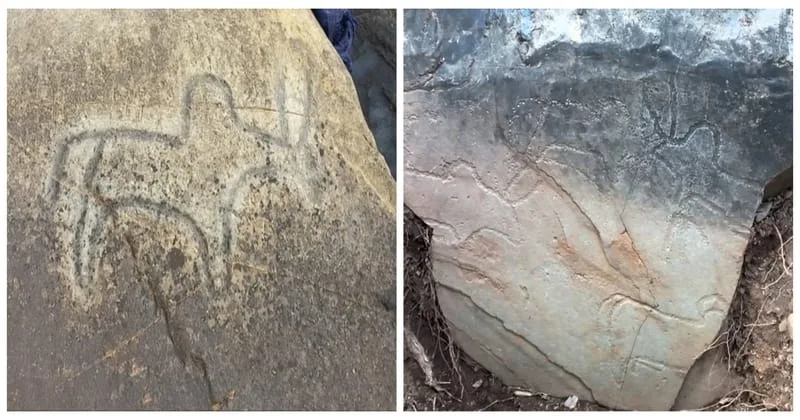
Rock carvings of neolithic period discovered in Goa

Rock carvings of neolithic period discovered in Goa

FacebookTwitterWhatsAppTelegramEmail

Understanding the rich history of a place like Goa is a fascinating journey, particularly when delving into its prehistoric roots. Mauxi (Mhaus) village in the Sattari taluka has shed light on some captivating aspects of Goa’s Neolithic period through the discovery of ancient rock carvings.

Held in the precincts of the Ravalnath Temple, the 11th edition of the Cultural and Heritage Walk, or Parikrama, revealed intriguing details about the region’s early inhabitants. These carvings, etched into the meta basalt rock on the dry riverbed of the Zarme river, offer a glimpse into Goa’s distant past. The carvings predominantly feature animals, such as zebus, bulls, and antelopes, along with footprints and cupules—circular cavities on the rock surface.

Organiser E Exit poll Lok Sabha Elections 2024

The discovery of these carvings, initially made by local residents about 20 years ago, underscores the significance of community involvement in uncovering historical artefacts. Around 20 rock etchings have been identified in this area, showcasing the use of the bruising technique. Additionally, tools from the same period have been found on the riverbed, further validating the site’s historical importance.

The site has drawn attention from several researchers and officials from the Archaeological Survey of India (ASI), confirming its Neolithic origins. This period marks a pivotal time when humans began domesticating cattle, reflected in the numerous carvings of bulls. The Mauxi carvings stand out from other notable petroglyphs in Goa, such as those at Pansaimol on the banks of the River Kushavati in Sanguem, which are believed to belong to the Mesolithic period and are created on laterite, and those at Kazur in Quepem, etched on granite.

One striking carving at Mauxi depicts a trident, a symbol associated with the Iron Age, hinting at the site’s continuous significance through various historical periods. The presence of the Dhawad community, early settlers and ironsmiths adds another layer to the historical narrative, although new settlers eventually displaced this community.

Also Read: “Give 400 seats, we will raise temples at Krishna Janmabhoomi, Gyanvapi complex,” says Assam CM Himanta Biswa Sarma

The final point is a rock with cupules, worshipped outside the Puravati Temple. Initially believed to represent a star constellation with 27 cupules, further research indicated 31 cupules, sparking curiosity about their exact significance. While the precise purpose of these cupules remains unclear, they are a common feature in ancient civilisations worldwide and are often linked to fertility rites.

A visit to this prehistoric site reveals the deeply embedded history of Goa within the forests of the Western Ghats. Conserving such sites and promoting further research is essential for enhancing our understanding of human civilisation’s early chapters and preserving our rich heritage for future generations.


Topics: GoaNeolithic CultureRock Carvings in GoaMauxi villageRavalnath TempleASIArchaeological Survey of India
Share1TweetSendShareSend
✮ Subscribe Organiser YouTube Channel. ✮
✮ Join Organiser's WhatsApp channel for Nationalist views beyond the news. ✮
Previous News

Tamil Nadu: Annamlai gives befitting reply to CM Stalin’s accusation of PM Modi portraying Tamils as robbers

Next News

Tripura Police arrest NIA’s most wanted human trafficking kingpin, Hannan Mia

Related News

India is restoring ancient temples and heritage sites across Asia, using cultural diplomacy to preserve shared civilisational heritage

From Prambanan to Angkor Wat: How India is preserving ancient heritage to strengthen global cultural ties

Bharat is reaffirming its civilisational legacy by restoring and conserving ancient Hindu temples and sacred heritage sites across the world

The Great Awakening: Bharat leads global renaissance of ancient Hindu Mandirs

Bhojshala Case: Supreme Court Declines Muslim Plea, No Namaz Allowed on Premises

Bhojshala: SC refuses to stay Madhya Pradesh HC order; No namaz allowed within premises, Bars structural changes by ASI

Senior Advocate Harishankar Jain claims he has documentary evidence that the Taj Mahal was originally the Hindu Mandir "Tejo Mahalaya"

Taj Mahal Was Originally ‘Tejo Mahalaya’: Adv Harishankar Jain says he has documentary evidence to back his claim

My Son Sanctuary, Vietnam

From Vietnam to Bahrain: Inside the Modi government’s mission to restore ancient Hindu Mandir across Asia

Prime Minister Narendra Modi and Indonesian President Prabowo Subianto at the Prambanan Mandir complex in Yogyakarta, Indonesia

Prambanan Mandir Restoration: India and Indonesia revive two millennia of shared heritage and civilisational diplomacy

Load More

Latest News

Tamil Nadu: Temple activist seeks criminal action against HR&CE officials in Arunachaleswarar Temple property dispute

Kerala: CPI(M)’s post-poll outreach to win back Hindu voters begins with Kasaragod temple committees

Madurai Meenakshi Amman Temple

Tamil Nadu: Madurai police book 19 over illegal registration of Meenakshi temple Trust Properties

Kejriwal’s E20 claims fail before Maruti, Toyota, & Hero’s real-world evidence involving crores of vehicles

Bharat’s natural farming mission is reviving traditional agriculture, restoring soil health, cutting costs and promoting sustainable farming

Natural Farming: How Bharat’s return to traditional agriculture could shape the future of global food systems

BMS National Working Committee Concludes in Ranchi

Jharkhand: BMS National Working Committee meeting concludes; Calls for EPS pension hike & amendments to labour codes

Rajabhoj Memorial Lecture Series Committee, Dhar, hosted a lecture on “Bhojshala: India’s Cultural Renaissance” at Milan Mahal

Rajabhoj Memorial Lecture Series: Bhojshala -A powerful symbol of India’s cultural renaissance

Sindhu River: The inseparable bond

Representative Image

Empty reservoir! What if one claim drains your family floater health insurance?

Bharat’s diverse languages have historically served as bridges of cultural unity, connecting people through a shared civilisational ethos (AI-generated image)

World Hindu Congress 2026: Why Bharatiya languages are the soul of India’s unity

Load More
  • Privacy
  • Terms
  • Cookie Policy
  • Refund and Cancellation
  • Delivery and Shipping

© Bharat Prakashan (Delhi) Limited.
Tech-enabled by Ananthapuri Technologies

  • Home
  • Search Organiser
  • Bharat
    • Assam
    • Bihar
    • Chhattisgarh
    • Jharkhand
    • Maharashtra
    • View All States
  • World
    • Asia
    • Africa
    • North America
    • South America
    • Europe
    • Australia
  • Editorial
  • Operation Sindoor
  • Opinion
  • Analysis
  • Defence
  • Culture
  • Sports
  • Business
  • RSS @ 100
  • Entertainment
  • More ..
    • Sci & Tech
    • Vocal4Local
    • Special Report
    • Education
    • Employment
    • Books
    • Interviews
    • Travel
    • Health
    • Politics
    • Law
    • Economy
    • Obituary
  • Subscribe Magazine
  • Read Ecopy
  • Advertise
  • Circulation
  • Careers
  • About Us
  • Contact Us
  • Policies & Terms
    • Privacy Policy
    • Cookie Policy
    • Refund and Cancellation
    • Terms of Use

© Bharat Prakashan (Delhi) Limited.
Tech-enabled by Ananthapuri Technologies