





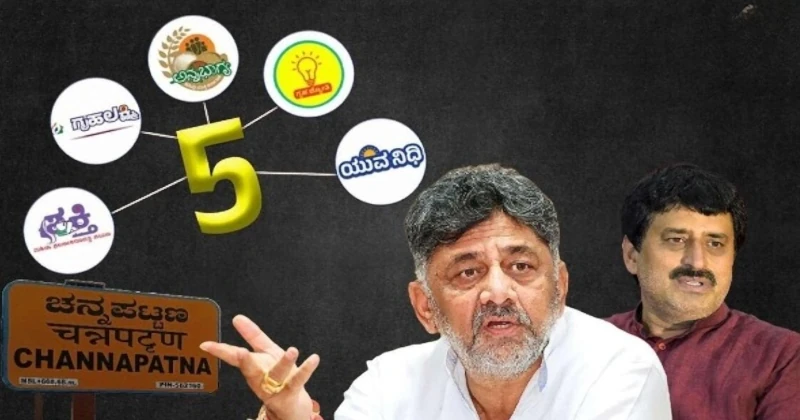
In a shocking display of misplaced priorities, the state government has demonstrated its absurd fiscal policies by approving a whopping Rs 6 crore for organising a convention focused on the beneficiaries of guarantee schemes in Channapatna. This decision comes against the same government’s refusal to provide a mere Rs 15 lakh for essential developmental works, particularly canal repairs in the region. This stark juxtaposition of financial commitment raises serious questions about the government’s priorities and genuine concern for developmental needs over political theatrics.
The Context of Disparity
The economic department has justified its reluctance to allocate Rs 15 lahks for crucial canal repairs by citing financial constraints. Yet, almost simultaneously, this same department has signaled its approval to disburse Rs 6 crore for a convention intended to inform the public about various governmental guarantee schemes. This glaring inconsistency has left many citizens and local leaders bewildered and deeply frustrated.
The convention in Channapatna is ostensibly aimed at discussing the progress and benefits of government schemes—but at what cost? It is an exercise in public relations and political propaganda that seemingly prioritises visibility and optics over immediate, tangible developmental needs. The real question arises: Why can the government find the funds for a grand event but not for the essential repair of public infrastructure?
The Economic Mismanagement
The economic department’s rationale for not releasing funds for canal repairs is troubling. A mere Rs 15 lakh is a paltry sum in a state budget, especially when the government has demonstrated the capacity to allocate ₹6 crore for what can only be characterised as a political event. This is not just a matter of money; it reflects a pattern of disregard for the immediate needs of the citizens who depend on these canals for agriculture, drinking water, and overall livelihood.
From an administrative standpoint, this decision raises alarms about the systemic flaws within the government’s financial management process. The inability to allocate funds for urgent needs indicates a severe lack of prioritisation and strategic planning. Instead of making decisions that would concretely benefit the populace, the government seems intent on showcasing its initiatives through grandiose events that may yield more headlines than actual welfare.
Political Implications
This incident will likely have political ramifications that could affect the government’s standing in the next elections. Opposition BJP questioned the rationale behind such spending and whether their interests are being adequately represented. The timing of this convention also raises eyebrows—coming just ahead of significant elections, it appears that the current administration is more focused on leveraging governmental schemes for electoral gains rather than addressing the persistent issues facing the populace.
Political observers have pointed out that this convention and the corresponding financial approval could be a strategic move to garner support and aimed to create a vote bank at the expense of longer-term developmental goals. It signals a government more interested in appearances than in substantive improvements to infrastructure and public welfare.
Public backlash
The public has begun to respond, expressing outrage and confusion over the government’s choices. Villagers and farmers of Channapatna and surrounding areas, who rely on well-functioning canals for agriculture and other activities, are rightfully resentful. They see their immediate needs being ignored in favour of a grand convention that fails to provide tangible benefits to their daily lives.
This sentiment represents a broader discontent with how local governments allocate funds. Communities across the state are beginning to realise that political campaigns often overshadow real governance, leading to mistrust in the handling of public resources. The focus on temporary showcase initiatives risks alienating citizens who expect genuine engagement and investment in their welfare.
The government must reassess its priorities and notably increase its commitment to addressing core developmental issues. The current situation underscores the need for a more transparent and accountable budgetary process, where public needs are prioritised over political expediency. It necessitates a shift in focus towards implementing policies that enable sustainable development rather than short-lived political gains.
To restore public trust, the government should consider reallocating funds to critical infrastructure projects, including those that support canal maintenance, before spending exorbitant amounts on events designed to showcase existing schemes. Ensuring that the foundational needs of communities are met should be the administration’s primary goal, prioritising real changes over flashy representations.
Spending Rs 6 crore on a convention while denying a mere Rs 15 lakh for repairing canals is an indictment of budgetary mismanagement and a sign of elected leaders forgetting their duty to serve the community at large. The government must listen to citizens’ voices and realign its priorities towards genuine development, which would foster public support and trust in the administration. It is time for the government to put the well-being of the people before political gain and to act decisively for the betterment of its constituents.











Comments