The Delhi Riots of 2020: A blueprint for global instability
December 5, 2025
  • Read Ecopy
  • Circulation
  • Advertise
  • Careers
  • About Us
  • Contact Us
Android AppiPhone AppArattai
Organiser
  • ‌
  • Bharat
    • Assam
    • Bihar
    • Chhattisgarh
    • Jharkhand
    • Maharashtra
    • View All States
  • World
    • Asia
    • Europe
    • North America
    • South America
    • Africa
    • Australia
  • Editorial
  • International
  • Opinion
  • RSS @ 100
  • More
    • Op Sindoor
    • Analysis
    • Sports
    • Defence
    • Politics
    • Business
    • Economy
    • Culture
    • Special Report
    • Sci & Tech
    • Entertainment
    • G20
    • Azadi Ka Amrit Mahotsav
    • Vocal4Local
    • Web Stories
    • Education
    • Employment
    • Books
    • Interviews
    • Travel
    • Law
    • Health
    • Obituary
  • Subscribe
    • Subscribe Print Edition
    • Subscribe Ecopy
    • Read Ecopy
  • ‌
  • Bharat
    • Assam
    • Bihar
    • Chhattisgarh
    • Jharkhand
    • Maharashtra
    • View All States
  • World
    • Asia
    • Europe
    • North America
    • South America
    • Africa
    • Australia
  • Editorial
  • International
  • Opinion
  • RSS @ 100
  • More
    • Op Sindoor
    • Analysis
    • Sports
    • Defence
    • Politics
    • Business
    • Economy
    • Culture
    • Special Report
    • Sci & Tech
    • Entertainment
    • G20
    • Azadi Ka Amrit Mahotsav
    • Vocal4Local
    • Web Stories
    • Education
    • Employment
    • Books
    • Interviews
    • Travel
    • Law
    • Health
    • Obituary
  • Subscribe
    • Subscribe Print Edition
    • Subscribe Ecopy
    • Read Ecopy
Organiser
  • Home
  • Bharat
  • World
  • Operation Sindoor
  • Editorial
  • Analysis
  • Opinion
  • Culture
  • Defence
  • International Edition
  • RSS @ 100
  • Magazine
  • Read Ecopy
Home Politics

The Delhi Riots of 2020: A blueprint for global instability

The Delhi Riots of 2020 were not merely an instance of local communal violence but a carefully orchestrated event that exposed the blueprint for global instability. What initially appeared as spontaneous clashes soon revealed deeper, more sinister undertones—marked by well-coordinated misinformation campaigns, international propaganda, and the involvement of radical elements aiming to disrupt India's social fabric

Dr Mamta TyagiDr Mamta Tyagi
Mar 2, 2025, 09:00 am IST
in Politics, Bharat, Opinion, Delhi
Follow on Google News
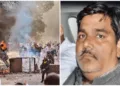
Violent protesters hurling stones during Delhi Riots 2020 (File Image)

Violent protesters hurling stones during Delhi Riots 2020 (File Image)

FacebookTwitterWhatsAppTelegramEmail

The Delhi riots of February 2020, ostensibly triggered by the Citizenship Amendment Act (CAA), were not a spontaneous outburst of communal violence, but a meticulously planned operation designed to destabilize the Indian state. Evidence suggests a coordinated effort by radical Muslim organizations, leftist groups, and student activists to exploit the CAA controversy and foment widespread unrest. The riots served as a chilling experiment, showcasing tactics now being replicated in various parts of the world, including Bangladesh, France, and other European nations.

The groundwork for the riots was laid through a sustained campaign of disinformation. Rumours were deliberately spread that the CAA, which expedited citizenship for persecuted religious minorities from neighbouring countries, would strip Indian Muslims of their citizenship. This misinformation, disseminated through social media and orchestrated campaigns, radicalized segments of the Muslim population, particularly students at institutions like Jamia Millia Islamia (JMI) and Jawaharlal Nehru University (JNU). These institutions became breeding grounds for extremist ideologies, with radical elements infiltrating student groups and inciting violence.

The riots unfolded in four distinct stages. The first stage involved the aforementioned misinformation campaign, which successfully sowed fear and distrust among the Muslim community. The second stage saw the mobilization of women and children as human shields in protests. These demonstrations, often framed as peaceful expressions of dissent, were laced with anti-national rhetoric and calls for violence. Financial support, including cash payments, was provided to attendees to sustain the protests. The third stage involved organized marches, where slogans like “cheen ke lenge azaadi” (we will snatch freedom) incited further unrest.

The fourth and final stage culminated in the chakka jam (road blockade) at Jafrabad, which served as the flashpoint for the riots.

The timing of the riots, coinciding with the visit of then-US President Donald Trump, suggests a deliberate attempt to embarrass the Indian government on the international stage. The violence was not random; it was targeted. Police officers and Hindus were specifically targeted, mirroring the pattern of targeted killings seen in other countries where similar tactics have been employed. The use of chakka jams was a novel strategy, designed to create a situation of confrontation where violence could be easily escalated. By blocking roads and disrupting daily life, the rioters forced the police to intervene, providing a pretext for further violence.

Investigations have revealed the involvement of various organizations and individuals in planning and executing the riots. Radical Muslim organizations like the All India Majlis-e-Mushawarat and Jamaat-e-Islami, known for their ability to mobilize and radicalize students, played a key role. Student activists from JMI and JNU, including Umar Khalid and Sharjeel Imam, were instrumental in organizing the protests and inciting violence. The formation of groups like the DPSG (Delhi Protest Support Group) and Pinjra Tod, which included leftist elements, broadened the base of the protests and provided strategic direction.

The Delhi riots served as a blueprint for destabilization, with tactics like misinformation campaigns, the use of human shields, and chakka jams now being replicated globally. In Bangladesh, rumours about reservation policies have been used to incite communal violence against Hindus. In France and other European countries, similar tactics are being used to exploit social tensions and foment unrest. The pattern is consistent: spread misinformation, radicalize students, organize protests, and escalate to violence, targeting specific communities and law enforcement.

The failure of the Indian judicial system to effectively address the riots has further emboldened these destabilizing forces. The perceived bias of the courts and the lack of convictions have created a sense of impunity, encouraging further violence. The failure of intelligence agencies to anticipate and prevent the riots highlights a systemic weakness that needs to be addressed. The lack of witness protection has also caused many victims to turn hostile, and cases to fail. The use of single chargesheets for both Hindu and Muslim parties in some cases, and the subsequent dismissal of these cases, also shows a clear flaw in the legal process.

The Delhi riots of 2020 were not an isolated incident. They were a carefully orchestrated operation, designed to destabilize the Indian state and serve as a model for similar operations worldwide. The tactics employed in Delhi are now being used to exploit social tensions and foment unrest in various countries, posing a significant threat to global stability. Understanding the planning and execution of the Delhi riots is crucial to preventing similar incidents in the future. Stronger intelligence, judicial reform, and public awareness campaigns are essential to counter these destabilizing forces.

Topics: Delhi RiotsDelhi riots 2020
ShareTweetSendShareSend
✮ Subscribe Organiser YouTube Channel. ✮
✮ Join Organiser's WhatsApp channel for Nationalist views beyond the news. ✮
Previous News

Sants and devotees receive 2,000 metric tons of subsidised ration during Mahakumbh; facility to continue in March

Next News

Gen AI: A game changer for jobs and entrepreneurship in India

Related News

Accused in the 2020 Delhi riots case, Sharjeel Imam and Umar Khalid

2020 Delhi Riots Case: Intellectual terrorists more threatening, Delhi Police tells SC while opposing bail of Sharjeel

Umar Khalid, accused in 2020 Delhi riots

Delhi Riots Case: Were Umar Khalid and others planning regime change; Know why Delhi Police oppose their bail plea

Rahul Gandhi’s aide Sachin Rao in WhatsApp Group that ‘Orchestrated’ Delhi anti-Hindu riots; Congress’ role exposed

Delhi Riots Toolkit : Engineering unrest

Senior advocate Monika Arora addressing the event organised by GIA at New Delhi

Delhi Riots 2020 were a pre-planned instance of information warfare against the Bharatiya State, says Monika Arora

Aam Aadmi Party’s Municipal Councilor Tahir Hussain (Right)

Unmasking the Delhi Riots 2020: How Aam Aadmi Party’s Municipal Councilor Tahir Hussain fueled communal tensions

Load More

Comments

The comments posted here/below/in the given space are not on behalf of Organiser. The person posting the comment will be in sole ownership of its responsibility. According to the central government's IT rules, obscene or offensive statement made against a person, religion, community or nation is a punishable offense, and legal action would be taken against people who indulge in such activities.

Latest News

Petitioner S Vignesh Shishir speaking to the reporters about the Rahul Gandhi UK citizenship case outside the Raebareli court

Rahul Gandhi UK Citizenship Case: Congress supporters create ruckus in court; Foreign visit details shared with judge

(L) Kerala High Court (R) Bouncers in Trippoonithura temple

Kerala: HC slams CPM-controlled Kochi Devaswom Board for deploying bouncers for crowd management during festival

Fact Check: Rahul Gandhi false claim about govt blocking his meet with Russian President Putin exposed; MEA clears air

Union Minister for Road Transport and Highways Nitin Gadkari (Right)

India set for highway overhaul as Union Minister Nitin Gadkari unveils nationwide shift to MLFF electronic tolling

RSS Akhil Bharatiya Prachar Pramukh Shri Sunil Ambekar

When Narrative Wars result in bloodshed, countering them becomes imperative: Sunil Ambekar

Ministry of Civil Aviation mandates emergency action: IndiGo ordered to stabilise flight operations by midnight

Chhattisgarh CM Vishnu Deo Sai at Panchjanya Conclave, Nava Raipur, Image Courtesy - Chhattisgarh govt

Panchjanya Conclave: Chhattisgarh CM Sai shares views on development projects in Maoist hotbed, women empowerment

Union Finance Minister Nirmala Sitharaman

‘TMC is holding Bengal back’: Sitharaman slams Mamata govt over industrial & healthcare setbacks

Karnataka: Muslim youth Mohammed Usman accused of sexual assault, blackmail & forced conversion in Bengaluru

Social Justice Is a cover; Anti-Sanatana dharma is the DMK’s real face at Thirupparankundram

Load More
  • Privacy
  • Terms
  • Cookie Policy
  • Refund and Cancellation
  • Delivery and Shipping

© Bharat Prakashan (Delhi) Limited.
Tech-enabled by Ananthapuri Technologies

  • Home
  • Search Organiser
  • Bharat
    • Assam
    • Bihar
    • Chhattisgarh
    • Jharkhand
    • Maharashtra
    • View All States
  • World
    • Asia
    • Africa
    • North America
    • South America
    • Europe
    • Australia
  • Editorial
  • Operation Sindoor
  • Opinion
  • Analysis
  • Defence
  • Culture
  • Sports
  • Business
  • RSS @ 100
  • Entertainment
  • More ..
    • Sci & Tech
    • Vocal4Local
    • Special Report
    • Education
    • Employment
    • Books
    • Interviews
    • Travel
    • Health
    • Politics
    • Law
    • Economy
    • Obituary
  • Subscribe Magazine
  • Read Ecopy
  • Advertise
  • Circulation
  • Careers
  • About Us
  • Contact Us
  • Policies & Terms
    • Privacy Policy
    • Cookie Policy
    • Refund and Cancellation
    • Terms of Use

© Bharat Prakashan (Delhi) Limited.
Tech-enabled by Ananthapuri Technologies