





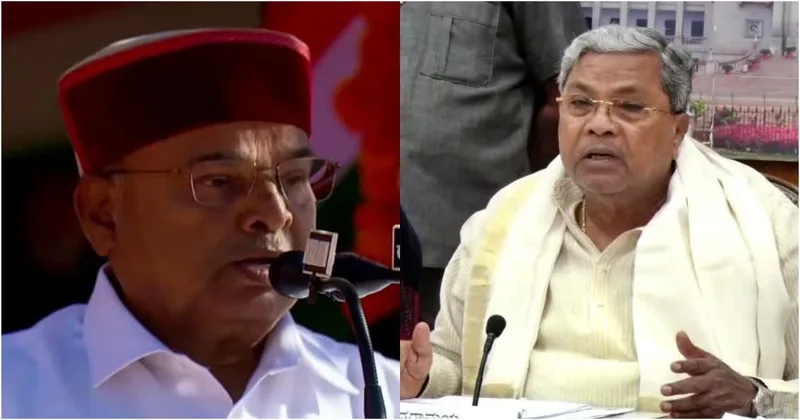
Bengaluru: In a significant development, Karnataka Governor Thawar Chand Gehlot has returned the draft ordinance aimed at curbing harassment from microfinance institutions due to concerns regarding its provisions. The ordinance, titled the Karnataka Microfinance (Control of Coercive Measures) Ordinance-2025, was submitted to the Governor last week but was returned unsigned as Gehlot seeks further clarification on various aspects of the proposed law. This decision has raised concerns over the effectiveness of the state government’s efforts to tackle the issue of microfinance-related harassment.
One of the primary points of contention in the ordinance is the provision offering borrowers complete relief from debt and interest. Additionally, it proposes that civil courts be prohibited from entertaining litigation against borrowers related to debt recovery. The Governor highlighted that it is the state government’s duty to protect victims of microfinance harassment but emphasized the necessity of safeguarding the interests of lenders who provide loans to those in need, as prescribed by law.
Gehlot raised alarms over the potential implications of discharging borrowers from their debts without a systematic recovery mechanism for lenders. Legal lenders might encounter considerable difficulties if they are unable to reclaim their loans, which could undermine the financial stability of lending institutions and disrupt the balance that validates contracts under existing legal frameworks. The Governor also questioned whether these provisions might infringe upon fundamental rights, necessitating a detailed examination.
Furthermore, the ordinance proposes stringent penalties, including a maximum of ten years’ imprisonment and a fine of Rs 5 lakh against violators. Critics have pointed out that this fine might be disproportionate given that the maximum loan amount from microfinance institutions is capped at Rs 3 lakh. Such high penalties could be seen as a violation of natural justice principles, potentially deterring lenders from extending credit to vulnerable populations who often rely on microfinance services.
The ordinance has also raised concerns about its potential impact on self-help groups (SHGs) that provide financial assistance to the economically disadvantaged. The Governor has emphasised the need for a balanced approach, arguing that it could stifle the operations of many self-help organisations in the state.
Another important consideration is that the ordinance will not cover banks and non-banking financial institutions registered under the Reserve Bank of India (RBI). Hence, a substantial number of lending bodies will be excluded from the ordinance’s purview, which raises questions about the overall effectiveness of the law in regulating microfinance practices.
In his assessment, the Governor noted that various existing laws, such as the Karnataka Moneylenders Act of 1961, the NIA Act, and the Karnataka Debt Free Act, coupled with provisions in the Indian Penal Code (IPC), already regulate harassment by financial institutions. He asserted that strictly enforcing these laws could be more effective in addressing the issue.
Additionally, the file submitted to the Governor lacked crucial clarifications, statistical data, and legal analyses demonstrating how this ordinance would effectively combat microfinance harassment. While the ordinance aims to protect borrowers, it is equally essential to consider its ramifications on lenders, who are integral to the societal financial ecosystem. Gehlot suggested that these critical aspects require comprehensive discussions in the state legislative assembly.
With the budget session set to commence next month, the Governor has urged a thoughtful approach, advising against pushing through the ordinance hastily. He proposed that an in-depth discussion during the assembly could lead to the development of a more effective and equitable law that safeguards the interests of all stakeholders involved. Consequently, he has instructed that the file be resubmitted with the requested clarifications, explanations, and suggestions for review.
Opposition leader R Ashok criticised government
In a vehement outcry against the state government’s failure to address the severe issues plaguing vulnerable families due to microfinance harassment, Leader of the Opposition in the Legislative Assembly R Ashok has brought to light a distressing reality: an estimated 1 lakh people have been forced to abandon their villages, with at least 30 individuals reportedly committing suicide due to financial duress.
During his visit on Thursday to Konnapura village in Mandya, where a mother and son tragically took their own lives amid unmanageable microfinance debts, Ashok expressed profound sorrow and extended his condolences to the grieving family. The victims, Prema and her son Ranjith, succumbed to despair after being unable to repay loans from multiple microfinance institutions, highlighting the urgent need for government intervention.
Speaking to reporters post his visit, Ashok criticised Chief Minister Siddaramaiah’s inaction, noting that it has been over a month since the CM promised to introduce an ordinance to regulate these predatory lending practices. “While the government claims to prioritize the welfare of the poor, families like that of Prema and Ranjith are left to suffer in silence. If an ordinance is not enacted swiftly, these tragic deaths will continue to rise,” he stated emphatically.
In Konnapura alone, Ashok revealed that 24 microfinance institutions, including major players like Chamundeshwari, Navachetana, Suryodaya, Unity, and Pragati, have inundated the village with loans at exorbitant interest rates of 12% per annum. The system is designed to ensnare borrowers; when one individual defaults, co-borrowers are held accountable, putting immense pressure on families already struggling to make ends meet. “The cycle of despair ends in catastrophe, with many resorting to suicide as a means of escape from their dire circumstances,” Ashok lamented.
He further slammed the local law enforcement agencies, claiming that police support for microfinance institutions exacerbates the plight of the borrowers. According to Ashok, police officers were seen forcibly removing family members during home seizures, a blatant abuse of power that underscores the vulnerability of these families. “The police in Mandya are acting as enablers for these predatory lenders instead of protecting the citizens,” he charged.
With 60 microfinance institutions operating in the Mandya district, Ashok highlighted the alarming fact that only 18 are officially recognised, while the rest are alleged to have links with local gangs and rowdy elements. This unregulated landscape calls for urgent intervention from district authorities. “The tahsildar and police must take immediate action to identify and shut down unauthorized institutions. We demand a judicial inquiry led by a competent judge to ensure justice for these families,” Ashok asserted.
The prevailing circumstances have left families like Prema and Ranjith’s in despair. The grieving relatives reported that no government officials or ministers have reached out to offer support during this harrowing time. “We survive solely on the assistance of relatives. The future seems bleak,” said family member Manikya, illustrating the profound social disintegration resulting from the government’s inaction.
In a show of solidarity, Ashok assured the family that he would advocate fiercely for their cause and exert pressure on the government to take meaningful action. He also announced his intention to contact District Magistrate Kumar to express his outrage at the conduct of local police during the traumatic home seizure incident.
In a dramatic demand for accountability, Ashok called for the immediate suspension of the police personnel involved in the maltreatment of the bereaved family. “This is not merely a matter of policy; it showcases the heartlessness of a system that fails to protect its most vulnerable citizens. The time for action is now,” he declared, holding the state government accountable for its responsibility to safeguard the welfare of its people.









Comments