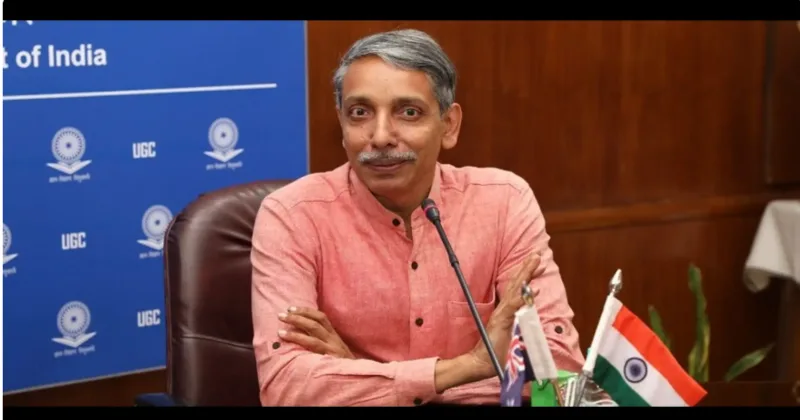
UGC Chairman Prof M Jagadesh Kumar highlights role of universities in building a sustainable future
December 5, 2025
  • Read Ecopy
  • Circulation
  • Advertise
  • Careers
  • About Us
  • Contact Us
Android AppiPhone AppArattai
Organiser
  • ‌
  • Bharat
    • Assam
    • Bihar
    • Chhattisgarh
    • Jharkhand
    • Maharashtra
    • View All States
  • World
    • Asia
    • Europe
    • North America
    • South America
    • Africa
    • Australia
  • Editorial
  • International
  • Opinion
  • RSS @ 100
  • More
    • Op Sindoor
    • Analysis
    • Sports
    • Defence
    • Politics
    • Business
    • Economy
    • Culture
    • Special Report
    • Sci & Tech
    • Entertainment
    • G20
    • Azadi Ka Amrit Mahotsav
    • Vocal4Local
    • Web Stories
    • Education
    • Employment
    • Books
    • Interviews
    • Travel
    • Law
    • Health
    • Obituary
  • Subscribe
    • Subscribe Print Edition
    • Subscribe Ecopy
    • Read Ecopy
  • ‌
  • Bharat
    • Assam
    • Bihar
    • Chhattisgarh
    • Jharkhand
    • Maharashtra
    • View All States
  • World
    • Asia
    • Europe
    • North America
    • South America
    • Africa
    • Australia
  • Editorial
  • International
  • Opinion
  • RSS @ 100
  • More
    • Op Sindoor
    • Analysis
    • Sports
    • Defence
    • Politics
    • Business
    • Economy
    • Culture
    • Special Report
    • Sci & Tech
    • Entertainment
    • G20
    • Azadi Ka Amrit Mahotsav
    • Vocal4Local
    • Web Stories
    • Education
    • Employment
    • Books
    • Interviews
    • Travel
    • Law
    • Health
    • Obituary
  • Subscribe
    • Subscribe Print Edition
    • Subscribe Ecopy
    • Read Ecopy
Organiser
  • Home
  • Bharat
  • World
  • Operation Sindoor
  • Editorial
  • Analysis
  • Opinion
  • Culture
  • Defence
  • International Edition
  • RSS @ 100
  • Magazine
  • Read Ecopy
Home Bharat

UGC Chairman Prof M Jagadesh Kumar highlights role of universities in building a sustainable future

Higher education institutions (HEIs) play a crucial role in promoting sustainability through education, research, and community collaboration, aligning with India's National Education Policy and global SDGs. By adopting eco-friendly practices, engaging local communities, and transforming campuses into carbon-neutral spaces, HEIs can drive meaningful environmental change

WEBDESKWEBDESK
Jan 9, 2025, 09:00 am IST
in Bharat, Education
Follow on Google News
UGC Chairman Prof M Jagadesh Kumar

UGC Chairman Prof M Jagadesh Kumar

FacebookTwitterWhatsAppTelegramEmail

There is no denying that scientific and technological advancements have greatly contributed to economic growth and human progress. However, their unforeseen environmental impacts require immediate action from all sectors of society. Higher education institutions (HEIs), in particular, play a vital role in fostering and implementing solutions for a sustainable future. By combining research, practical application, and community involvement, HEIs can make significant strides in addressing the climate crisis and promoting eco-friendly practices. This view is strongly supported by Prof M Jagadesh Kumar, Chairman of the University Grants Commission (UGC), who emphasizes the critical role of HEIs in leading the way toward sustainability.

HEIs are in a unique position to influence sustainable development through education, research, and the implementation of environmentally friendly practices. India’s National Education Policy (NEP) 2020 stresses aligning the nation’s educational objectives with the United Nations’ Sustainable Development Goals (SDGs). Among these, SDG 11 (Sustainable Cities and Communities) and SDG 13 (Climate Action) are particularly relevant for HEIs aiming to transform their campuses into centers of innovation and environmental consciousness.

For example, HEIs can strive toward carbon-neutral campuses by implementing renewable energy solutions, such as solar power, constructing energy-efficient buildings, and adopting comprehensive waste management systems. These efforts align with SDG 12, which focuses on responsible consumption and production. Such initiatives not only reduce environmental footprints but also create living laboratories where students can observe and contribute to real-world sustainability solutions.

One of the major challenges HEIs face is managing the environmental impact of transportation. With large numbers of students and staff on campus daily, promoting walking, cycling, and the use of electric vehicles can significantly cut down emissions. Adopting sustainable transportation methods helps combat climate change while fostering a culture of environmental responsibility.

Repurposing unused spaces into biodiversity-rich areas is another impactful strategy. Planting native trees and nurturing local ecosystems on campuses can support SDG 15 (Life on Land) and provide practical learning experiences for students. These biodiversity initiatives not only enhance the ecological value of campuses but also motivate students to become advocates for environmental stewardship.

Collaboration with local communities is essential for achieving sustainable development. HEIs should integrate their sustainability initiatives with the environmental challenges faced by local communities. By working together, HEIs can ensure that their efforts are both relevant and sustainable in the long term. Joint projects focusing on sustainable agriculture, waste management, or water conservation can foster a mutually beneficial exchange of knowledge, enriching both students’ education and local residents’ lives.

Such collaborations also bridge the gap between academic research and practical application. Incorporating community-driven perspectives into research can help HEIs develop innovative solutions to pressing environmental issues while empowering local populations.

Integrating sustainability into the curriculum is one of the most effective ways to instill environmental responsibility in students. Prof M. Jagadesh Kumar says that the University Grants Commission (UGC) has already issued guidelines for environmental education in HEIs. By following these guidelines, institutions can offer interdisciplinary programs that address the complex challenges of climate change, biodiversity loss, and resource depletion.

For instance, programs that combine environmental studies with social sciences, economics, philosophy, and psychology can provide students with a comprehensive understanding of sustainability. Offering practical learning opportunities, such as community outreach and sustainability projects, can further prepare students to confront climate-related challenges.

Elaborating further, Prof. M. Jagadesh Kumar said that looking ahead, HEIs should aim to transition into carbon-neutral campuses by 2047, aligning with India’s broader environmental objectives. Achieving this goal will require a multi-faceted approach, including green building practices, incorporating sustainability into campus policies, and promoting environmental awareness among students and faculty.

Building energy-efficient structures, using renewable energy, and minimising resource consumption are key actions HEIs can take. These efforts must be supported by policies that prioritise sustainability across all aspects of campus life, including procurement, operations, curriculum, and extracurricular activities.

Despite the existence of frameworks and guidelines, many HEIs in India have yet to fully integrate sustainability into their core strategies. Limited awareness, resources, and commitment remain obstacles to progress. Overcoming these challenges requires proactive leadership from both HEI administrators and policymakers.

UGC guidelines emphasise the need for interdisciplinary education and aligning academic goals with global environmental agreements, such as the Rio Conventions. By fostering a sense of responsibility and urgency within HEIs, India can unlock the potential of its educational institutions to drive sustainable development.

HEIs are at the forefront of shaping the future, not just for their students but for society as a whole. By prioritizing sustainability in education, research, and community collaboration, HEIs can lead efforts to address the environmental challenges of our time. Through innovative practices, interdisciplinary learning, and community partnerships, these institutions can inspire a new generation of environmental leaders, scientists, and policymakers.

India’s vision for a sustainable future depends on HEIs actively transforming their campuses into models of eco-conscious living. With the right combination of policies, resources, and commitment, HEIs can emerge as key drivers of change, paving the way for a greener, healthier planet.

By embracing their role as sustainability catalysts, HEIs will not only prepare students for a brighter future but also contribute to building a more resilient and sustainable world. This perspective aligns with the UGC Chairman’s call for greater involvement of HEIs in driving sustainability and fostering a culture of environmental responsibility across the country.


Topics: higher education institutionsUGC Chairman Prof M Jagadesh KumarUniversity Grants Commission
ShareTweetSendShareSend
✮ Subscribe Organiser YouTube Channel. ✮
✮ Join Organiser's WhatsApp channel for Nationalist views beyond the news. ✮
Previous News

Tripura: Bangladeshi smugglers backed by villagers attack BSF jawan on duty with sharp weapons, tried to snatch weapon

Next News

UGC opens nominations for PhD excellence citation 2025; Apply before March 31

Related News

UGC urges colleges and universities to implement “Learn One More Bharatiya Bhasha” initiative under NEP 2020

UGC directs educational institutions to implement POSCH ACT

Women Safety: UGC issues directive to all educational institutions for effective implementation of POSH Act, 2013

(From Left To Right) Dr Meenu rani, Prafulla Ketkar, Prof Manish R Joshi, Prof (Dr) Pavitra Bharadwaj , Dr Pratibha Tripathi

Vimarsh 2025 | Safeguarding culture of India is like safeguarding its constitution: Prafulla Ketkar

UGC releases list of fake universities across India ( Map Image: Map.chart.net)

UGC releases updated list of 22 fake universities across India; Delhi tops the chart

UGC issues guidelines to promote social media safety: Follow these essential do’s & dont’s to stay protected online

UGC issues notice to 54 private universities

UGC issues notice to 54 state private universities for non-compliance with disclosure norms

Load More

Comments

The comments posted here/below/in the given space are not on behalf of Organiser. The person posting the comment will be in sole ownership of its responsibility. According to the central government's IT rules, obscene or offensive statement made against a person, religion, community or nation is a punishable offense, and legal action would be taken against people who indulge in such activities.

Latest News

BJYM leader Shyamraj with Janaki

Kerala: Widow of BJP worker murdered in 1995 steps into electoral battle after three decades at Valancherry

Russian Sber bank has unveiled access to its retail investors to the Indian stock market by etching its mutual fund to Nifty50

Scripting economic bonhomie: Russian investors gain access to Indian stocks, Sber unveils Nifty50 pegged mutual funds

Petitioner S Vignesh Shishir speaking to the reporters about the Rahul Gandhi UK citizenship case outside the Raebareli court

Rahul Gandhi UK Citizenship Case: Congress supporters create ruckus in court; Foreign visit details shared with judge

(L) Kerala High Court (R) Bouncers in Trippoonithura temple

Kerala: HC slams CPM-controlled Kochi Devaswom Board for deploying bouncers for crowd management during festival

Fact Check: Rahul Gandhi false claim about govt blocking his meet with Russian President Putin exposed; MEA clears air

Union Minister for Road Transport and Highways Nitin Gadkari (Right)

India set for highway overhaul as Union Minister Nitin Gadkari unveils nationwide shift to MLFF electronic tolling

RSS Akhil Bharatiya Prachar Pramukh Shri Sunil Ambekar

When Narrative Wars result in bloodshed, countering them becomes imperative: Sunil Ambekar

Ministry of Civil Aviation mandates emergency action: IndiGo ordered to stabilise flight operations by midnight

Chhattisgarh CM Vishnu Deo Sai at Panchjanya Conclave, Nava Raipur, Image Courtesy - Chhattisgarh govt

Panchjanya Conclave: Chhattisgarh CM Sai shares views on development projects in Maoist hotbed, women empowerment

Union Finance Minister Nirmala Sitharaman

‘TMC is holding Bengal back’: Sitharaman slams Mamata govt over industrial & healthcare setbacks

Load More
  • Privacy
  • Terms
  • Cookie Policy
  • Refund and Cancellation
  • Delivery and Shipping

© Bharat Prakashan (Delhi) Limited.
Tech-enabled by Ananthapuri Technologies

  • Home
  • Search Organiser
  • Bharat
    • Assam
    • Bihar
    • Chhattisgarh
    • Jharkhand
    • Maharashtra
    • View All States
  • World
    • Asia
    • Africa
    • North America
    • South America
    • Europe
    • Australia
  • Editorial
  • Operation Sindoor
  • Opinion
  • Analysis
  • Defence
  • Culture
  • Sports
  • Business
  • RSS @ 100
  • Entertainment
  • More ..
    • Sci & Tech
    • Vocal4Local
    • Special Report
    • Education
    • Employment
    • Books
    • Interviews
    • Travel
    • Health
    • Politics
    • Law
    • Economy
    • Obituary
  • Subscribe Magazine
  • Read Ecopy
  • Advertise
  • Circulation
  • Careers
  • About Us
  • Contact Us
  • Policies & Terms
    • Privacy Policy
    • Cookie Policy
    • Refund and Cancellation
    • Terms of Use

© Bharat Prakashan (Delhi) Limited.
Tech-enabled by Ananthapuri Technologies