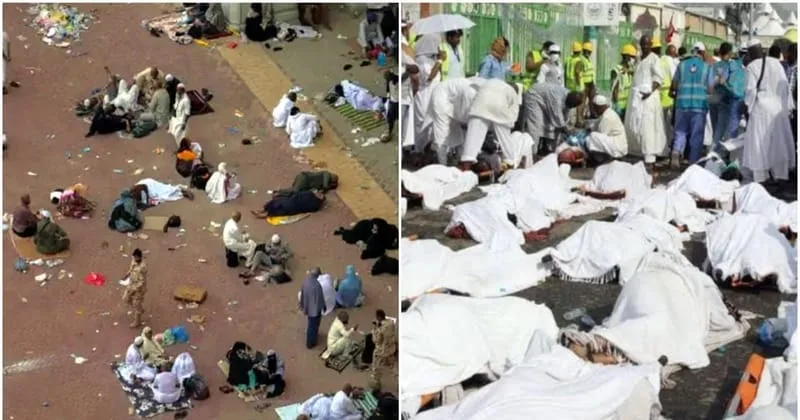
The 2024 Haj pilgrimage, a sacred journey for millions of Muslims from around the world, turned into a tragedy as over 1,300 people lost their lives, mainly due to the extreme heat. With temperatures soaring to 125.2°F (51.8°C) in the Grand Mosque of Mecca, the majority of fatalities were caused by heat-related illnesses such as heat stroke and dehydration. However, despite the magnitude of the disaster, it failed to capture the same global attention or sympathy often reserved for tragedies involving other religious or cultural groups.
Following the demise of pilgrims, India’s external affairs ministry said that out of the total deceased, 98 were Indians. MEA spokesperson Randhir Jaiswal said in a press conference, “This year, 175,000 Indian pilgrims have visited Haj so far…We have 98 Indian pilgrims who have died in Haj…”
Despite this, the likes of Arfa, Sayema and so-called Muslim rights activists stay mum in the negligence by the Saudi Government and especially the Haj committee for leaving people to struggle under scorching heat.
What’s more startling is that, of the 1,301 who perished, a staggering 83 per cent were unauthorised pilgrims. These individuals, who were not officially sanctioned to perform Haj, walked long distances under the unforgiving sun, without adequate shelter, water, or comfort. Among the dead were several elderly and chronically ill people, whose fragile health made them particularly vulnerable to the harsh conditions. But the most striking part of this tragedy is not just the loss of life, but the lack of global outrage, media coverage, and social media uproar that usually accompanies such disasters—especially when they occur in places of religious significance to other faiths.
A Tragic Reality Lying on the Roads of Mecca
The tragedy was not limited to the heat. Bodies of the deceased were reportedly left lying on the roads, unattended and uncared for in the brutal heat, as thousands of pilgrims continued their journey to the sacred sites.
Reports from various sources indicated that most of those who died were not part of the official pilgrim count. Many had arrived without the necessary approvals or travel documentation, choosing to embark on the journey without adequate guidance. These unauthorised pilgrims, seeking a spiritual experience, were unprepared for the physical strain imposed by the intense desert heat.
Heat-Related Deaths: A Silent Crisis
While the world witnesses the horrors of heatwaves across the globe, the tragedy in Mecca has largely been relegated to the back pages of news outlets. When natural disasters strike in other parts of the world, the media coverage is often instantaneous and intense. Drone shots flood our screens, showing the scale of devastation—often paired with the faces of the victims, their agony, and the shock of their families.
Yet, in the case of the Haj tragedy, the media response was far more subdued. There were no in-depth investigations into the causes of the fatalities or widespread international outrage.
This lack of global attention speaks volumes about the way tragedies are framed and perceived depending on their location and the identities of those affected. In stark contrast, when similar tragedies happen in other religious settings, such as accidents during pilgrimages at Hindu temples or other places of worship, the media coverage is often overwhelming. The social media landscape is flooded with discussions, and the voices of revolutionaries and activists quickly rise, decrying the lack of safety or the state’s negligence. Mocking comments, memes, and angry rants often circulate with unprecedented speed.
Yet, when 1,300 people perish in the scorching heat of Mecca, there is a deafening silence. This discrepancy raises a troubling question about the disparity in empathy and media treatment when the victims are Muslim.
The silence surrounding the 2024 Haj deaths reveals a deep-rooted bias in the way global media covers tragedies. While the world may rush to condemn or dissect disasters affecting people from other faiths or cultures, the suffering of millions of Muslims during a sacred pilgrimage receives less focus.
Why so-called Indian Muslim Activists are Silent?
When unforeseen accidents occur—whether it’s a tragic stampede during a religious gathering, a bus carrying devotees to pilgrimage sites meeting with an accident, or natural disasters like floods or droughts—certain so-called “Muslim Activists” are quick to place blame. Often, their targets are Hindus or other religious communities, framing these events as systemic issues or drawing sweeping conclusions about society at large. These individuals and groups remain vocal around the clock, actively pointing fingers, mobilising narratives, and amplifying their accusations.
In the face of this devastating incident, all that was heard were expressions of mourning from them. There were no demands for accountability, no criticisms of the reckless management that arguably led to such a significant loss of life. Moreover, neither mainstream nor alternative voices conducted any comparative analysis to highlight patterns of mismanagement during previous Haj pilgrimages or issued data-supported reports to understand the scope of negligence.
This silence becomes even more glaring when compared to the reactions following accidents involving Hindu pilgrimages or festivals. When stampedes occur at sites like Kumbh Mela or tragedies strike buses carrying devotees to religious sites such as Vaishno Devi or Amarnath, the discourse immediately shifts to blame: accusations are hurled, inquiries are demanded, and socio-political critiques dominate headlines. In such cases, debates often extend to questioning the very existence of these pilgrimages or the societal value they hold.
However, a stark contrast emerges when it comes to the tragedy that unfolded during this year’s Haj pilgrimage. Despite the enormity of the disaster, these same voices, who otherwise claim to champion justice and accountability, fell disturbingly silent. Not a single word was spoken against the Saudi government or its failure to ensure adequate arrangements for the safety and well-being of pilgrims during one of the holiest Islamic events.
This biased approach in reactions—both from activists and sections of the media—reveals an unsettling pattern of selective outrage. It calls for introspection and debate. Why are tragedies within specific religious contexts amplified while others are met with silence? Why are governments in certain nations shielded from critique, even in the face of negligence that costs hundreds or thousands of lives?
It is high time this double standard is addressed. Silence cannot remain the default response when the lives of thousands are at stake, regardless of the religious, regional, or cultural context.
The Double Standard in Global Reporting
In the case of the 2024 Haj, the lack of international media coverage, the absence of drone shots, and the minimal public response are stark examples of how religious tragedies are often treated differently based on the faith of the victims. If a similar disaster were to strike a major Hindu pilgrimage, the response would be dramatically different: there would be wall-to-wall media coverage, extensive drone footage, and social media uproar. But because the victims were Muslims on a religious journey in Mecca, their deaths seem to have become just another overlooked tragedy in a world increasingly indifferent to the suffering of others—especially when it is linked to Islam.
This double standard calls into question the nature of global empathy and the ways in which cultural biases influence our responses to human suffering. The reality is that the suffering of Muslims, especially when it occurs in places associated with their faith, is often ignored or downplayed in mainstream narratives.