As Prime Minister Narendra Modi’s tenure enters its 10th year, the impact of his government’s healthcare policies has been closely examined, particularly in light of its handling of the global pandemic. The COVID-19 crisis exposed vulnerabilities in healthcare systems worldwide, including challenges such as vaccine production and shortages of medical personnel, facilities, and essential equipment. In India, while several areas requiring improvement came to light, there was also much to commend. Despite being a relatively young nation with 77 years of independence, India has developed a robust healthcare infrastructure capable of adapting swiftly to the demands of manufacturing and production during a global health emergency. Over the past nine years, the Modi government has implemented significant reforms in the healthcare sector, enabling these advancements.
A key healthcare initiative of the Modi government is the Ayushman Bharat scheme, designed to provide health coverage to over 500 million individuals from economically weaker sections. The program offers cashless health insurance of up to Rs 5 lakh per family annually, covering secondary and tertiary care hospitalisations, as well as prescription costs for up to a year post-hospitalisation. This initiative has significantly reduced the financial burden of catastrophic healthcare expenses for millions. However, the focus must now expand to include annual physical exams and prescription coverage for managing chronic conditions like diabetes and heart disease. Such measures could help prevent hospitalisations while enhancing overall health outcomes for all citizens, irrespective of income.
The government also launched the National Digital Health Mission (NDHM) in August 2020, aiming to build a comprehensive digital health ecosystem that ensures universal health coverage. This includes access to health records and various healthcare services for all citizens. During the COVID-19 pandemic, telehealth consultations became widespread, enabling millions to access medical care without incurring high travel costs or risking the spread of illness.
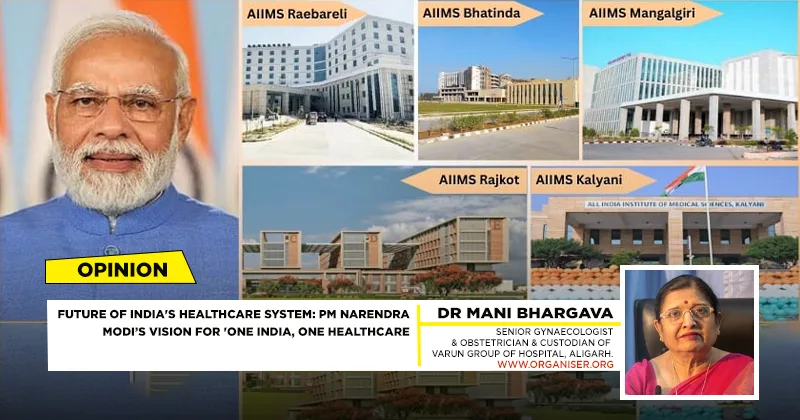
Significant investments have been made in healthcare infrastructure, including the establishment of new medical colleges, upgrades to existing facilities, and an increase in hospital beds. Over the past nine years, 302 new medical colleges have been established, representing a remarkable 78 per cent growth in the number of medical schools. This expansion has created more opportunities to train doctors and medical professionals, addressing the growing global demand for healthcare expertise.
While increasing the number of healthcare professionals remains a priority, ensuring quality education in these institutions is critical. The next phase of development should focus on maintaining high standards in newly established medical schools. Additionally, it is recommended that all medical colleges and hospitals, including government hospitals, be mandated to obtain NABH accreditation to uphold excellence in healthcare delivery.
To combat the pandemic, the government implemented several measures, including establishing dedicated COVID-19 hospitals and expanding testing facilities. Additionally, vaccine production was ramped up, enabling India to vaccinate nearly its entire population—an achievement matched by only a few nations.
Despite these efforts, the healthcare sector continues to face significant challenges. Healthcare delivery in India is decentralised, varying widely across states since it falls under state jurisdiction. Factors such as low education levels, inadequate sanitation, unsafe drinking water, malnutrition, poor housing, tobacco use, poverty, unemployment, and unhealthy lifestyles significantly influence health outcomes.
The allocation of funds to healthcare depends on the government’s resource availability, competing priorities across sectors, and the system’s capacity to utilise resources effectively. However, with advancements in technology, the rise of telemedicine, and increased interstate commerce due to labour migration, there is a compelling case for a constitutional amendment. Guaranteeing access to primary healthcare as a fundamental right and shifting healthcare to a Central subject could ensure uniform standards and accessibility nationwide.
The COVID-19 crisis underscored that diseases do not recognise state boundaries, emphasising the need for a unified approach to healthcare delivery and disease prevention. The time has come to embrace the vision of “One India, One Healthcare.”
Government hospitals in India are often managed by doctors promoted based on seniority rather than specialised training in hospital management. In contrast, private hospitals are typically overseen by professional hospital managers. Managing a public health system for the world’s largest population is a daunting task, even for the most experienced medical professionals.
India’s civil services train and appoint senior bureaucrats, including IAS and IFS officers, some of whom have MBBS qualifications. To address the complexities of managing public healthcare, it is proposed that the Government of India establish an Indian Health Service (IHS) branch. This new cadre would comprise 742 officers—one for each district—equivalent in rank to IAS officers, tasked with coordinating the district’s public health system. Additionally, expanding medical and nursing colleges to at least one per district would help create a larger, well-trained healthcare workforce to staff these facilities effectively.
Mandating rural service could ensure that underserved villages receive quality healthcare. For instance, a year of mandatory rural service at primary care centres could be integrated into medical training. Incentives, such as reduced educational costs, could encourage more professionals to serve in these areas.
While the Ayushman Bharat scheme has successfully addressed secondary and tertiary care, future efforts should focus on expanding coverage to primary healthcare, including chronic disease management and community health services. Fraud prevention measures, such as the DRG payment system, should also be strengthened.
India continues to grapple with a rising burden of chronic diseases, such as diabetes, which can lead to severe complications and hospitalisations if not managed effectively. Addressing this challenge requires prioritising annual wellness exams and emphasising primary and preventive care. Early identification and management of chronic conditions are both more efficient and less expensive than treating their advanced stages.
Geographic disparities in the quality of healthcare services and providers further highlight the need for standardised processes and consistent healthcare delivery across the country. Establishing uniform standards and prioritising primary care will be essential in addressing these challenges and ensuring equitable healthcare for all citizens.